





 All Earrings
 Stud Earrings
 Drop Earrings
 Solitaire
 Hoop Earrings
 Halo Earrings
 Vermeil Earrings
 Round
Round
 Oval
Oval
 Emerald
 Pear
Pear
 Princess
 Heart
Heart
 Marquise
 All Rings
 Solitaire Rings
 Band Rings
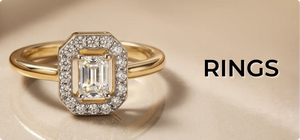
 Halo Rings
 Cocktail Rings
 Eternity Rings
 Fashion Ring
 Stack Rings
 Men's Rings
 Vermeil Rings
 All Necklaces
 Necklet
 Mangalsutra
 Solitaire
 Tennis Necklace
 Statement Necklace
 Vermeil Necklace
 Alphabets
 Solitaire Pendant
 Halo Pendant
 Vermeil Pendants
 All Bracelets
 Solitaire Bracelet
 Tennis Bracelet
 Fashion Bracelet
 Mangalsutra
 Vermeil Bracelets
 All Vermeil
 Vermeil Earring
 Vermeil Pendant
 Vermeil Ring
 Vermeil Necklace
 Vermeil Mangalsutra
 Vermeil Bracelets
 Vermeil Bangles
 Vermeil Men’s
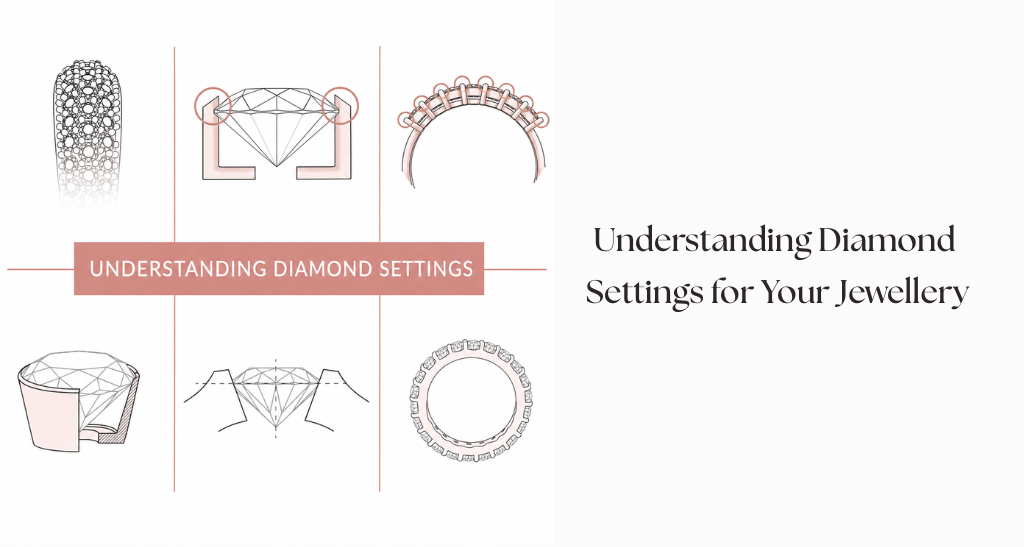
Understanding Diamond Settings for Your Jewellery
When you look at a diamond ring, necklace, bracelet, or pair of earrings, most of the attention naturally goes to the diamond. Its shape, size, cut and sparkle are easy to notice. But there is another part that plays a very important role in how the jewellery looks and feels: the diamond setting.
The setting is the part of the jewellery that holds the diamond in place. It can change how much of the diamond you see, how much light reaches it, how secure it is, and even how large the diamond appears.
Two rings can have diamonds of the same size and shape but look completely different because they use different settings.
Understanding these settings can help you make a better choice when buying diamond jewellery, especially when you are choosing an engagement ring or a piece you plan to wear regularly.
What Is a Diamond Setting?
A diamond setting is the method used to secure a diamond to a piece of jewellery. The metal around or underneath the stone keeps it in position.
A good setting needs to do two things well. It should hold the diamond securely and allow the stone to look its best.
Settings can be made using different metals, including yellow gold, white gold, rose gold and platinum. The design of the setting depends on the jewellery style, the diamond shape and how the piece will be worn.
For example, a ring that is worn every day may need a more protective setting, while a pair of special-occasion earrings may focus more on showing the diamond from different angles.
Why Does the Diamond Setting Matter?
The setting is not simply a technical part of jewellery. It has a direct effect on the final appearance and practicality of the piece.
It affects how much of the diamond you can see
Some settings leave most of the diamond exposed. Others surround or cover more of the stone.
A higher setting can make a diamond look more prominent, while a lower setting can give the jewellery a more secure and comfortable feel.
It affects sparkle
Light needs to enter and leave a diamond for it to show its brilliance. Settings that leave more of the diamond exposed can allow light to reach the stone from several directions.
However, the setting is only one part of the equation. The diamond's cut quality has a major influence on its sparkle too.
It affects protection
Diamonds are hard, but they are not impossible to damage. The edges and corners of certain diamond shapes can be more exposed to knocks.
A protective setting can cover vulnerable areas and reduce the chance of accidental damage.
It affects your jewellery's overall style
The same round diamond can look classic in a solitaire setting, bold in a halo setting, or modern in a bezel setting.
This is why choosing a setting is just as much about personal style as it is about security.
Common Types of Diamond Settings
There are several diamond settings used in jewellery. Each one has its own design, advantages and limitations.
1. Prong Setting

The prong setting is one of the most familiar diamond settings, especially for engagement rings.
Small metal claws, called prongs, hold the diamond from several points around its edge. A four-prong or six-prong design is commonly used.
The main advantage of a prong setting is that it leaves a large part of the diamond visible. This can help the stone receive plenty of light and gives it a more open appearance.
A four-prong setting usually gives a lighter, more open look. A six-prong setting provides more points of support and has a slightly more traditional appearance.
Best for: Solitaire rings, engagement rings and anyone who wants the diamond to be the main focus.
One thing to consider: The exposed sides of the diamond can be more vulnerable to knocks, particularly with shapes that have pointed corners.
2. Bezel Setting

In a bezel setting, a thin rim of metal surrounds the edge of the diamond and holds it in place.
Because the metal surrounds the stone, the bezel offers good protection. This makes it a practical choice for people who want to wear their jewellery frequently.
It also creates a clean, modern look. Unlike prongs, there are no visible claws around the diamond.
A bezel setting can slightly reduce the amount of the diamond's sides that are visible, so it may not have the same open appearance as a traditional prong setting.
Best for: Everyday rings, active lifestyles and modern jewellery designs.
3. Halo Setting

A halo setting places smaller diamonds around a central diamond.
The surrounding diamonds create a larger overall shape around the centre stone. This can make the centre diamond appear bigger than its actual carat size.
Halo settings are available in many designs. You can have a single row of diamonds around the centre stone, multiple rows, or even a shaped halo designed around an oval, pear or marquise diamond.
Best for: People who want more sparkle and a larger-looking centre stone.
One thing to consider: More diamonds and smaller spaces can make cleaning a little more important because dust and residue can collect between the stones.
4. Pavé Setting

The word pavé comes from the French word for "paved." In this setting, small diamonds are placed closely together across the surface of the metal.
Tiny beads or small amounts of metal hold each diamond in place. When done well, the metal becomes less noticeable and the surface appears covered with diamonds.
Pavé is often used on ring bands and around the centre stone.
Best for: Adding extra sparkle to a ring without making the metal the main visual element.
One thing to consider: The small stones and their settings should be checked from time to time, especially if the jewellery is worn every day.
5. Channel Setting

In a channel setting, diamonds sit next to one another inside a groove or channel made in the metal.
There are no individual prongs between each diamond. Instead, the metal walls on either side of the channel help hold the stones.
This gives the jewellery a smooth surface, which is one reason channel settings are popular for wedding bands and eternity-style rings.
Best for: Wedding bands, eternity rings and designs with a clean, continuous line of diamonds.
6. Bar Setting

A bar setting uses small metal bars between diamonds to hold them in place.
The bars are visible between the stones, giving the jewellery a structured appearance. This setting is often used when diamonds are arranged in a row.
It offers a different look from pavé or channel settings because the metal divisions are more noticeable.
Best for: Modern rings, bracelets and jewellery with diamonds arranged in straight rows.
7. Tension Setting

A tension setting creates the appearance that the diamond is floating between two sides of the metal.
Instead of traditional prongs, the design uses pressure from the metal structure to hold the diamond in place.
The result is a very open design with a strong focus on the centre stone.
Because the construction is more specialised, tension settings require careful manufacturing and precise fitting.
Best for: People looking for a contemporary ring with an unusual appearance.
8. Cluster Setting

A cluster setting brings several diamonds together to create the appearance of one larger design.
The diamonds may be arranged in floral, geometric, pear or other shapes. Instead of relying on one large diamond, the design uses multiple stones to create the overall look.
This can be particularly useful when you want a larger visual presence without choosing a single large centre diamond.
Best for: Statement rings, pendants, earrings and vintage-inspired designs.
How Does the Setting Affect Diamond Size?
This is an important point that many jewellery buyers overlook.
A diamond's carat weight tells you its weight, but it does not always tell you how large the diamond will look on your hand.
The setting can change the visual size.
For example, a halo setting surrounds a centre diamond with smaller stones, creating a wider overall shape. A cluster setting can also combine several smaller diamonds to create a larger visual impression.
A high prong setting may also make the centre diamond appear more prominent because more of the stone is visible.
So when comparing two rings, do not look only at carat weight. Look at the entire design.
Which Setting Is Best for Everyday Wear?
There is no single setting that is perfect for everyone.
If you use your hands frequently, a lower-profile bezel setting can be practical because the metal protects the diamond's edges.
A well-made prong setting can also work very well for everyday wear, but the prongs should be checked periodically to make sure they have not become loose or worn.
Channel and pavé settings can be good choices when you want diamonds across the band, although they need regular cleaning and occasional inspection.
Your lifestyle should be part of the decision.
If you work with your hands, play sports, exercise regularly or often wear gloves, a setting that sits closer to the finger may be more comfortable than a high setting.
Diamond Shape and Setting Should Work Together
The diamond shape also matters when choosing a setting.
Round diamonds work with almost every major setting style, which is one reason they are so popular.
Oval diamonds look beautiful in prong and halo settings. A halo can follow the shape of the oval and make the centre stone look wider.
Pear and marquise diamonds have pointed ends, so the tips need proper protection. Prongs placed at the pointed ends can help protect these areas.
Emerald-cut diamonds often look striking in a simple setting because their long, clean facets already create a strong visual effect.
Princess-cut diamonds can work particularly well in channel and four-prong settings because of their straight edges.
There is no universal rule. The important thing is that the diamond shape, setting and overall jewellery design should work together.
How to Choose the Right Diamond Setting
Before choosing a setting, ask yourself a few simple questions.
How often will I wear it?
For everyday jewellery, think about protection and comfort as well as appearance.
Do I want the diamond to stand out?
A solitaire prong setting puts most of the attention on the centre stone.
Do I want more overall sparkle?
Halo, pavé and cluster designs can add more diamonds to the jewellery.
Do I prefer a modern or traditional look?
Prong settings often have a classic appearance, while bezel and tension settings can feel more contemporary.
Do I work with my hands often?
If yes, consider a lower or more protective setting.
How easy will it be to clean?
Some settings have small spaces where dust and product residue can collect. Regular cleaning becomes especially important when a design has many small diamonds.
Setting Is More Than Just a Holder
When buying diamond jewellery, it is easy to spend most of your time comparing diamond shape, carat, colour and clarity. These are important, but the setting deserves the same attention.
The right setting can protect the diamond, change how large it looks, affect how much light reaches it and completely change the personality of the jewellery.
A classic solitaire does not need many additional diamonds to make an impact. A halo can create a fuller look. A bezel can offer protection and a clean finish. Pavé can bring more sparkle to the band, while a cluster can create a larger design using several diamonds.
The best choice is not necessarily the most expensive or the most popular one. It is the setting that fits your diamond, your lifestyle, your comfort and the way you want to wear the jewellery.
Once you understand what each setting does, choosing diamond jewellery becomes much easier. Instead of simply asking, "Which ring looks better?", you can ask the more useful question: "Which setting works best for the way I want to wear my diamond?"


