




 All Earrings
 Stud Earrings
 Drop Earrings
 Solitaire
 Hoop Earrings
 Halo Earrings
 Vermeil Earrings
 Round
Round
 Oval
Oval
 Emerald
 Pear
Pear
 Princess
 Heart
Heart
 Marquise
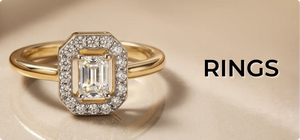
 All Rings
 Solitaire Rings
 Band Rings
 Halo Rings
 Cocktail Rings
 Eternity Rings
 Fashion Ring
 Stack Rings
 Men's Rings
 Vermeil Rings
 All Necklaces
 Necklet
 Mangalsutra
 Solitaire
 Tennis Necklace
 Statement Necklace
 Vermeil Necklace
 Alphabets
 Solitaire Pendant
 Halo Pendant
 Vermeil Pendants
 All Bracelets
 Solitaire Bracelet
 Tennis Bracelet
 Fashion Bracelet
 Mangalsutra
 Vermeil Bracelets
 All Vermeil
 Vermeil Earring
 Vermeil Pendant
 Vermeil Ring
 Vermeil Necklace
 Vermeil Mangalsutra
 Vermeil Bracelets
 Vermeil Bangles
 Vermeil Men’s
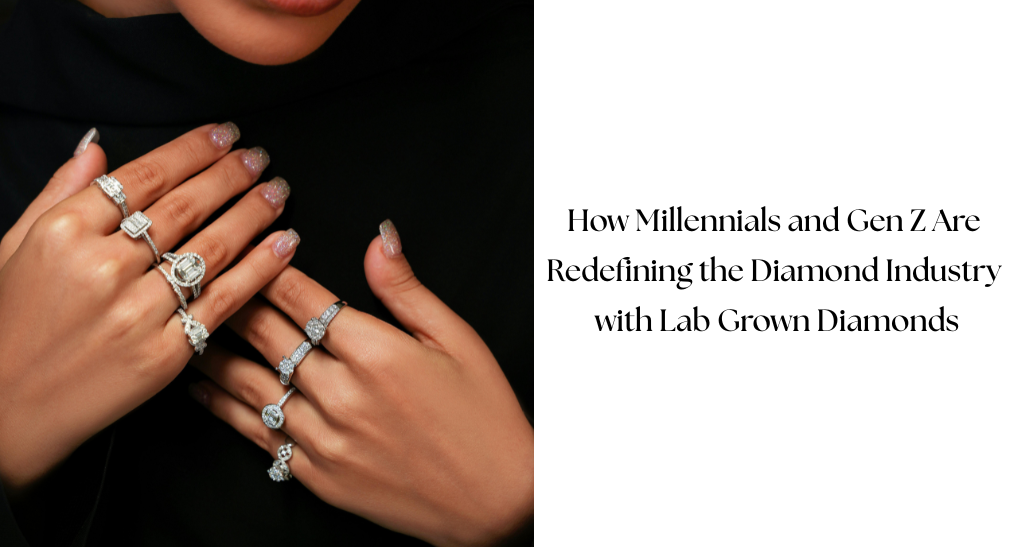
How Millennials and Gen Z Are Redefining the Diamond Industry with Lab Grown Diamonds
- kajal seo
For decades, diamond buying followed a familiar pattern. Natural diamonds were seen as the standard choice for proposals, weddings and important celebrations. Buyers often focused on tradition, rarity and the idea that a diamond should last for generations.
Millennials and Gen Z are approaching diamond jewellery differently. They still care about appearance, quality and meaning, but they are less willing to follow old buying rules without asking questions. They want to understand what they are paying for, where the diamond comes from and whether a better option is available within their budget.
This change has helped lab grown diamonds move from a lesser-known alternative to a serious choice for engagement rings, earrings, pendants, bracelets and other fine jewellery.
They Are Questioning Traditional Diamond-Buying Rules
Older diamond advertising often connected the value of an engagement ring with the amount spent on it. Buyers were encouraged to follow salary-based rules or choose the largest natural diamond they could afford.
Millennial and Gen Z buyers are less likely to accept these ideas without comparison. They often research diamond prices, certificates, quality grades and jewellery policies before making a purchase.
For many young buyers, an engagement ring does not become more meaningful simply because it costs more. The design, proposal and relationship matter more than following a traditional spending formula.
This does not mean they are looking only for the cheapest option. They are looking for a ring that gives them the appearance and quality they want at a price they consider reasonable.
Lab grown diamonds fit naturally into this way of buying because they allow customers to compare specifications instead of paying mainly for natural origin.
Larger Diamonds Are Becoming More Accessible
One of the biggest reasons younger buyers consider lab grown diamonds is the difference in price compared with natural diamonds of similar specifications.
Within the same budget, a buyer may be able to choose a larger lab grown centre diamond, improve the colour or clarity grade, or spend more on the ring design and gold.
For example, someone considering a smaller natural diamond solitaire may find that the same budget gives them more options in lab grown diamonds. They may be able to choose an oval, pear, emerald or round diamond with a more noticeable appearance without increasing their overall spending.
This has changed what buyers expect from engagement rings. A one-carat or larger centre diamond is no longer limited to a very high budget. Younger customers can focus more on the ring they actually want instead of reducing the diamond size only because of price.
However, informed buyers still understand that size is not the only sign of quality. Cut, proportions, colour, clarity, certification and setting remain important.
They Want Clear Information Before Buying
Millennials and Gen Z are used to researching products online before making a decision. They compare brands, read policies, watch product videos and check customer feedback.
The same behaviour now applies to diamond jewellery.
Young buyers often want clear answers to questions such as:
- Is the diamond natural or lab grown?
- Is it CVD or HPHT grown?
- Is the centre diamond certified?
- Does the diamond have a laser inscription?
- Is the mentioned carat for the centre stone or the complete ring?
- Is the gold BIS hallmarked?
- What happens if the ring does not fit?
- What are the return, exchange and buyback terms?
This demand for information is encouraging jewellers to be more transparent. A product page can no longer depend only on attractive photographs and phrases such as “premium quality.” Buyers want actual specifications, measurements, certificates and written policies.
Lab grown diamond brands that clearly provide this information are more likely to earn the confidence of younger customers.
Personal Style Matters More Than Following One Standard
Traditional engagement rings were often centred around a round solitaire in white or yellow gold. That design remains popular, but younger customers are choosing from a wider range of shapes and settings.
Oval, emerald, pear, cushion, radiant and marquise diamonds are now regularly considered for engagement rings. Buyers are also comparing bezel settings, halos, three-stone rings, east-west settings, diamond bands and custom designs.
Some couples choose the ring together rather than keeping the complete purchase a surprise. Others customise the gold colour, diamond shape, setting height or engraving.
This reflects a broader shift in how younger buyers view jewellery. They want the ring to match the wearer’s actual style instead of choosing a design only because it is considered traditional.
Lab grown diamonds make customisation easier within a controlled budget. Buyers may spend less on the centre diamond than they would for a comparable natural stone and use the remaining budget for a setting that feels more personal.
Online Buying Is Becoming More Acceptable
Fine jewellery was once considered something that had to be purchased only after visiting multiple stores. Physical viewing is still important for many buyers, but Millennials and Gen Z are more comfortable starting their search online.
They expect jewellery websites to provide:
- Clear front, side and hand-view images
- Videos showing the exact ring
- Diamond measurements and quality details
- Gold purity and weight
- Size assistance
- Online certificate verification
- Video-call viewing
- Customisation support
- Insured delivery
- Written return and exchange policies
Some customers complete the entire purchase online, while others shortlist designs digitally and visit a store only for the final comparison.
This combination of online research and offline viewing is changing how diamond brands sell. The customer often enters the store already knowing the diamond shape, approximate carat weight and budget they prefer.
Certification Is More Important Than Assumptions
Younger buyers may be open to lab grown diamonds, but they still want proof of what they are purchasing.
A recognised grading report helps confirm that the centre stone is a lab-grown diamond and provides details such as its carat weight, colour, clarity and measurements. A laser-inscribed report number can also help connect the physical diamond with its certificate.
Millennial and Gen Z buyers are less likely to depend only on a salesperson’s verbal assurance. They may verify the report number online, ask to view the inscription and check whether the certificate details are included on the invoice.
This behaviour is making certification and proper disclosure a normal part of diamond buying rather than an optional extra.
It is also reducing confusion between lab grown diamonds and diamond alternatives such as cubic zirconia or moissanite. Younger customers increasingly understand that these are different materials and should not be grouped together.
Attitudes Towards Resale Value Are Changing
Resale value remains an important concern, but not every young buyer treats jewellery primarily as an investment.
Many Millennials and Gen Z customers see an engagement ring as something they plan to wear rather than resell. Their priority may be to get a ring they like now instead of paying significantly more because a diamond formed naturally.
At the same time, buyers are becoming more careful about exchange and buyback terms. They want to know how the gold and diamond will be valued later and whether deductions will apply.
Lab grown diamonds generally have limited resale value compared with their original retail price, so clear communication is important. Buyers should not be promised that the ring will retain its complete value.
For younger customers, a fair purchase is often one where the price, product and future policies are explained honestly from the beginning.
Social Acceptance Has Changed
Earlier, some buyers worried that a lab grown diamond would look visibly different or that other people would immediately recognise it.
Awareness has reduced much of this concern. A lab grown diamond cannot generally be identified by sight alone. Its origin is confirmed through disclosure, certification, laser inscription or specialised testing rather than casual observation.
As more people understand this, the question has shifted from “Will anyone know?” to “Does the origin matter to me?”
For many younger buyers, choosing lab grown is not something they feel the need to hide. They see it as a practical decision that allows them to choose the size, quality and design they prefer.
Jewellery Is Becoming More Personal and Less Rule-Based
Millennials and Gen Z are not rejecting diamond jewellery. They are changing the reasons for buying it and the way it is selected.
A diamond ring can still represent commitment, but it does not need to follow a fixed salary rule. A larger diamond can be chosen for its appearance without pretending it is rare. A couple can select the ring together. An engagement ring can use an unconventional shape, coloured gold or a setting designed around the wearer’s routine.
Lab grown diamonds support this more flexible approach. They give buyers another option rather than forcing them to choose between expensive natural diamonds and non-diamond alternatives.
Final Thoughts
Millennials and Gen Z are making the diamond industry more transparent, comparison-driven and personal. They want clear product details, recognised certification, realistic pricing and jewellery that suits their own preferences.
Lab grown diamonds meet many of these expectations. They offer the appearance and physical properties of diamonds while providing more flexibility in size, quality and ring design within a given budget.
The industry is no longer shaped only by tradition or rarity. It is increasingly influenced by informed buyers who ask questions, compare options and decide what value means to them.


