




 All Earrings
 Stud Earrings
 Drop Earrings
 Solitaire
 Hoop Earrings
 Halo Earrings
 Vermeil Earrings
 Round
Round
 Oval
Oval
 Emerald
 Pear
Pear
 Princess
 Heart
Heart
 Marquise
 All Rings
 Solitaire Rings
 Band Rings
 Halo Rings
 Cocktail Rings
 Eternity Rings
 Fashion Ring
 Stack Rings
 Men's Rings
 Vermeil Rings
 All Necklaces
 Necklet
 Mangalsutra
 Solitaire
 Tennis Necklace
 Statement Necklace
 Vermeil Necklace
 Alphabets
 Solitaire Pendant
 Halo Pendant
 Vermeil Pendants
 All Bracelets
 Solitaire Bracelet
 Tennis Bracelet
 Fashion Bracelet
 Mangalsutra
 Vermeil Bracelets
 All Vermeil
 Vermeil Earring
 Vermeil Pendant
 Vermeil Ring
 Vermeil Necklace
 Vermeil Mangalsutra
 Vermeil Bracelets
 Vermeil Bangles
 Vermeil Men’s
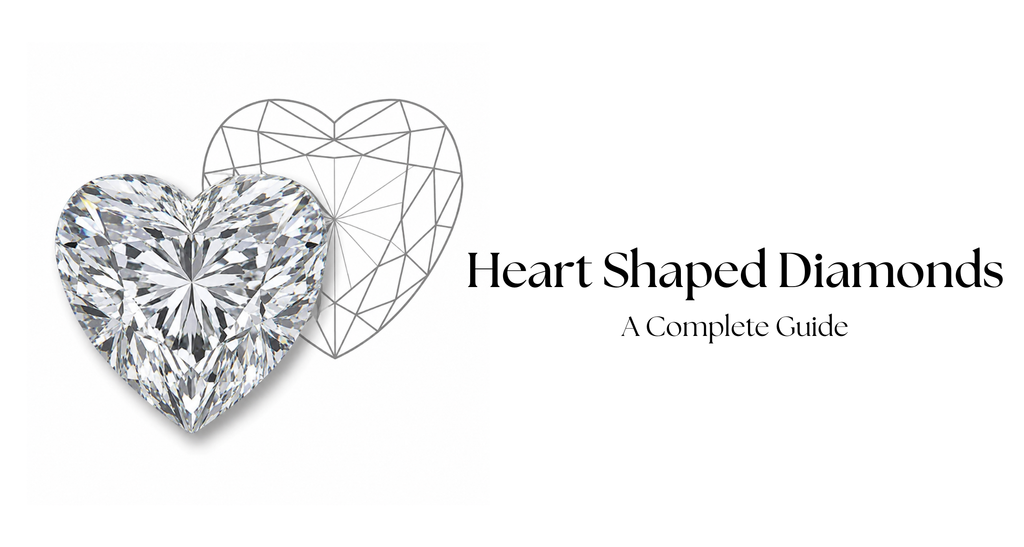
Heart Shaped Diamonds - A Complete Guide
Heart shaped diamonds have a message built into their shape. The two rounded curves, centre dip and pointed tip create a symbol that is directly connected with love, This is why this cut is often chosen for heart shape diamond rings, for engagement, anniversaries and personal jewellery.
But a heart shaped diamond should not be chosen only for its meaning. The shape has to be clear, balanced and easy to recognise. If the curves are uneven, the centre dip is too soft or the point is not placed correctly, the diamond may lose the look that makes it special.
This is why buyers need to look beyond carat weight, colour and clarity. With heart shaped diamonds, the outline, symmetry, size and setting all play an important role in how the diamond appears once it is worn.
In this guide, you will learn what heart shaped diamonds are, how they became popular, what details affect their beauty and what you should check before choosing one.
What Is a Heart Shaped Diamond?

A heart shaped diamond is a fancy diamond cut created in the outline of a heart.
It has two rounded curves at the top, a small dip in the centre and a pointed tip at the bottom. These parts work together to create the heart shape.
Most heart shaped diamonds are cut with brilliant-style facets. This means they are designed to reflect light and create sparkle, similar to other brilliant cuts.
A well-cut heart shaped diamond should look balanced from the top view. The two upper curves should be similar, the centre dip should be visible and the point should sit in the middle.
If these details are not correct, the diamond may look uneven or may lose the heart shape completely.
History of Heart Shaped Diamonds
Heart shaped diamonds have been connected with love, friendship and royal jewellery for centuries.
One of the most well-known historical references goes back to 1562, when Mary, Queen of Scots, is said to have gifted Queen Elizabeth I a heart shaped diamond ring. This helped connect heart shaped diamonds with affection, goodwill and personal meaning.
During earlier centuries, creating a heart shaped diamond was much harder than it is today. Cutters had limited tools, so shaping the two upper curves, the centre dip and the pointed tip required a high level of skill.
If any part was uneven, the diamond would not look like a clear heart. This made the shape more difficult to cut compared with simpler diamond outlines.
As diamond cutting improved, jewellers were able to create heart shaped diamonds with better symmetry, cleaner curves and stronger brilliance.
Even today, the heart shape still needs careful craftsmanship. The design may look simple, but creating a balanced heart shaped diamond is not easy.
What Makes Heart Shaped Diamonds Special?
The biggest difference is the emotion attached to the shape.
Most diamond cuts are admired because of how they reflect light or how they look on the hand. A heart shaped diamond adds another layer because its shape has a direct meaning. It is instantly connected with love, affection and commitment.
That is why this cut is often chosen for jewellery that marks a personal moment. It may be an engagement ring, a pendant from a partner, an anniversary gift or a piece of jewellery bought to celebrate someone special.
A Shape That Already Has Meaning
A heart shaped diamond does not need much explanation.
The shape itself communicates the message. This makes it different from many other diamond cuts, where the meaning usually comes from the occasion or the design.
Even in a simple solitaire setting, a heart shaped diamond feels personal because the centre stone already carries the symbol of love.
A Diamond That Stands Out
Heart shaped diamonds are not as common as round, oval or princess cut diamonds.
This makes them a good choice for someone who wants jewellery that feels different without looking too unusual. The shape is bold enough to be noticed, but still familiar because the heart symbol is easy to recognise.
Technical Details That Matter in Heart Shaped Diamonds
A heart shaped diamond may look simple, but its beauty depends on several small details.
The shape needs balance, clear curves and proper alignment. If one side looks heavier than the other, the heart outline can lose its charm.

Lobes
The lobes are the two rounded curves at the top of the heart.
Both lobes should look equal in size and shape. If one lobe appears larger or higher than the other, the diamond may look unbalanced.
The curves should look smooth, not flat or uneven.
Cleft
The cleft is the small dip between the two upper curves.
This is one of the most important parts of a heart shaped diamond. If the cleft is too shallow, the diamond may look like a rounded triangle instead of a heart. If it is too deep, the top may look too sharp.
A good cleft should be clear enough to define the heart shape without looking too harsh.
Wings
The wings are the curved sides that move from the lobes towards the pointed tip.
Both wings should flow evenly. If one side looks wider or more curved than the other, the diamond can look slightly twisted.
Pointed Tip
The pointed tip forms the bottom of the heart.
It should sit directly in the centre. If the point leans to one side, the whole diamond can look uneven.
Since the tip is more delicate than the rounded parts of the diamond, it should be protected properly in the setting.
Why Symmetry Is So Important
Symmetry is one of the most important things to check in a heart shaped diamond.

The two halves should look almost equal. The lobes should match, the cleft should sit in the centre and the pointed tip should align with the middle of the diamond.
A diamond may have good colour and clarity, but if the shape is uneven, the overall look will not feel right.
This is why a heart shaped diamond should always be checked visually. A certificate can help you understand the diamond’s technical details, but it cannot fully show whether the heart shape looks balanced in real life.
For this cut, visual beauty matters as much as the numbers on the report.
Other Technical Details to Check
After checking the overall symmetry, it is also useful to look at a few technical details that can affect the diamond’s appearance, durability and sparkle.

Table
The table is the flat top surface of the diamond. In a well-cut heart shaped diamond, the table should look properly centred. If it is not centred, the diamond may not reflect light evenly.
Depth
Depth refers to how deep the diamond is from top to bottom. If a heart shaped diamond is too shallow, it may look dull. If it is too deep, it may look smaller from the top than its carat weight suggests.
Girdle
The girdle is the outer edge of the diamond. In heart shaped diamonds, the girdle should not be too thin near the pointed tip because this area is more delicate.
Culet
The culet is the small point or facet at the bottom of the diamond. It should be properly centred. If the culet is off-centre, the diamond can look unbalanced.
Polish and Symmetry Grade
Polish shows how smooth the diamond’s surface is. Symmetry shows how well the facets and shape are aligned. For heart shaped diamonds, symmetry is especially important because both sides of the heart should look balanced.
Inclusions Near the Point
The pointed tip should be checked carefully for visible inclusions. This part is more delicate, so inclusions near the point can affect both appearance and durability.
Ideal Length-to-Width Ratio for Heart Shaped Diamonds
The length-to-width ratio affects how a heart shaped diamond looks.
This ratio compares the length of the diamond with its width. In heart shaped diamonds, many buyers prefer a shape that looks close to equal in length and width.
A balanced heart shaped diamond usually looks full and easy to recognise. If the diamond is too wide, it may look short and heavy. If it is too long, it may lose the natural heart appearance and look stretched.
Many jewellery experts prefer a heart shaped diamond that is close to a 1.00 ratio, although slightly longer shapes can also look attractive depending on personal taste.
The most important thing is not the number alone. The diamond should clearly look like a heart when viewed from above.
Why Size Matters in Heart Shaped Diamonds
Size is more important in heart shaped diamonds than many buyers realise.
In very small diamonds, the heart outline may not be clearly visible. The lobes, centre dip and pointed tip can become difficult to notice, especially once the stone is set in jewellery.
This does not mean small heart diamonds are bad. They can still look beautiful in earrings, pendants or side-stone designs. But if you want the heart shape to be clearly recognised, the diamond should have enough surface area.

Small Heart Diamonds
Small heart shaped diamonds can work well in delicate jewellery.
They are often used in earrings, small pendants or side details. But from a distance, the heart shape may not be very clear.
Larger Heart Diamonds
For engagement rings or centre-stone jewellery, a slightly larger heart shaped diamond usually works better.
The lobes, cleft and pointed tip are easier to see, so the heart shape looks more defined. This is why buyers should not only focus on carat weight. The visible outline matters just as much.
Sparkle and Cut Quality
Heart shaped diamonds can sparkle beautifully when they are cut well.
Because they usually use brilliant-style faceting, they can reflect light in a lively way. A good heart shaped diamond should look bright across the surface and should not have a dull or lifeless centre.
But sparkle should not come at the cost of shape.
Sometimes a diamond may look bright, but the heart outline may not be clean. In other cases, the shape may look good, but the diamond may not reflect light well.
A good heart shaped diamond needs both.
Shape and Sparkle Should Work Together
The best heart shaped diamond is one where the outline looks clear and the stone still has strong brilliance.
A diamond that looks good only on paper may not always look beautiful in real life. This is why photos, videos or in-person viewing are useful when buying a heart shaped diamond.
Best Settings for Heart Shaped Diamonds
The setting should protect the diamond and allow the heart shape to remain visible.
A heart shaped diamond already has a strong identity, so the setting does not always need to be heavy or complicated. The right setting should support the shape, not hide it.
Solitaire Setting
A solitaire setting keeps the focus on the centre diamond.
This is one of the cleanest choices for a heart shaped diamond because it allows the shape to stand out clearly.
Halo Setting
A halo setting surrounds the centre diamond with smaller diamonds.
This can make the diamond appear larger and add extra sparkle. But the halo should follow the heart outline properly. If the halo is too thick, it can make the design look heavy.
Pendant Setting
Heart shaped diamonds work very well in pendants.
The shape naturally suits necklaces because it already carries a romantic meaning. Even a simple heart diamond pendant can feel complete without extra design.
Protective Prong Setting
The pointed tip of a heart shaped diamond should be protected.
A prong at the tip helps reduce the risk of damage because this part is more delicate than the rounded areas of the diamond.
Who Should Choose a Heart Shaped Diamond?
A heart shaped diamond is best for someone who likes jewellery with emotion and symbolism.
It is not the most traditional diamond shape, so it may not suit everyone. Some people prefer classic cuts like round, oval or cushion because they feel more subtle. A heart shaped diamond is more expressive.
This shape is a strong choice for someone who likes romantic designs, meaningful jewellery and pieces that feel personal. It can also work well for someone who does not want the same engagement ring style that many people already have.
Best For Romantic Jewellery
Heart shaped diamonds work especially well for jewellery that carries emotional value.
They are often chosen for engagement rings, anniversary gifts, Valentine’s Day jewellery, promise rings, pendants and personalised gifts.
For gifting, the shape makes the message clear. You do not have to explain the meaning of the design because the diamond already says it.
Not For Everyone
A heart shaped diamond is expressive, so it should match the wearer’s taste.
Someone who prefers minimal or very classic jewellery may prefer a round, oval or emerald cut diamond. But for someone who likes romantic and noticeable designs, the heart shape can be a strong choice.
Heart Shaped Diamond Engagement Rings
Heart shaped diamond engagement rings are chosen by people who want a ring with a clear romantic message.
They are not as common as round, oval or princess cut engagement rings, which makes them feel more personal. The shape already carries meaning, so the design does not need to be very complicated.
However, this shape should match the wearer’s taste.
Some people love heart shaped diamonds because they feel romantic and expressive. Others may prefer a more classic shape for daily wear. Before choosing a heart shaped engagement ring, it is important to understand the style of the person who will wear it.
A well-balanced heart shaped diamond in a simple setting can look elegant, personal and memorable.
Common Mistakes to Avoid
A heart shaped diamond should be selected carefully because small details can change the whole look.
Choosing Only Because of the Shape
One common mistake is choosing the diamond only because it is heart shaped.
The outline should still be checked carefully. If the lobes are uneven or the centre dip is not clear, the diamond may not look attractive after setting.
Choosing a Very Small Size
Another mistake is choosing a very small heart shaped diamond when the goal is to show the heart shape clearly.
In smaller sizes, the outline can become harder to recognise.
Ignoring the Setting
The setting should protect the pointed tip and should not hide the heart outline.
If the setting covers too much of the diamond, the heart shape may not be visible properly.
Depending Only on the Certificate
A certificate can tell you the carat weight, colour and clarity, but it cannot fully show whether the heart shape looks balanced.
With heart shaped diamonds, visual checking is very important.
Heart Shaped Diamonds vs Other Diamond Shapes
A heart shaped diamond has a very different personality from other cuts.
- Compared with a round diamond, it feels more romantic and symbolic.
- Compared with an oval diamond, it has a stronger visual identity.
- Compared with a princess cut, it looks softer and more emotional.
- Compared with a pear shaped diamond, it carries a more direct meaning of love.
This is why heart shaped diamonds are usually chosen for emotional value as much as appearance.
They may not be the safest choice for someone who wants a very traditional design, but they are a strong choice for someone who wants jewellery with personal meaning.
Famous Heart Shaped Diamonds
Heart shaped diamonds are not only used in romantic jewellery. Some of the world’s famous diamonds have also been cut in this shape, which shows that the heart cut is valued for more than its symbolism.

The Blue Heart Diamond
The Blue Heart Diamond is one of the most recognised heart shaped diamonds in the world.
It is a 30.62 carat blue diamond and is part of the Smithsonian’s National Gem Collection. Its deep blue colour, heart shape and historic importance make it one of the finest examples of this diamond cut.
The Graff Venus
The Graff Venus is one of the most remarkable modern heart shaped diamonds.
It weighs 118.78 carats and is known for its D colour, flawless clarity and Type IIa quality. Because of its size and quality, it is considered one of the most important heart shaped diamonds created in modern fine jewellery.
The Heart of Eternity
The Heart of Eternity is a 27.64 carat Fancy Vivid Blue heart shaped diamond.
Its rare colour, clear heart shape and connection with the De Beers Millennium Jewels collection make it one of the most memorable blue heart shaped diamonds.
These famous diamonds show that the heart shape is not only romantic. When it is cut with skill, it can also be used for some of the world’s most valuable and memorable diamonds.
Final Thoughts
A heart shaped diamond is one of the most meaningful diamond shapes.
Its beauty is not only in its sparkle, but also in the message it carries. The shape represents love in a direct and recognisable way, which makes it suitable for romantic jewellery and special gifts.
But the diamond should still be chosen carefully. The two upper curves should look balanced, the centre dip should be clear and the pointed tip should sit in the middle.
When the shape is well-cut and the setting supports it properly, a heart shaped diamond can look romantic, bright and personal without needing a heavy design.
For someone who wants a diamond that feels emotional and different from common styles, the heart shaped diamond remains a strong choice.


