




 All Earrings
 Stud Earrings
 Drop Earrings
 Solitaire
 Hoop Earrings
 Halo Earrings
 Vermeil Earrings
 Round
Round
 Oval
Oval
 Emerald
 Pear
Pear
 Princess
 Heart
Heart
 Marquise
 All Rings
 Solitaire Rings
 Band Rings
 Halo Rings
 Cocktail Rings
 Eternity Rings
 Fashion Ring
 Stack Rings
 Men's Rings
 Vermeil Rings
 All Necklaces
 Necklet
 Mangalsutra
 Solitaire
 Tennis Necklace
 Statement Necklace
 Vermeil Necklace
 Alphabets
 Solitaire Pendant
 Halo Pendant
 Vermeil Pendants
 All Bracelets
 Solitaire Bracelet
 Tennis Bracelet
 Fashion Bracelet
 Mangalsutra
 Vermeil Bracelets
 All Vermeil
 Vermeil Earring
 Vermeil Pendant
 Vermeil Ring
 Vermeil Necklace
 Vermeil Mangalsutra
 Vermeil Bracelets
 Vermeil Bangles
 Vermeil Men’s
Cushion Cut Diamond - A Complete Guide
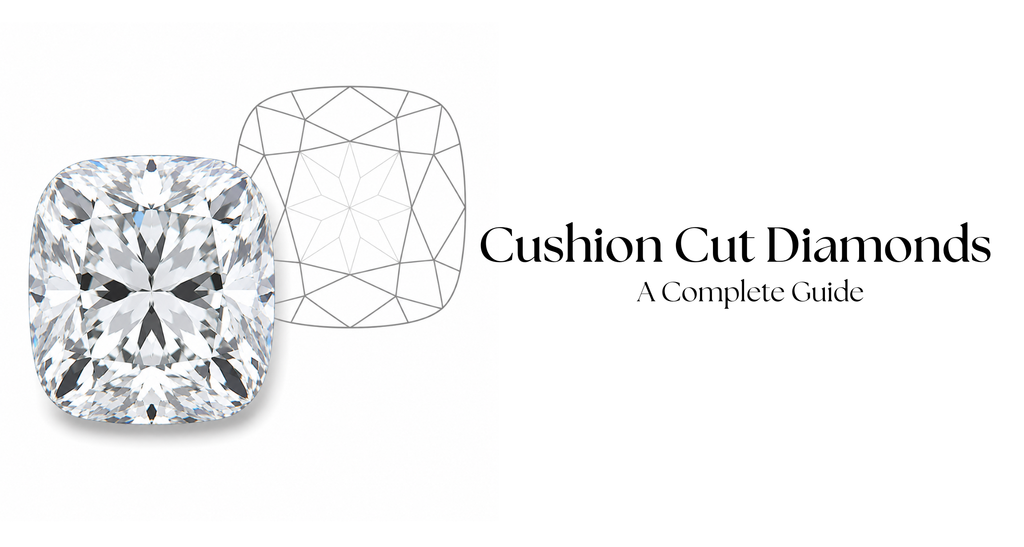
A cushion cut diamond is known for its soft square or rectangular shape with rounded corners. Its outline looks less sharp than a princess cut and less circular than a round diamond, which gives it a balanced look between classic and modern diamond styles.
This diamond shape is often chosen by buyers who want sparkle, but not in the same sharp way as a round brilliant or princess cut. Cushion cuts have their own personality. Some show broad flashes of light, while others have a smaller, crushed-ice sparkle pattern. This is why two cushion cut diamonds with the same carat weight can look very different.
But a cushion cut diamond should not be selected only because the shape looks attractive. Its beauty depends on the outline, cut style, length-to-width ratio, depth, table, symmetry and how the facets reflect light.
In this guide, you will learn what cushion cut diamonds are, how they became popular, what technical details matter and what you should check before choosing one.
What Is a Cushion Cut Diamond?
A cushion cut diamond is a fancy diamond shape with a square or rectangular outline and rounded corners.
The name comes from its pillow-like shape. Unlike princess cut diamonds, which have sharp corners, cushion cut diamonds have softer edges. This gives the stone a smoother appearance on the hand.
Most cushion cut diamonds are cut with brilliant-style facets. These facets help the diamond reflect light and create sparkle. However, cushion cuts are not all cut in the same way. Some have larger facets that create broad flashes of light, while others have extra facets that create a more scattered sparkle.
This variety is one of the main reasons cushion cut diamonds are popular. Buyers can choose a cushion that looks more antique, more modern, more square or more elongated, depending on personal style.
History of Cushion Cut Diamonds
Cushion cut diamonds have a long history and are closely connected with old mine cut diamonds.
Earlier cushion-style diamonds were cut by hand, often with larger facets, higher crowns and deeper pavilions. These older cuts were designed for the lighting conditions of their time, especially candlelight. Instead of sharp, modern brilliance, they produced broader flashes of light.
As diamond cutting tools improved, the cushion shape also changed. Cutters began refining the outline, improving symmetry and adjusting facet patterns to increase light performance.
Modern cushion cut diamonds still keep the soft outline that made older cushion styles popular, but they can now offer much stronger brilliance.
This is why cushion cuts feel interesting to many buyers. They carry a vintage connection, but they can still look fresh in modern rings and jewellery.
What Makes Cushion Cut Diamonds Different?
A cushion cut diamond is different because of its shape, corners and sparkle pattern.
Soft Rounded Corners
The rounded corners are one of the easiest ways to recognise a cushion cut diamond.
These corners make the diamond look softer than a princess cut. They also reduce the sharpness that comes with square diamond shapes.
Square or Rectangular Outline
Cushion cut diamonds can be square or slightly rectangular.
A square cushion gives a balanced look, while an elongated cushion can make the finger appear longer. This gives buyers more flexibility when choosing a ring style.
Different Sparkle Styles
Not every cushion cut sparkles in the same way.
Some cushion cuts show larger flashes of light. Others have a crushed-ice look, where the sparkle appears smaller and more scattered.
This is why cushion cut diamonds should always be checked visually before buying.
Cushion Brilliant vs Cushion Modified Brilliant
One of the most important things to understand is that cushion cut diamonds can have different facet styles.
Cushion Brilliant
A cushion brilliant diamond usually has larger facets.
These facets create broader flashes of light and can give the diamond a softer sparkle. This style is often preferred by buyers who like a more antique-inspired look.
A cushion brilliant may not always look as sparkly as a round brilliant diamond, but it can show beautiful fire and character when cut well.
Cushion Modified Brilliant
A cushion modified brilliant has extra facets.
These extra facets create a more broken sparkle pattern, often called a crushed-ice effect. The diamond may look brighter in some lighting, but the sparkle can appear more scattered.
Some buyers like this look because it feels modern. Others prefer the larger flashes of a cushion brilliant.
Neither style is automatically better. The right choice depends on the type of sparkle you prefer.
Square Cushion vs Elongated Cushion
The length-to-width ratio decides whether a cushion cut diamond looks square or elongated.
A square cushion usually has a ratio close to 1.00. This gives the diamond a balanced, compact look.
An elongated cushion has a higher ratio and looks more rectangular. This can make the diamond appear longer on the finger.
Both styles can look good, but they create different effects.
A square cushion feels more classic.
An elongated cushion can feel more graceful on the hand.
The best choice depends on your personal preference and the ring design.
Main Parts of a Cushion Cut Diamond
A cushion cut diamond may look simple, but a few shape details make a big difference.
Corners
The corners should look smooth and rounded.
If the corners are too sharp, the diamond may look closer to a princess cut. If they are too round, the diamond may lose its cushion shape.
Sides
The sides should look even and balanced.
Some cushion diamonds have slightly curved sides, while others look more straight. Both can work, but the outline should not look uneven.
Table
The table is the flat top surface of the diamond.
A well-centred table helps the diamond reflect light evenly. If the table looks too large or poorly placed, the diamond may lose visual balance.
Depth
Depth refers to how deep the diamond is from top to bottom.
If a cushion cut diamond is too deep, it may look smaller from the top than its carat weight suggests. If it is too shallow, it may lose brightness.
Girdle
The girdle is the outer edge of the diamond.
In cushion cut diamonds, the girdle should not be extremely thin because it can affect durability. It should also not be extremely thick because that can hide weight where it is not visually useful.
Key Technical Features of Cushion Cut Diamonds
Cushion cut diamonds can look very different from one another, so a few technical details should be checked before buying.
Facet Pattern
The facet pattern affects how the diamond reflects light.
Some cushion cut diamonds have larger facets that create broad flashes. Others have extra facets that create a smaller, crushed-ice type sparkle.
This is why two cushion cut diamonds with the same carat weight can look completely different.
Crown
The crown is the upper part of the diamond above the girdle.
A well-cut crown helps the diamond return light properly and can add fire. If the crown is too flat, the diamond may not show as much life.
Pavilion
The pavilion is the lower part of the diamond below the girdle.
If the pavilion is too deep, the diamond may look smaller from the top. If it is too shallow, light may not reflect properly.
Table
The table is the flat top surface of the diamond.
A table that looks too large can make the diamond appear flat. A well-balanced table helps the cushion cut maintain both shape and sparkle.
Depth
Depth affects both appearance and face-up size.
A cushion cut diamond that is too deep may hide weight at the bottom, making it look smaller from above. A diamond that is too shallow may lose brightness.
Girdle
The girdle is the outer edge of the diamond.
In cushion cut diamonds, the girdle can be thicker near the corners. This is normal, but an extremely thin girdle can make the diamond more vulnerable to damage.
Culet
The culet is the small point or facet at the bottom of the diamond.
In antique-style cushion cuts, the culet may be more visible. In modern cushion cuts, the culet is usually smaller and less noticeable.
Polish and Symmetry
Polish shows how smooth the diamond’s surface is, while symmetry shows how well the facets and outline are aligned.
For cushion cut diamonds, symmetry is important because uneven sides or corners can make the shape look off.
Why Cut Quality Matters
Cut quality is very important in cushion cut diamonds because there is no single fixed look for this shape.
A cushion cut can be square, elongated, antique-style, modern, brilliant or modified. Because of this variety, the diamond should not be judged only by numbers.
A certificate can show carat weight, colour, clarity, polish and symmetry. But it cannot fully show how beautiful the sparkle pattern looks in real life.
Some cushion cut diamonds look bright and lively. Others may look dull in the centre or too busy across the surface.
This is why visual checking is important. Clear photos, videos and real-life viewing can help you understand whether the diamond has the kind of sparkle you want.
Sparkle and Fire in Cushion Cut Diamonds
Cushion cut diamonds are known for their fire.
Fire means the coloured flashes of light that appear when light passes through the diamond. Because of their facet arrangement, many cushion cuts can show attractive flashes of colour.
The sparkle style depends on the cut.
A cushion brilliant usually gives broader flashes.
A cushion modified brilliant usually gives a smaller, scattered sparkle.
Some buyers prefer the broad flashes because they feel more vintage. Some prefer the crushed-ice look because it gives more surface activity.
The important thing is to choose a diamond that looks bright across the stone and does not have a lifeless centre.
Colour in Cushion Cut Diamonds
Colour can be more noticeable in some cushion cut diamonds than in round brilliant diamonds.
This does not mean you always need the highest colour grade. Many buyers are happy with near-colourless grades, especially when the diamond is set in yellow gold or rose gold.
For white gold or platinum settings, some buyers prefer a higher colour grade because the metal can make warmth more visible.
The right colour grade depends on the diamond size, setting metal and personal preference.
A slightly warmer cushion cut can still look beautiful if the cut is strong and the setting suits it.
Clarity in Cushion Cut Diamonds
Clarity is also important, but it should be judged practically.
A cushion cut diamond can hide some small inclusions because of its brilliant-style facets. However, larger inclusions near the centre may still be visible.
Instead of chasing the highest clarity grade, buyers should focus on whether the diamond is eye-clean.
Eye-clean means the inclusions are not easily visible to the naked eye when the diamond is viewed normally.
This can help buyers choose a beautiful diamond without spending extra on clarity grades that may not make a visible difference.
Best Settings for Cushion Cut Diamonds
Cushion cut diamonds are versatile and work well in many jewellery settings.
Solitaire Setting
A solitaire setting keeps the focus on the cushion cut diamond.
This is a good choice if you want the shape and sparkle of the centre stone to stand out clearly.
Halo Setting
A halo setting surrounds the cushion cut diamond with smaller diamonds.
This can make the centre diamond look larger and add more sparkle around the outline. Cushion cut diamonds are often used in halo rings because their rounded corners work well with this style.
Three-Stone Setting
A three-stone setting gives the ring a more detailed look.
The side stones should be chosen carefully so they do not make the cushion diamond look crowded.
Vintage-Inspired Setting
Cushion cut diamonds work well in vintage-inspired designs because of their connection with antique diamond cuts.
Milgrain details, delicate side stones and warmer metals can support this look nicely.
Who Should Choose a Cushion Cut Diamond?
A cushion cut diamond is a good choice for someone who wants a diamond that feels classic but not too common.
It suits buyers who like rounded corners, soft outlines and a less sharp square shape.
It is also a good option for people who like vintage-inspired jewellery but still want a modern diamond.
A cushion cut can work well for engagement rings, solitaire rings, halo rings, pendants and earrings.
This shape is especially suitable for someone who wants a diamond with character rather than a standard look.
Common Mistakes to Avoid
Cushion cut diamonds can look very different from one another, so buyers should avoid a few common mistakes.
Choosing Only by Carat Weight
A cushion cut diamond with higher carat weight does not always look bigger.
If the diamond is too deep, much of the weight may sit below the surface. This can make it look smaller from the top.
Ignoring the Sparkle Pattern
Some cushion cuts have broad flashes, while others have a crushed-ice effect.
Both can look good, but they are very different. Buyers should compare both styles before choosing.
Not Checking the Ratio
A cushion cut can be square or elongated.
If you prefer a square look, check that the diamond does not appear too rectangular. If you prefer an elongated look, make sure the shape still looks balanced.
Depending Only on the Certificate
The certificate is important, but it does not show everything.
With cushion cut diamonds, the visual appearance matters a lot. Always check real images or videos before making a final decision.
Cushion Cut vs Other Diamond Shapes
A cushion cut diamond has a different personality from many other shapes.
Compared with a round diamond, it usually feels softer and more vintage-inspired.
Compared with a princess cut, it has rounded corners and a gentler outline.
Compared with an oval diamond, it looks more compact and structured.
Compared with a radiant cut, it can look softer, although some cushion modified diamonds may have a sparkle pattern that feels similar to radiant cuts.
This is why cushion cut diamonds are often chosen by people who want a shape that sits between traditional and distinctive.
Final Thoughts
A cushion cut diamond is loved for its rounded corners, soft outline and variety of sparkle styles.
It can look antique-inspired or modern depending on the cut style, ratio and setting. This flexibility is one of the biggest reasons the cushion cut has remained popular for so long.
But this diamond should be chosen carefully. The outline, depth, table, ratio, sparkle pattern and visual balance all affect how the diamond looks in real life.
Carat weight, colour and clarity matter, but with cushion cut diamonds, the way the stone looks to the eye matters just as much.
When chosen well, a cushion cut diamond can feel warm, distinctive and suitable for both classic and modern jewellery designs.


