






 All Earrings
 Stud Earrings
 Drop Earrings
 Solitaire
 Hoop Earrings
 Halo Earrings
 Vermeil Earrings
 Round
 Oval
 Emerald
 Pear
 Princess
 Heart
 Marquise
 All Rings
 Solitaire Rings
 Band Rings
 Halo Rings
 Cocktail Rings
 Eternity Rings
 Fashion Ring
 Stack Rings
 Men's Rings
 Vermeil Rings
 All Necklaces
 Necklet
 Mangalsutra
 Solitaire
 Tennis Necklace
 Statement Necklace
 Vermeil Necklace
 Alphabets
 Solitaire Pendant
 Halo Pendant
 Vermeil Pendants
 All Bracelets
 Solitaire Bracelet
 Tennis Bracelet
 Fashion Bracelet
 Mangalsutra
 Vermeil Bracelets
 All Vermeil
 Vermeil Earring
 Vermeil Pendant
 Vermeil Ring
 Vermeil Necklace
 Vermeil Mangalsutra
 Vermeil Bracelets
 Vermeil Bangles
 Vermeil Men’s
Why Are Prong Settings So Popular for Round Diamond Rings
A round diamond can look quite different depending on the type of setting used. From classic four-prong designs to detailed claw and tulip styles, each option changes how the diamond is held and presented. The choice also affects the ring's overall appearance, metal visibility and support.
Here are the different prong settings to consider when choosing a round diamond ring.
1. Why Do Prong Settings Work Well with Round Diamonds?
Round brilliant diamonds are cut to maximise light performance through carefully arranged facets. Their circular shape also makes them suitable for different prong arrangements.
Prongs hold the diamond at selected points around its edge, leaving much of the stone visible from above. This gives buyers a clear view of the diamond's shape, sparkle and overall appearance.
Another reason for their popularity is design flexibility. Prongs can be made in different shapes, sizes, and arrangements, allowing you to create anything from a simple solitaire ring to a more detailed engagement ring.
2. Different Types of Prong Settings for Round Diamond Rings
The appearance of a prong setting depends on the number, shape and arrangement of its metal tips. Here are some common styles to consider.
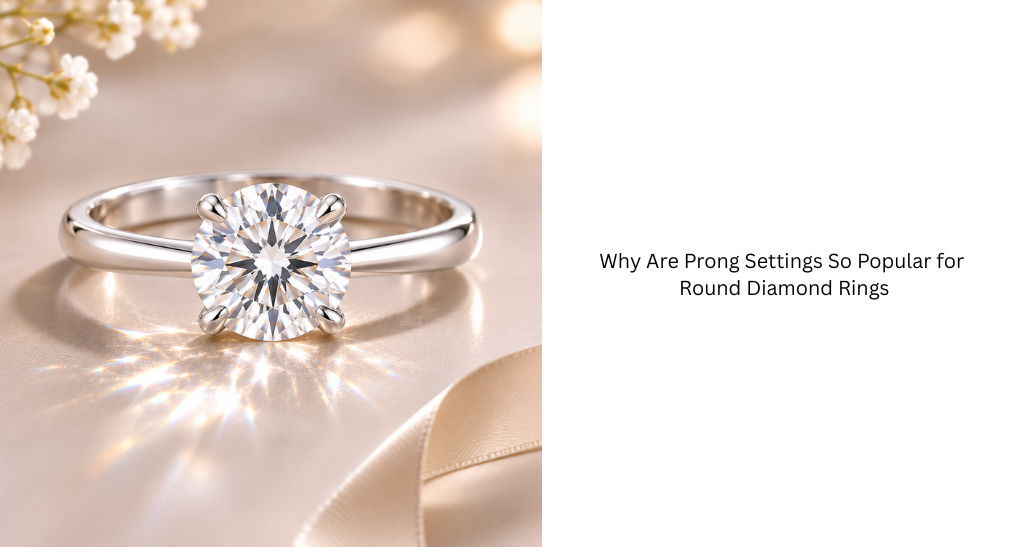
Four-Prong Setting

A four-prong setting uses four metal tips positioned around the diamond. It creates an open appearance and leaves more of the stone's edge visible.
This style is a good choice for people who want a clean solitaire design without too much visible metal. However, the prongs need to be properly positioned and maintained to keep the diamond secure.
Six-Prong Setting

A six-prong setting holds the diamond at six points around its circumference. It is often associated with traditional solitaire engagement rings.
Compared with a four-prong design, it offers additional contact points and distributes the holding structure around more of the diamond's edge. The extra metal may also create a slightly more defined outline.
Claw Prong Setting

Claw prongs have pointed, tapered tips that curve over the diamond's edge. Their fine shape creates a neat appearance while keeping metal coverage relatively minimal.
They are often chosen for round solitaire rings because they allow the diamond to remain the main focus. Claw prongs can also be used in four-prong and six-prong arrangements.
Double-Claw Prong Setting

In a double-claw design, each prong position features two smaller tips instead of one. For example, a four-position setting may have eight individual tips.
This design adds detail around the diamond and creates a distinctive finish. It is a suitable option for buyers who want something more decorative than a standard solitaire.
Ball or Button Prong Setting

Ball prongs have rounded metal tips that sit over the diamond's edge. Unlike pointed claw prongs, they create a softer and slightly traditional appearance.
This style works well in classic ring designs where the prongs are intended to be visible as part of the overall look.
Tab Prong Setting

Tab prongs use broader, flatter sections of metal to hold the diamond. They create a more noticeable metal finish than delicate claw prongs.
Depending on their size and placement, tab prongs can give a round solitaire ring a simple yet distinctive appearance.
Compass Prong Setting

A compass setting positions four prongs at the north, south, east and west points of the diamond. This gives the stone a clearly defined orientation within the ring.
It is a design choice for people who prefer a slightly different look from the traditional four-prong arrangement.
Tulip Prong Setting

A tulip setting features a decorative structure beneath the diamond that resembles flower petals. The metal rises towards the stone to support it, creating a floral appearance when viewed from the side.
It adds detail beneath the centre diamond without necessarily changing the simple look from above.
3. Different Structures Used in Prong-Set Rings
Apart from the shape and number of prongs, the structure supporting the diamond also affects the ring's appearance.

Cathedral Setting: The shoulders of the band rise towards the centre stone, creating an elevated profile. This design gives the ring a more traditional engagement ring appearance.

Basket Setting: A basket setting uses a metal framework beneath the diamond. The prongs extend from this structure to hold the stone, while the basket provides additional support around its lower portion.

Peg-Head Setting: In this design, the diamond sits in a separate setting head attached to the band. It allows the head and shank to be designed or selected separately, offering more flexibility in ring construction.
These are different construction styles rather than separate prong-tip shapes. They can be combined with different prong arrangements.
4. Four-Prong vs Six-Prong: Which Should You Choose?
Both settings work well with round brilliant diamonds, but they create different visual effects.
A four-prong setting has fewer visible metal points, giving the diamond a more open appearance. It is suitable for people who prefer a clean and minimal design.
A six-prong setting provides more contact points around the diamond and creates a more traditional look. It can be a suitable choice for buyers who prefer additional prong support.
The right option depends on the diamond's dimensions, setting construction and personal preference. Neither setting should be considered automatically more secure without looking at the quality and condition of its prongs.
5. What Should You Consider Before Choosing a Prong Setting?
Before selecting a prong-set round diamond ring, consider a few practical details:
-
Prong thickness: Prongs should be strong enough to hold the diamond without covering too much of its surface.
-
Diamond size: Larger diamonds may require a different setting structure and carefully designed support.
-
Metal choice: Gold and platinum can both be used for prong settings, but their properties and maintenance requirements differ.
-
Everyday wear: Consider whether the prongs are likely to catch on clothing or other materials.
-
Maintenance: Prongs should be inspected periodically by a qualified jeweller to check for wear, loosening or damage.
A well-designed setting should balance the visibility of the diamond with the support it needs.
Final Thoughts
Prong settings remain popular for round diamond rings because they offer a clear view of the centre stone and allow plenty of room for different designs. Whether you prefer a classic four-prong solitaire, a traditional six-prong setting or detailed claw and tulip designs, there are several ways to personalise the ring.
The best setting is one that suits the diamond's proportions, holds it securely and matches your preferred style. Paying attention to both the prong design and the supporting structure will help you choose a ring that looks good and is suitable for regular wear.


