










 All Earrings
 Stud Earrings
 Drop Earrings
 Solitaire
 Hoop Earrings
 Halo Earrings
 Vermeil Earrings
 Round
Round
 Oval
Oval
 Emerald
 Pear
Pear
 Princess
 Heart
Heart
 Marquise
 All Rings
 Solitaire Rings
 Band Rings
 Halo Rings
 Cocktail Rings
 Eternity Rings
 Fashion Ring
 Stack Rings
 Men's Rings
 Vermeil Rings
 All Necklaces
 Necklet
 Mangalsutra
 Solitaire
 Tennis Necklace
 Statement Necklace
 Vermeil Necklace
 Alphabets
 Solitaire Pendant
 Halo Pendant
 Vermeil Pendants
 All Bracelets
 Solitaire Bracelet
 Tennis Bracelet
 Fashion Bracelet
 Mangalsutra
 Vermeil Bracelets
 All Vermeil
 Vermeil Earring
 Vermeil Pendant
 Vermeil Ring
 Vermeil Necklace
 Vermeil Mangalsutra
 Vermeil Bracelets
 Vermeil Bangles
 Vermeil Men’s
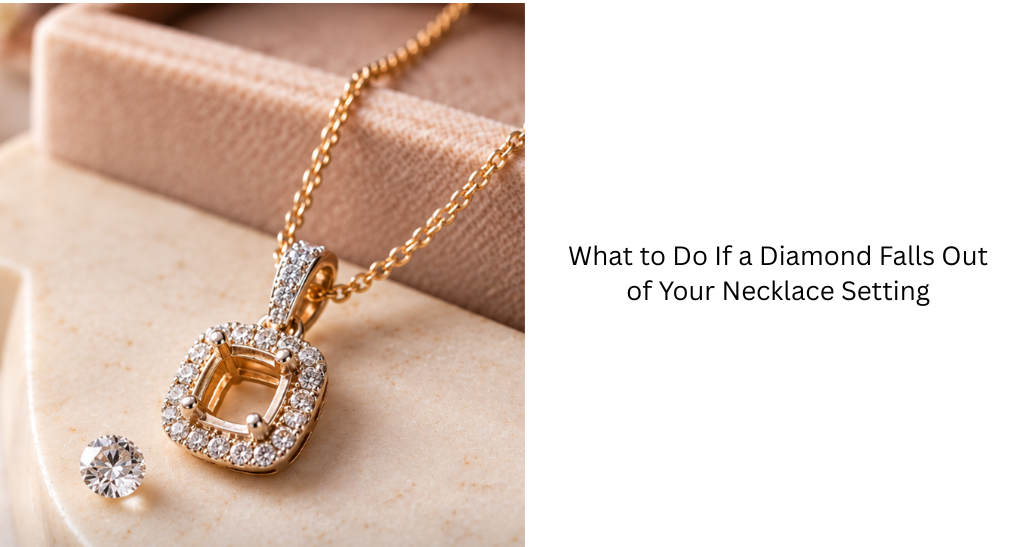
What to Do If a Diamond Falls Out of Your Necklace Setting
Finding an empty space where a diamond should be can be worrying, especially when it happens to a necklace you wear regularly. You might notice the missing stone while getting dressed, cleaning your jewellery or taking your necklace off at the end of the day.
If a diamond falls out of your necklace setting, the first priority is to protect the jewellery and locate the stone if possible. The next step is to understand why it came loose and have the setting repaired before wearing the necklace again. Trying to push the stone back into place yourself can cause further damage or make the diamond easier to lose.
What Should You Do First If a Diamond Falls Out?
The steps you take immediately after discovering a missing diamond can make a difference, particularly if the stone is still nearby.
1. Stop Wearing the Necklace
Take the necklace off carefully and avoid pulling or shaking the chain. If the setting has a broken prong or a damaged section, further movement could loosen other stones or cause additional damage.
Place the necklace on a soft, clean surface. Avoid putting it directly into a pocket or loose handbag, where the setting could catch on fabric or come into contact with other objects.
If other diamonds are set close to the missing stone, do not assume they are secure. A jeweller should check the surrounding settings as well.
2. Look for the Missing Diamond
If you have just noticed the empty setting, check the area where you were wearing or removing the necklace. The diamond may have fallen onto clothing, a dressing table, a bathroom counter or the floor.
Use a bright light to inspect the area carefully. Diamonds are small, and their shape can make them difficult to spot on patterned carpets or reflective surfaces.
If you suspect the stone has fallen near a sink, avoid running water or rinsing anything down the drain. Check the surrounding area before cleaning it.
Once found, place the diamond in a small, secure container. Avoid wrapping it loosely in tissue, as the stone could be accidentally discarded.
3. Keep the Necklace and Diamond Together
If you find the stone, store it separately in a secure container and keep it with the necklace. This makes it easier for the jeweller to assess the stone and determine whether it can be reset.
If you cannot find the diamond, keep the necklace anyway. A jeweller can inspect the empty setting and may be able to estimate the missing stone's dimensions and specifications.
If the necklace came with a diamond grading report or product documentation, keep those details available. They may help establish the stone's original size, cut and other characteristics.
Why Do Diamonds Fall Out of Necklace Settings?
A diamond does not usually fall out simply because the necklace is old. Several factors can affect how securely a stone sits in its setting.
1. A Prong Has Bent or Broken
Prong settings use small metal claws to hold a diamond in place. These prongs can become bent, worn or damaged after repeated contact with clothing, other jewellery or hard surfaces.
When one or more prongs no longer hold the stone securely, the diamond may begin to move and can eventually fall out.
What to do: Have the setting examined by a jeweller. Depending on the damage, the prongs may need reshaping, rebuilding or replacement before the diamond can be reset.
2. The Setting Has Become Loose
A diamond can loosen even when the setting does not show obvious damage. Everyday wear may gradually affect the metal holding the stone, particularly in jewellery that is frequently handled or exposed to knocks.
You may notice a slight movement or hear a faint sound when the necklace is handled. However, do not shake the necklace or repeatedly touch the stone to test it.
What to do: Stop wearing the necklace and arrange an inspection. A jeweller can assess whether the stone is loose, whether the setting is worn and what repair is needed.
3. The Necklace Has Been Knocked or Caught on Something
A necklace can catch on a collar, scarf, hairbrush or clothing. A sudden pull or impact may damage the setting, even if the necklace looks fine from the outside.
This can happen with delicate pendants because the setting and its metal components may be small.
What to do: Consider whether the necklace may have caught on something or been knocked recently. Tell the jeweller if you remember an incident, as this may help identify the damaged area.
4. The Setting Is Worn or Damaged
Different settings hold diamonds in different ways. Prong settings use individual metal claws, while bezel settings surround the stone with a metal rim. Other designs use small shared prongs or multiple stones set close together.
The type of setting affects how a stone is secured and what repairs may be needed. A damaged prong setting, for example, requires a different repair from a bent bezel edge.
What to do: Have the setting assessed according to its construction. Avoid attempting to bend the metal back into place, as this can weaken the setting or scratch the diamond.
Can a Diamond That Has Fallen Out Be Reset?
In many cases, yes. If the diamond has been recovered and is undamaged, a jeweller may be able to reset it after repairing the setting.
However, simply putting the diamond back into the empty space is not enough. The metal holding it must be secure, and the setting must be suitable for the stone's size and shape.
The jeweller will generally assess:
-
Whether the diamond is chipped, cracked or otherwise damaged.
-
Whether the original setting can hold the stone securely.
-
Whether any prongs, metal edges or connecting components need repair.
-
Whether neighbouring diamonds have become loose.
-
Whether the existing setting needs to be rebuilt or replaced.
If the original stone cannot be recovered, a replacement may be possible. The replacement should match the setting's requirements, including the stone's dimensions, shape and depth. A stone with the same carat weight may not necessarily fit because diamonds with equal carat weights can have different measurements.
Should You Repair the Setting or Replace the Diamond?
The right option depends on whether the original diamond is available and whether the setting can be repaired.
1. If the diamond is recovered: A jeweller can check the stone for damage and determine whether it can be reset into the repaired setting.
2. If the diamond is missing: A replacement stone may be needed. The jeweller can help identify the appropriate size and shape, using the original product specifications where available.
3. If the setting is badly damaged: Rebuilding or replacing the setting may be more suitable than simply fitting another diamond into it.
Before approving the repair, ask for a breakdown of the work required, including any stone replacement, metalwork and inspection of surrounding diamonds. If the necklace is insured or covered by a jewellery warranty, check the applicable terms before authorising repairs.
How to Prevent a Diamond From Falling Out Again
Although no setting can be guaranteed against every impact, good care and regular inspection can reduce the risk of losing a stone.
Inspect the Setting Periodically
Look for visibly bent prongs, damaged metal or changes in the way the stone sits. A visual check cannot confirm that a diamond is secure, but it may help you spot signs that professional attention is needed.
If the necklace has multiple diamonds, pay attention to the surrounding stones as well as the centre stone.
Remove Your Necklace Before Risky Activities
Take off your necklace before exercising, swimming, sleeping or doing activities where it could catch on clothing or be knocked against a hard surface. This is particularly useful for delicate pendants and necklaces with exposed prongs.
Store the Necklace Separately
Keep the necklace in a jewellery box or soft pouch where it will not become tangled with other chains. Tangling can put pressure on the setting when you try to separate the pieces.
Arrange Professional Checks
If you wear your diamond necklace frequently, have the setting checked periodically by a qualified jeweller. The appropriate inspection frequency depends on the design, wear and condition of the jewellery.
After a stone has fallen out, have the entire setting checked before wearing the necklace again, even if the missing diamond has been recovered.
It is also worth checking the chain and clasp regularly. If your clasp keeps shifting towards the front, read our guide on why a necklace clasp keeps moving to the front to understand the possible causes and how to address them.
Final Thoughts
If a diamond falls out of your necklace setting, stop wearing the jewellery, look for the stone and keep both the diamond and necklace secure. Avoid trying to reset the stone yourself, as the setting may need repair before it can hold the diamond safely again.
A jeweller can assess the damage, determine whether the original diamond can be reused and check the surrounding stones for signs of looseness. Addressing the underlying problem, rather than simply replacing the missing diamond, is the best way to help prevent the same issue from happening again.


