




 All Earrings
 Stud Earrings
 Drop Earrings
 Solitaire
 Hoop Earrings
 Halo Earrings
 Vermeil Earrings
 Round
Round
 Oval
Oval
 Emerald
 Pear
Pear
 Princess
 Heart
Heart
 Marquise
 All Rings
 Solitaire Rings
 Band Rings
 Halo Rings
 Cocktail Rings
 Eternity Rings
 Fashion Ring
 Stack Rings
 Men's Rings
 Vermeil Rings
 All Necklaces
 Necklet
 Mangalsutra
 Solitaire
 Tennis Necklace
 Statement Necklace
 Vermeil Necklace
 Alphabets
 Solitaire Pendant
 Halo Pendant
 Vermeil Pendants
 All Bracelets
 Solitaire Bracelet
 Tennis Bracelet
 Fashion Bracelet
 Mangalsutra
 Vermeil Bracelets
 All Vermeil
 Vermeil Earring
 Vermeil Pendant
 Vermeil Ring
 Vermeil Necklace
 Vermeil Mangalsutra
 Vermeil Bracelets
 Vermeil Bangles
 Vermeil Men’s
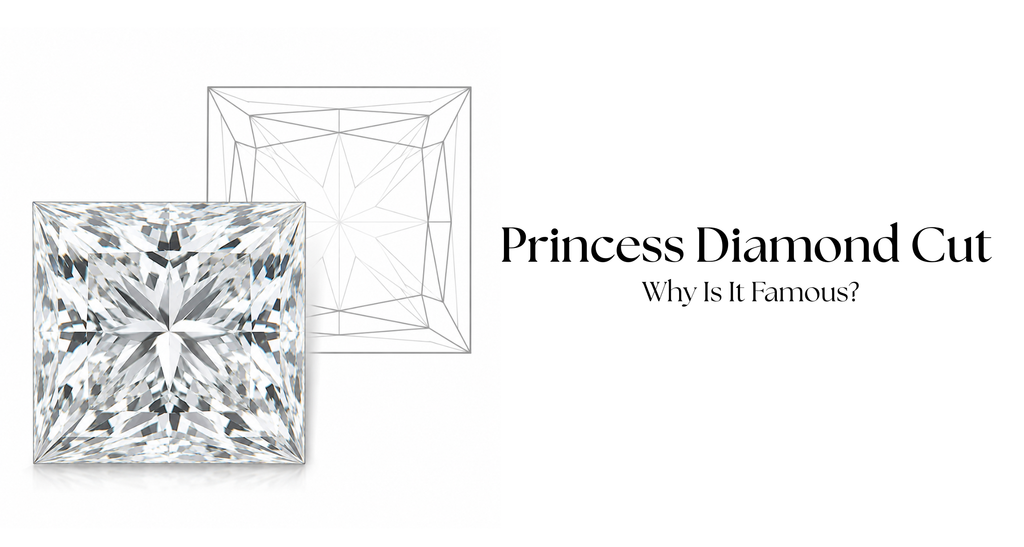
What Is a Princess Diamond Cut and Why Is It Famous?
Princess cut diamonds became famous because they changed how a square diamond could look. A square diamond did not have to look quiet or flat anymore. With the princess cut, the shape stayed sharp, but the stone started showing the kind of sparkle people usually expected from round diamonds.
The cut has straight sides and pointed corners, so it gives a ring a clear square shape. But the inside of the diamond is where the real work happens. Its facets are arranged to reflect light in different directions, which gives the stone more life than many other square cuts.
This is why buyers still choose princess cut diamonds today. They get the neat look of a square diamond, but not the plainness that some people fear in square shapes. It is a cut made for people who want structure, sparkle, and a diamond that looks different from the usual round centre stone.
What Is a Princess Cut Diamond?

A princess cut diamond is a square or slightly rectangular diamond with sharp corners. It is usually known as a square modified brilliant cut because it has a square outline but uses brilliant-style faceting.
This means the diamond is designed to reflect light, not just show clean lines. It is different from step-cut diamonds like emerald or Asscher cuts, where the facets are longer and more mirror-like.
From the top, a princess cut looks square. From the side, it usually has a deep lower section that comes down like an inverted pyramid. This structure helps the diamond create sparkle while keeping the square shape visible from above.
A good princess cut diamond should look even from all sides. The corners should be sharp, the sides should look straight, and the centre should not appear dull.
The History of Princess Cut Diamonds
The princess cut is a modern diamond cut compared to old cuts like rose cut, old mine cut, or old European cut. It became popular in the late 20th century, especially during the 1980s.
Before princess cut diamonds became famous, square diamonds were often seen in step-cut styles. These cuts looked elegant, but they did not give the same sparkle as brilliant-cut diamonds.
The princess cut gave buyers something different. It kept the square shape but added more light return. This made it a strong choice for people who liked clean geometric jewellery but still wanted the diamond to shine.
The modern princess cut is often linked with diamond cutters Betzalel Ambar and Israel Itzkowitz, who helped develop the square modified brilliant style in the early 1980s. After that, the cut became one of the most recognised fancy diamond shapes in engagement rings and modern jewellery.
Why Princess Diamonds Are Called Fancy Diamonds
A fancy diamond shape means any diamond shape that is not the standard round brilliant. Princess, oval, pear, emerald, cushion, radiant, marquise, and Asscher cuts all come under fancy diamond shapes.
Princess cut diamonds are called fancy diamonds because they have a square outline. They are not round, but they still use brilliant-style facets to create sparkle.
This is one reason the cut became popular. It gives the buyer a shape that looks different from a round diamond, but it does not move too far away from the sparkle people expect from diamond jewellery.
Main Parts of a Princess Cut Diamond
A princess cut diamond has a few important parts. Knowing these makes it easier to understand why the cut looks the way it does.
Table
The table is the flat top part of the diamond. It is the surface you see most clearly when looking at the diamond from above.
In a princess cut, the table should not look too large or too small. If it is too large, the diamond may look flat. If it is too small, the light pattern may not look balanced.
Crown
The crown is the upper part of the diamond between the table and the girdle. It helps control how light enters the diamond.
A princess cut with a better crown can show more fire and contrast. If the crown is too flat, the diamond may not look as active.
Girdle
The girdle is the outer edge of the diamond. In princess cut diamonds, the girdle runs around the square outline and includes the four corners.
The corners near the girdle should be checked carefully. If they are too thin or exposed, they can be more delicate.
Pavilion
The pavilion is the lower part of the diamond. In a princess cut, this area usually has chevron facets that affect how the diamond reflects light.
A well-cut pavilion helps the diamond return light through the top. If it is too deep or too shallow, the stone may lose brightness.
Corners
The corners are one of the most important features of a princess cut diamond. They give the stone its square shape.
At the same time, they need protection. Since the corners are pointed, the ring setting should hold them safely.
Understanding Princess Cut Diamond Proportions
The proportions of a princess cut diamond decide whether it looks square, balanced, and bright from the top.
Length-to-Width Ratio
The length-to-width ratio tells you whether the diamond is square or slightly rectangular. A perfectly square princess cut usually has a ratio close to 1.00.
For example, if a diamond is 5 mm long and 5 mm wide, the ratio is 1.00. If the length is slightly more than the width, the diamond may still look square to the eye.
Most buyers prefer a princess cut that looks square. If the ratio moves too far from 1.00, the diamond starts looking rectangular.
Square vs Slightly Rectangular Shape
A square princess cut gives the most classic look. It works well in solitaire rings, halo rings, and diamond bands.
A slightly rectangular princess cut can also look good, but it gives a different appearance. Some buyers may like this look, especially if they want a longer shape without choosing an emerald or radiant cut.
The shape should be judged from the top. If the diamond looks balanced to the eye, a very small difference in measurement may not matter much.
Why Balance Matters More Than Only Measurement
Numbers can guide you, but the diamond should still look balanced in real life. The sides should look even, the corners should not look weak, and the centre should not look dull.
A princess cut should not look heavy on one side. It should look square, steady, and properly aligned in the setting.
Why Princess Cut Diamonds Can Look Modern
Princess cut diamonds are popular because they have a clean square shape. Straight edges and sharp corners give the ring a more structured appearance.
This makes the cut different from round, oval, and cushion diamonds. Round diamonds look softer because they have no corners. Cushion cuts have rounded corners. Princess cuts have a sharper outline.
This is why many people choose princess cut diamonds when they want a ring that looks modern but still simple enough for regular wear.
What Makes a Good Princess Cut Diamond?
A good princess cut diamond should not be judged only by size. The shape, corners, light pattern, depth, and setting all matter.
Symmetry
Symmetry is important because the diamond has a clear square outline. All four sides should look even, and the corners should line up properly.
If one side looks longer or one corner looks slightly off, the diamond may look uneven in the ring.
Light Return
A princess cut should look bright from the top. The facets inside the diamond should return light instead of making the centre look dull.
Princess cut diamonds can show both bright flashes and darker contrast areas. Some contrast is normal, but the diamond should not look lifeless.
Depth
Depth is important in princess cut diamonds. If the diamond is too deep, more weight may sit underneath the stone, and the diamond may look smaller from the top.
If it is too shallow, the diamond may lose light. The best princess cut should have a balanced depth that supports both sparkle and face-up size.
Table
The table should work well with the rest of the diamond. A very large table can make the diamond look flat, while a very small table may affect the overall light pattern.
The table and depth should be checked together, not separately.
What Are Chevrons in Princess Cut Diamonds?
Chevrons are V-shaped facets in the lower part of a princess cut diamond. They affect how the diamond sparkles.
Some princess cut diamonds have fewer chevrons. These stones may show broader flashes of light. Other princess cut diamonds have more chevrons, which can create smaller and more active flashes.
This does not mean one style is always better. It depends on the look the buyer prefers.
If you want a cleaner light pattern, fewer chevrons may appeal more. If you like a more detailed sparkle pattern, more chevrons may look better.
This is why seeing the actual diamond or video is helpful. Certificate details alone may not show how the chevron pattern looks in real light.
Why Princess Cut Corners Need Protection
The corners are the most delicate parts of a princess cut diamond. They are pointed, so they can be more vulnerable if left exposed.
This does not mean princess cut diamonds are weak. It simply means the ring should be designed properly around the shape.
Corner Prongs
Many princess cut rings use prongs at all four corners. These prongs help protect the tips and hold the diamond securely.
The prongs should not be too bulky, but they should cover the corners properly.
Bezel Setting for More Protection
A bezel setting surrounds the diamond with metal. This protects the corners and outer edge of the stone.
The trade-off is that more metal becomes visible around the diamond. Some people like this clean framed look, while others prefer a more open setting.
For daily wear, corner protection is very important. A princess cut diamond should not be set in a way that leaves the corners exposed.
Are Princess Cut Diamonds Expensive?
Princess cut diamonds can sometimes be more budget-friendly than round diamonds of the same carat weight.
One reason is cutting yield. Rough diamonds often have a natural shape that works well for square cuts. This can reduce wastage compared to cutting a round brilliant diamond.
Less wastage can make princess cut diamonds a practical choice for buyers who want sparkle and size within a certain budget.
Still, the price depends on many things, including size, quality, certification, whether the diamond is mined or lab-grown, and how well it is cut.
A poorly cut princess diamond may cost less, but it may not look good. A well-cut princess diamond can look much better even if the size is slightly smaller.
Lab-Grown Princess Cut Diamonds
Lab-grown princess cut diamonds make sense for buyers who want a square diamond with sparkle without stretching the budget too far. They have the same shape, crystal structure, and appearance as mined diamonds, but they are created in a controlled environment.
This can help buyers choose a larger centre stone or better-looking diamond within the same budget.
Princess cut works well in lab-grown diamonds because the shape already gives a modern square look. With lab-grown options, buyers can compare more stones for shape, light return, corner finish, and size.
The same checks still matter. The diamond should look square from the top, the corners should be protected, and the centre should not look dull.
Best Settings for Princess Cut Diamond Rings
Princess cut diamonds work in many ring settings, but the setting should support the square shape and protect the corners.
Solitaire Princess Cut Ring
A solitaire setting keeps the focus on one princess cut diamond. This works well when the diamond has a clean square shape and good light return.
It is a good choice for someone who wants a simple ring where the centre stone does all the work.
Halo Princess Cut Ring
A halo setting surrounds the centre diamond with smaller diamonds. For princess cuts, the halo usually follows the square outline.
This can make the ring look larger and add more detail, but the halo should not hide the clean shape of the centre stone.
Three-Stone Princess Cut Ring
A three-stone setting places side stones next to the centre princess cut diamond. The straight edges of the princess cut can create a neat layout.
The side stones may be princess cut, baguette, trapezoid, or round, depending on the design.
Bezel Princess Cut Ring
A bezel setting gives more protection to the corners and outer edge. It is useful for daily wear.
This setting gives the diamond a framed look, so it may suit people who prefer a secure and structured design.
Channel-Set Princess Cut Band
Princess cut diamonds work well in channel settings because their square shape allows them to sit close together with fewer gaps.
This makes them useful in wedding bands, anniversary bands, and diamond shoulder rings.
Who Should Choose a Princess Cut Diamond?
A princess cut diamond suits someone who wants a square centre stone with sparkle. It is a good choice for buyers who do not want a round diamond but still want the ring to look bright.
It also works well for someone who likes straight lines, clean edges, and a modern ring shape.
This cut can look simple in a solitaire or more detailed in a halo or three-stone setting. It is also a practical option for lab-grown diamond jewellery because buyers can often get a better size within budget.
Conclusion
A princess cut diamond is famous because it brings together a square shape and brilliant-style sparkle. It gives buyers a clean outline without making the diamond look flat.
The cut works well in engagement rings, solitaires, halo rings, three-stone rings, diamond bands, and lab-grown diamond jewellery.
Before choosing a princess cut diamond, check the shape, corners, light return, depth, chevron pattern, and setting. The best princess cut is not just square. It should look balanced from the top, sparkle well in real light, and be protected properly in the ring.


