





 All Earrings
 Stud Earrings
 Drop Earrings
 Solitaire
 Hoop Earrings
 Halo Earrings
 Vermeil Earrings
 Round
Round
 Oval
Oval
 Emerald
 Pear
Pear
 Princess
 Heart
Heart
 Marquise
 All Rings
 Solitaire Rings
 Band Rings
 Halo Rings
 Cocktail Rings
 Eternity Rings
 Fashion Ring
 Stack Rings
 Men's Rings
 Vermeil Rings
 All Necklaces
 Necklet
 Mangalsutra
 Solitaire
 Tennis Necklace
 Statement Necklace
 Vermeil Necklace
 Alphabets
 Solitaire Pendant
 Halo Pendant
 Vermeil Pendants
 All Bracelets
 Solitaire Bracelet
 Tennis Bracelet
 Fashion Bracelet
 Mangalsutra
 Vermeil Bracelets
 All Vermeil
 Vermeil Earring
 Vermeil Pendant
 Vermeil Ring
 Vermeil Necklace
 Vermeil Mangalsutra
 Vermeil Bracelets
 Vermeil Bangles
 Vermeil Men’s
A Complete Guide to Marquise Diamonds
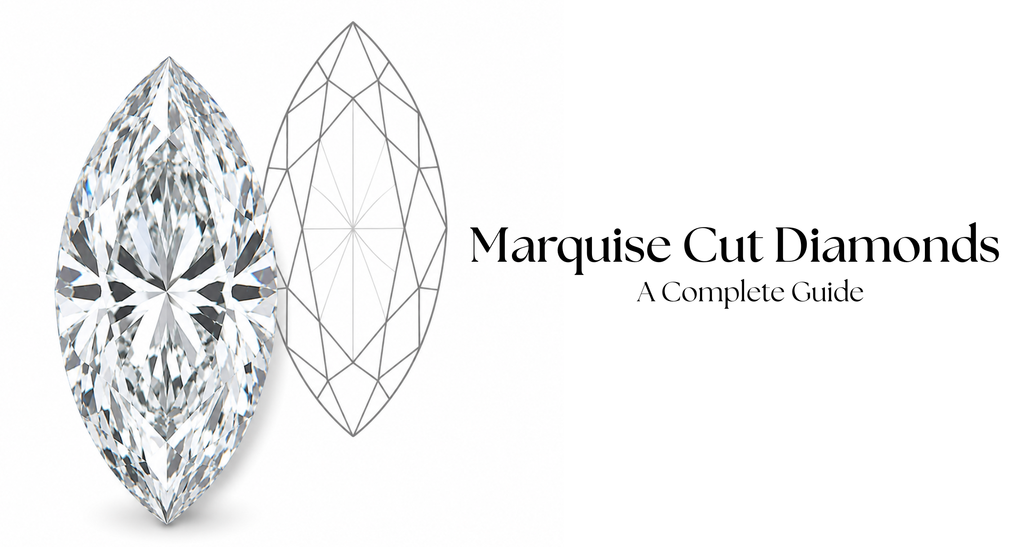
Marquise diamonds are known for their long shape and pointed ends. This shape covers more space on the finger than many other diamond cuts, so even a simple ring can look detailed without adding too much around the centre stone.
The shape is different from round and oval diamonds. A round diamond looks even from every side. An oval diamond has rounded ends. A marquise diamond has a stretched body with two sharp points, so the centre stone gets a more defined look.
But a marquise diamond should be chosen carefully. The two points should sit in one line, the side curves should look even, and the centre should not look too dark because of the bow-tie effect. The setting is also important because the pointed ends need proper protection.
What Is a Marquise Diamond?
A marquise diamond is an elongated diamond with curved sides and pointed ends. It comes under fancy diamond shapes because it is different from the standard round brilliant cut.
The shape is often compared to a small boat, an eye, or a leaf. In rings, it is usually placed vertically on the finger, but some designs place it horizontally for a more modern layout.
Most marquise diamonds are cut in a brilliant style. This means the facets are arranged to create sparkle. The long body gives the diamond more visible surface area, while the pointed ends make the outline sharper than an oval or pear diamond.
A marquise diamond should not look twisted or uneven. The two points should line up properly, and both sides should have a similar curve. If the shape is not balanced, the diamond can look tilted once it is set in a ring.
The History of Marquise Diamonds
The marquise diamond is often linked with 18th-century France. A popular story says that King Louis XV wanted a diamond shape inspired by the smile of Madame de Pompadour. This is more of a jewellery legend than a fully proven historical record, but it is still part of the story people connect with this cut.
The word “marquise” also comes from a noble rank in Europe. Because of this, the shape became connected with status and royal jewellery. The cut was also known as “navette,” which means small boat, because the outline looks like a narrow boat with pointed ends.
Earlier marquise diamonds were cut by hand, so the shape was not always exact. The two points could be slightly off-line, and the curves on both sides were not always the same. As cutting tools improved, cutters became better at controlling the length, curve, and tips. Modern marquise diamonds are more precise, but this shape still needs careful cutting.
Why Marquise Diamonds Are Called Fancy Diamonds
A fancy diamond shape means any diamond shape that is not a round brilliant. Marquise, oval, pear, emerald, cushion, radiant, and princess cuts all come under fancy shapes.
Marquise diamonds stand out because of their long pointed outline. This shape gives more visible length on the finger, which is why it can look larger than some other diamonds of the same carat weight.
This happens because more of the diamond’s weight is spread across the top view. A round diamond carries its weight in a more compact shape, while a marquise spreads across a longer area. This top view is called the face-up size, and it is one of the main reasons people choose marquise diamonds.
Main Parts of a Marquise Diamond
A marquise diamond has a few important parts. Knowing these names makes it easier to understand the shape and check the diamond properly.
Belly
The belly is the widest centre part of the marquise diamond. This is where the sides curve outward the most. The width of the diamond is measured from this area.
If the belly is uneven, the diamond can look heavier on one side. A well-shaped marquise diamond should have a balanced belly on both sides.
Points
The two pointed ends are called points. These are the top and bottom tips of the diamond. The full length of a marquise diamond is measured from one point to the other.
The points are delicate, so they need proper protection in the setting. V-prongs are often used for this reason.
Wings
The wings are the areas between the belly and the points. These parts decide how smoothly the diamond narrows toward the ends.
If the wings are too flat or too bulged, the diamond can look awkward. A good marquise diamond should move smoothly from the belly to the points.
Girdle
The girdle is the outer edge of the diamond. In a marquise diamond, the girdle near the pointed ends should be checked carefully because very thin areas can be more delicate.
A good setting should protect the girdle, especially near the tips.
Keel Line
The keel line runs along the bottom of the diamond where the pavilion facets meet. It is usually not visible when the diamond is set in a ring, but it is part of the diamond’s structure.
The keel line should follow the centre of the stone properly. If it is off, the diamond may not look balanced from the top.
Understanding Marquise Diamond Proportions
The proportion of a marquise diamond changes the whole look of the stone. The most important measurement is the length-to-width ratio. This tells you how long the diamond is compared to how wide it is.
Length-to-Width Ratio
The ratio is calculated by dividing the length of the diamond by its width. For example, if a diamond is 10 mm long and 5 mm wide, the ratio is 2.00.
Many classic marquise diamonds sit around 1.85 to 2.00. A ratio near 2.00 means the diamond is about twice as long as it is wide. This gives the stone the well-known marquise shape.
Narrow vs Wider Marquise Shape
A narrow marquise has a higher ratio. It looks longer on the finger and gives the ring a stronger vertical line.
A wider marquise has a lower ratio. It gives the diamond a fuller shape and can suit people who like the pointed outline but do not want the stone to look too slim.
Both shapes can work well. The right choice depends on the hand, the setting, and the design preference.
Why Balance Matters More Than a Fixed Number
A ratio can guide you, but it should not be the only thing you follow. Some marquise diamonds outside the usual range can still look beautiful if the shape is balanced.
The diamond should not look too stretched, too short, or uneven. The points should line up, the belly should sit in the centre, and both sides should look similar.
Why Marquise Diamonds Can Look Larger
Marquise diamonds often look larger than many other diamond shapes of the same weight because they spread across more length on the finger.
This does not mean the diamond is heavier. It means the shape uses its weight differently. More of the stone is visible from the top, so the diamond gives better coverage on the hand.
This is useful for buyers who want a noticeable centre stone without increasing carat weight too much. Still, the depth should be checked. If a marquise diamond is too deep, more weight may sit underneath the stone, and the top view may not look as large as expected.
What Makes a Good Marquise Diamond?
A good marquise diamond is not only about size. The shape should be balanced, the bow-tie effect should not be too strong, and the pointed ends should be finished cleanly.
Symmetry
Symmetry matters a lot in marquise diamonds. The two points should sit on one straight line. The left and right sides should mirror each other. The belly should not look higher on one side or wider on the other.
Because the shape is long, even a small imbalance can be easy to notice. Poor symmetry can make the diamond look tilted in the setting.
Bow-Tie Effect
The bow-tie effect is a dark shadow across the centre of the diamond. It is common in elongated shapes like marquise, oval, and pear diamonds.
A light bow tie is normal. The problem starts when the centre looks dark most of the time. A strong bow tie can make the middle of the diamond look dull because that area is not returning light properly.
A marquise diamond should be checked in normal light. Move it slightly and see if the dark area changes. If the bow tie stays dark from most angles, the diamond may not look good in daily wear.
Table and Depth
The table is the flat top part of the diamond. The depth is how deep the diamond is from top to bottom.
If a marquise diamond is too deep, light may not return well through the top. If it is too shallow, the centre may look flat or dark. A very large table can also affect how the light moves inside the stone.
As a general guide, many well-cut marquise diamonds sit around 53% to 63% table and around 58% to 62% depth. These numbers can help, but the final decision should come from how the diamond looks in real light.
What Are French Tips in Marquise Diamonds?
French tips are a small detail found in some marquise diamonds. In a regular marquise cut, the facets near the pointed ends meet in one pattern. In a French tip style, the facet arrangement near the point is modified.
This can make the tip area look cleaner and more finished. French tips are also seen in pear and heart-shaped diamonds because these shapes also have pointed areas.
Not every marquise diamond needs French tips, but the tip area should always be checked. The ends should not look messy, weak, or too dark. A clean tip area makes the whole shape look better.
Why Pointed Tips Need Protection
The pointed ends are the most delicate parts of a marquise diamond. If the tips are left exposed, they can be more likely to chip.
This does not mean marquise diamonds are weak. It simply means the ring should be designed properly around the shape.
V-Prongs for Tip Safety
Many marquise diamond rings use V-prongs at both ends. A V-prong wraps around the point and protects it from direct impact.
This is one of the most common ways to secure a marquise diamond in a ring. It is especially important for daily wear.
Bezel Setting for More Protection
A bezel setting surrounds the diamond with metal. This gives more protection because the edge of the diamond is covered.
The trade-off is that more metal is visible around the stone. Some people like this secure look, while others prefer a more open setting.
For regular wear, the pointed ends should not be left unprotected.
Are Marquise Diamonds Expensive?
Marquise diamonds can sometimes offer better visual size for the budget. Since the shape spreads across more length, a marquise diamond may look larger from the top than a round diamond of the same carat weight.
Another reason is cutting yield. When a marquise shape is cut from rough diamond, there may be less wastage compared to cutting a round brilliant. This can make marquise diamonds more practical for buyers who want a larger-looking stone.
However, price still depends on the diamond’s size, certification, quality, and whether it is mined or lab grown. Larger marquise diamonds, especially above 2 carats, can become expensive because well-shaped stones in bigger sizes are harder to find.
Lab Grown Marquise Diamonds
Lab grown marquise diamonds make sense for buyers who want the marquise look in a larger size without stretching the budget too far. They have the same long outline, pointed ends, curved sides, and brilliant-style faceting as mined marquise diamonds. The difference is that they are created in a controlled environment instead of being mined from the earth.
This shape needs careful selection, whether the diamond is mined or lab-grown. The two points should sit in one line, both side curves should look balanced, and the centre should not appear too dark because of the bow-tie effect.
A lab-grown marquise diamond can also help buyers get a larger-looking stone within their budget. Because marquise diamonds already have a bigger face-up appearance, choosing a lab-grown option can make the ring look noticeable without increasing the budget too much.
Still, the same checks matter. Look at the ratio, symmetry, bow-tie effect, tip finishing, and setting security before choosing the final diamond.
North-South vs East-West Marquise Settings
A marquise diamond can be placed in different directions. The direction changes how the ring looks on the finger.
North-South Setting
A north-south setting places the pointed ends up and down the finger. This is the most traditional way to wear a marquise diamond.
It shows the length of the stone clearly and gives the ring a vertical line.
East-West Setting
An east-west setting places the diamond horizontally across the finger. This style gives the ring a different layout.
It works well for someone who likes the marquise shape but does not want the usual vertical placement.
Setting Height for Daily Wear
For daily wear, setting height also matters. A lower setting may be easier to manage because the diamond sits closer to the finger.
A high setting can make the centre stone look more prominent, but it may also catch more easily on clothing or other surfaces.
Best Settings for Marquise Diamond Rings
Marquise diamonds work in many ring settings, but the setting should support the shape instead of hiding it.
Solitaire Marquise Ring
A solitaire setting keeps the full marquise outline visible. This works well when the diamond has a balanced shape and clean tips.
It is a good choice for someone who wants the centre stone to stay the main focus.
Halo Marquise Ring
A halo setting surrounds the centre diamond with smaller diamonds. It can make the ring look larger, but the halo should follow the marquise shape properly.
If the halo is too heavy, it can hide the pointed outline.
Three-Stone Marquise Ring
A three-stone setting places side stones next to the centre marquise. Tapered baguettes, pear shapes, or small round diamonds can work well, depending on the design.
The side stones should support the centre diamond without making the ring look crowded.
Bezel Marquise Ring
A bezel setting gives more protection to the edge of the diamond. It is useful for daily wear, but it creates a more metal-framed look.
This setting works best when protection is more important than showing every edge of the diamond.
Floral Marquise Ring
A floral setting works naturally with marquise diamonds because the shape already resembles a petal or leaf.
This makes the stone useful in nature-inspired designs where the marquise shape can become part of the pattern.
Marquise Diamonds in Indian Jewellery
Marquise diamonds work well in Indian jewellery because the shape resembles petals, leaves, and traditional decorative motifs.
Floral and Leaf-Inspired Designs
Small marquise diamonds are often placed like petals in floral patterns. The pointed shape also works well in leaf-inspired jewellery.
This makes marquise diamonds useful in designs that need natural shapes without using heavy metalwork.
Rings, Pendants, Earrings and Mangalsutra
In Indian jewellery, marquise diamonds can be used in rings, earrings, pendants, bracelets, mangalsutra designs, and bridal jewellery.
A large marquise diamond can be used as a centre stone, while smaller marquise diamonds can be used as design elements around other stones.
Daily Wear vs Occasion Wear
A marquise solitaire ring can work for regular wear when the setting is secure. A marquise halo or floral design can suit occasions where the jewellery needs more detail.
This is why the shape works across both simple and occasion-based jewellery.
Who Should Choose a Marquise Diamond?
A marquise diamond suits someone who wants the centre stone to have a clear outline, not just sparkle. It is not as common as a round diamond, but it still has a place in classic jewellery.
It also suits buyers who want the diamond to look larger on the hand. The long outline gives more coverage, especially in rings.
This shape can also work for someone who likes floral, vintage, or statement designs. It can look simple as a solitaire or detailed as part of a larger setting.
Conclusion
Marquise diamonds are different because of their long body, pointed ends, and old European story. The shape gives more visible length on the hand and works well in many jewellery styles.
But choosing a marquise diamond is not only about liking the shape. The ratio, symmetry, bow-tie effect, table-depth balance, tip protection, and setting style all matter.
A good marquise diamond should look balanced from the top, should not have a dark centre, and should be protected properly at both ends.
Choose marquise only after checking the shape from top to bottom. When the points, curves, bow-tie and setting are right, the cut gives a ring a look that is difficult to get from a regular round diamond.


