





 All Earrings
 Stud Earrings
 Drop Earrings
 Solitaire
 Hoop Earrings
 Halo Earrings
 Vermeil Earrings
 Round
Round
 Oval
Oval
 Emerald
 Pear
Pear
 Princess
 Heart
Heart
 Marquise
 All Rings
 Solitaire Rings
 Band Rings
 Halo Rings
 Cocktail Rings
 Eternity Rings
 Fashion Ring
 Stack Rings
 Men's Rings
 Vermeil Rings
 All Necklaces
 Necklet
 Mangalsutra
 Solitaire
 Tennis Necklace
 Statement Necklace
 Vermeil Necklace
 Alphabets
 Solitaire Pendant
 Halo Pendant
 Vermeil Pendants
 All Bracelets
 Solitaire Bracelet
 Tennis Bracelet
 Fashion Bracelet
 Mangalsutra
 Vermeil Bracelets
 All Vermeil
 Vermeil Earring
 Vermeil Pendant
 Vermeil Ring
 Vermeil Necklace
 Vermeil Mangalsutra
 Vermeil Bracelets
 Vermeil Bangles
 Vermeil Men’s
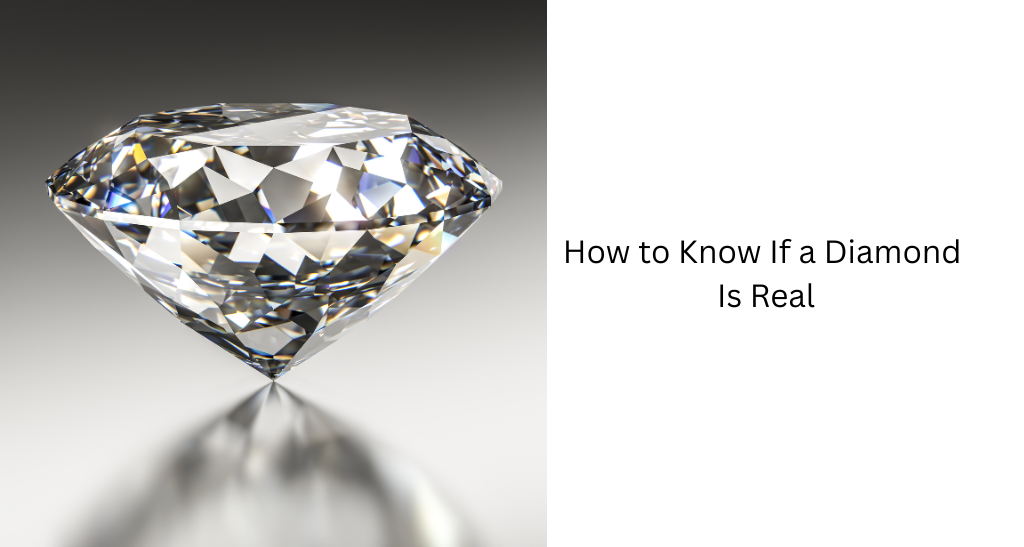
How to Know If a Diamond Is Real : 10 Ways to Identify a Real Diamond
Buying a diamond is a significant purchase, and one of the first questions buyers often have is simple: Is this diamond real?
Whether you already own a diamond, are buying a pre-owned piece of jewellery, or are considering a diamond ring, it is useful to know how to identify a real diamond. There are several tests you can try at home, such as checking how the stone handles light or using the fog test. However, these methods are only indicators and should not be treated as proof.
The most reliable way to confirm whether a diamond is genuine is to have it examined by a qualified gemologist or an independent gemological laboratory.
What Does a "Real Diamond" Mean?
A real diamond is a gemstone made of crystallised carbon with the characteristic physical and optical properties of diamond.
It is important to understand that lab grown diamonds are also real diamonds. They have essentially the same chemical composition, crystal structure and physical properties as natural diamonds. The main difference is their origin.
Natural diamonds form naturally beneath the Earth's surface over extremely long periods, while lab grown diamonds are produced using advanced technology in a controlled environment. This means a diamond being lab grown does not make it fake.
Real Diamond vs Fake Diamond
A fake or diamond simulant is a different material that resembles a diamond but does not have the same composition and properties.
Common diamond simulants include:
-
Cubic zirconia
-
Moissanite
-
Glass
-
Synthetic white sapphire
Some simulants can look very convincing, which is why visual inspection alone is not always enough.
How to Identify a Real Diamond
There are several ways to check a diamond. Some can be performed at home, while others require professional equipment.
1. Check the Diamond's Certification
The first thing to check when buying a diamond is whether it comes with a reliable grading report.

A professional grading report provides information about the diamond's characteristics, such as:
-
Carat weight
-
Colour
-
Clarity
-
Cut
-
Measurements
-
Shape
-
Proportions
For a purchased diamond, check that the details on the certificate match the actual stone.
If the diamond has a report number inscribed on its girdle, a jeweller or gemologist can verify whether the inscription corresponds with the grading report.
A trusted grading report is far more reliable than a DIY test.
2. Try the Fog Test

The fog test is one of the commonly mentioned ways to check a diamond at home.
Hold the diamond carefully and breathe on it so that a light layer of condensation forms on the surface.
Because diamond conducts heat efficiently, the fog is generally expected to clear relatively quickly.
However, this test is not conclusive. Other stones can behave similarly, and the result can also be affected by dirt, moisture and the condition of the stone.
Use it as a quick observation, not as proof that a diamond is genuine.
3. Look at How the Diamond Reflects Light

A diamond interacts with light in a distinctive way because of its refractive properties and cut.
Under suitable lighting, a well-cut diamond can show a combination of:
-
Bright white reflections
-
Coloured flashes
-
Dark and light areas
-
Noticeable sparkle as the stone moves
However, sparkle alone cannot confirm whether a diamond is real. Moissanite and other simulants can also produce strong fire and brilliance.
The quality of the cut also has a major effect on how much a diamond sparkles.
4. Check the Diamond Under Magnification

A jeweller's loupe or microscope can reveal details that are difficult to see with the naked eye.
You may notice inclusions, tiny internal characteristics or other features within the stone.
Natural diamonds commonly contain internal characteristics formed during their growth. Lab grown diamonds can also contain inclusions, although their characteristics may differ from those typically found in natural diamonds.
A magnified inspection can therefore provide useful information, but you should not try to determine whether a diamond is natural or lab grown simply by looking through a loupe.
Professional testing is needed for reliable identification.
5. Perform a Read-Through Test Carefully

Another popular home test involves placing a loose, unmounted stone over printed text.
Because of the way diamonds refract light, it can be difficult to clearly see text through a properly cut round diamond when viewing it from above.
However, this test has important limitations. The result can vary depending on the diamond's shape, cut, size and viewing angle. Some other stones may also produce confusing results.
It is therefore not a dependable way to authenticate a diamond.
6. Don't Rely on the Scratch Test

You may come across advice suggesting that you can identify a diamond by scratching glass.
Do not use this method. Although diamond is extremely hard, scratching another material does not provide a reliable way to authenticate a diamond. It can also damage the jewellery or the surface being tested.
A diamond's hardness is a scientific property, but a scratch test is not a professional identification method.
7. Check the Setting and Jewellery
If the diamond is already set in a ring, pendant or pair of earrings, examine the jewellery as well.

Look for:
-
Metal hallmarks
-
Craftsmanship
-
Secure stone setting
-
Manufacturer or jeweller markings
-
Certification or purchase documentation
These details cannot prove that the stone is a diamond by themselves, but they can provide useful information about the jewellery's origin and quality.
Remember that a genuine diamond can be mounted in inexpensive jewellery, while a convincing-looking piece of jewellery does not necessarily contain a genuine diamond.
8. Use a Diamond Tester Carefully

Electronic diamond testers are designed to measure certain physical properties of gemstones, particularly thermal conductivity.
They can be useful for distinguishing diamonds from some common simulants.
However, basic testers have limitations. Some diamond simulants, particularly moissanite, can produce results that require more advanced testing to interpret correctly.
Professional gemologists may therefore use multiple testing methods rather than relying on one handheld device.
9. Compare the Stone With a Known Diamond
If you have access to a confirmed diamond of similar size and shape, you can compare the two stones under the same lighting.
Look at:
-
Brilliance
-
Fire
-
Light return
-
Cut appearance
-
Overall visual characteristics
This can help you notice differences, but it still cannot establish authenticity with certainty.
Two genuine diamonds can look very different because of differences in cut, colour, clarity and proportions.
10. Get the Diamond Professionally Tested
If you need a definite answer, professional testing is the safest option.
A qualified gemologist or recognised gemological laboratory can use specialised equipment to determine whether the stone is:
-
A natural diamond
-
A lab grown diamond
-
A diamond simulant
Advanced testing can also help identify treatments and other characteristics that cannot be reliably detected through simple home tests.
Can You Tell If a Diamond Is Real by Looking at It?
Not always. A genuine diamond does not necessarily have to look extremely sparkly, and a fake diamond can sometimes look remarkably similar to the real thing.
The appearance of a diamond depends on several factors, including:
-
Cut quality
-
Shape
-
Colour
-
Clarity
-
Proportions
-
Lighting conditions
This is why visual inspection should not be considered a definitive authentication method.
How to Tell If a Lab Grown Diamond Is Real
A common misconception is that lab grown diamonds are fake diamonds.
They are not.
Lab grown diamonds are real diamonds. The difference is their origin rather than their basic chemical and physical properties.
Because lab grown and natural diamonds can be very similar, identifying whether a diamond is natural or lab grown generally requires specialised equipment or a grading report.
If you are buying a lab grown diamond, check the grading report and verify that the report details correspond with the stone.
Are Home Diamond Tests Reliable?
Home tests can be useful for curiosity or as an initial check, but none should be treated definitive proof.
| Test | Can it help? | Is it conclusive? |
|---|---|---|
| Fog test | Yes | No |
| Light and sparkle observation | Yes | No |
| Magnifying glass or loupe | Yes | No |
| Read-through test | Limited | No |
| Scratch test | Not recommended | No |
| Basic diamond tester | Yes | Not always |
| Grading report | Yes | Much more reliable |
| Professional gemological testing | Yes | Most reliable |
What Is the Most Reliable Way to Check a Diamond?
The most reliable approach is to combine professional examination with a recognised grading report.
If you are purchasing a diamond, ask for the relevant certification and make sure the report details match the diamond you are buying.
If you already own a stone and are unsure about its authenticity, take it to a qualified gemologist or reputable jewellery professional rather than relying solely on internet tests.
Final Thoughts
Knowing how to identify a real diamond can help you make a more informed purchase, but home tests have clear limitations. The fog test, sparkle test and other simple checks can provide clues, but they cannot reliably confirm whether a stone is a diamond or determine whether it is natural or lab grown.
For a purchase as valuable as a diamond, certification and professional testing are the best ways to verify what you are buying.


