




 All Earrings
 Stud Earrings
 Drop Earrings
 Solitaire
 Hoop Earrings
 Halo Earrings
 Vermeil Earrings
 Round
Round
 Oval
Oval
 Emerald
 Pear
Pear
 Princess
 Heart
Heart
 Marquise
 All Rings
 Solitaire Rings
 Band Rings
 Halo Rings
 Cocktail Rings
 Eternity Rings
 Fashion Ring
 Stack Rings
 Men's Rings
 Vermeil Rings
 All Necklaces
 Necklet
 Mangalsutra
 Solitaire
 Tennis Necklace
 Statement Necklace
 Vermeil Necklace
 Alphabets
 Solitaire Pendant
 Halo Pendant
 Vermeil Pendants
 All Bracelets
 Solitaire Bracelet
 Tennis Bracelet
 Fashion Bracelet
 Mangalsutra
 Vermeil Bracelets
 All Vermeil
 Vermeil Earring
 Vermeil Pendant
 Vermeil Ring
 Vermeil Necklace
 Vermeil Mangalsutra
 Vermeil Bracelets
 Vermeil Bangles
 Vermeil Men’s
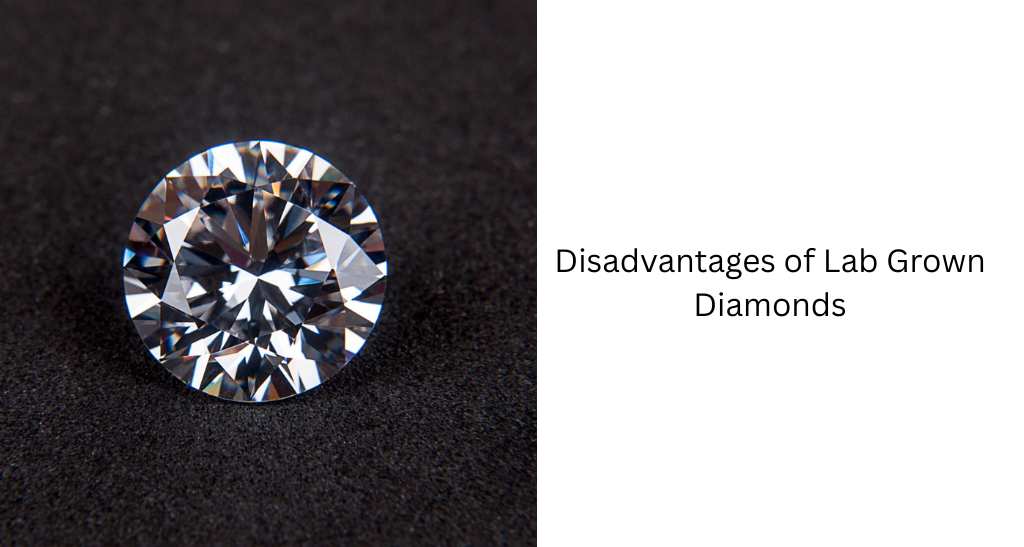
Disadvantages of Lab Grown Diamonds : What to Consider Before Buying
Lab grown diamonds look like natural diamonds because they share the same carbon structure and optical properties. They can also be graded for cut, colour, clarity and carat weight. The main difference is their origin: one is created in a controlled facility, while the other forms naturally beneath the earth.
Their lower pricing has made diamond jewellery accessible to more buyers. However, a lower price does not automatically make every lab-grown diamond a good purchase. There are concerns related to resale value, future pricing, certification, energy use and market perception.
Not every concern will matter to every buyer. The purpose is not to discourage the purchase but to explain what should be considered before choosing one.
What Are the Real Disadvantages of Lab Grown Diamonds?
1. Lower Resale Value
The most common concern is the resale value of lab-grown diamonds. Their secondary market is still smaller than the market for natural diamonds, and not every jeweller or diamond buyer accepts them for resale.
A lab-grown diamond may receive an offer considerably below its original purchase price. In some cases, a jeweller may provide value mainly for the gold and offer only a limited amount for the diamond.
Natural diamonds also do not guarantee a profitable resale. Their resale price can be affected by retail margins, market demand, certification and condition. However, they have a longer-established resale network and are generally viewed as more scarce.
Lab-grown diamonds are therefore better suited to buyers purchasing jewellery for personal use rather than expecting it to work as a financial investment.
2. Prices May Fall Further
Lab-grown diamonds are produced through repeatable technological processes. As equipment improves and more manufacturers enter the market, production can become faster and less expensive.
This is positive for new buyers because it can make larger or higher-quality diamonds more affordable. The disadvantage is that a diamond purchased today may be available at a lower price in the future.
Falling retail prices can directly affect resale and exchange offers. A buyer may have paid a reasonable amount based on the market at the time of purchase, but a future buyer will compare the diamond with the price of a newly produced stone.
This does not remove the personal value of the jewellery. It simply means that the original purchase price should not be treated as an amount that will necessarily be recovered later.
3. They Do Not Carry the Same Geological Rarity
Natural diamonds take billions of years to form beneath the earth. Their limited supply and geological origin contribute to how they are traditionally valued.
Lab-grown diamonds are produced over a much shorter period. They are genuine diamonds, but production can be increased when facilities add equipment and capacity. This means they do not have the same natural scarcity.
For buyers focused on appearance, design and price, this difference may not be important. For someone who values the age, rarity and natural origin of a diamond, it can influence the final decision.
The question is not whether whether one origin is universally better. It is whether natural rarity is part of what the buyer wants from the diamond.
4. Not Everyone Sees Them as Traditional Heirlooms
In India, jewellery is often purchased with the intention of passing it to the next generation. Some families still connect heirloom value with naturally formed diamonds because of their rarity and long history.
Lab-grown diamonds are relatively new in comparison, so some buyers may feel uncertain about how future generations will view them. Others believe that the emotional value of an heirloom comes from the person and occasion rather than the origin of its stone.
A lab-grown diamond is durable enough to last for generations. It does not become less stable with age. The concern is mainly about perception and tradition, not physical life.
Anyone buying an engagement ring or another important family piece should consider whether geological origin matters to them or their family.
5. Environmental Claims Require Closer Attention
Lab-grown diamonds do not require traditional diamond mining, but they still need energy, equipment and raw materials to produce.
The environmental impact can vary depending on:
-
The source of electricity used by the facility
-
The efficiency of the production equipment
-
Whether the diamond is created through CVD or HPHT
-
Any post-growth treatment required
-
Cutting, polishing and transportation
-
The sourcing of gold used in the complete jewellery piece
A diamond created using renewable energy may have a different footprint from one produced using electricity generated from fossil fuels. This is why broad claims such as “completely sustainable” should be supported by clear information.
Lab-grown diamonds remove many concerns connected with large-scale mining, but they should not automatically be assumed to have no environmental impact.
6. Market Perception Is Still Developing
Some people continue to describe lab-grown diamonds as synthetic, artificial or fake. This is technically incorrect. Lab-grown diamonds have essentially the same chemical composition and physical properties as natural diamonds.
However, public perception can still influence how the jewellery is viewed socially, emotionally and financially. Some traditional buyers may prefer natural diamonds, while younger buyers may place greater importance on design, price and controlled origin.
Acceptance is increasing as lab-grown diamonds become more common in engagement rings and everyday jewellery. Even so, buyers should be comfortable with their choice rather than making it only because the diamond is available at a lower price.
7. Lab Grown Does Not Automatically Mean High Quality
A controlled production process does not make every lab-grown diamond flawless. These diamonds can still have inclusions, colour undertones, poor proportions and weak cut quality.
CVD diamonds may sometimes show strain, graining or brown and grey undertones. Certain HPHT diamonds may show a blue nuance or growth-related inclusions. Many of these characteristics are minor, but they show why every diamond should be judged individually.
Two diamonds with similar certificate grades may also look different because of their cut and proportions. A larger diamond with a poor cut may return less light than a smaller diamond with balanced proportions.
Buyers should not select a diamond based only on carat weight or a high colour and clarity grade. Its overall appearance, cut and certification are equally important.
To understand CVD and HPHT production, grading standards and the factors that affect quality, read complete guide to lab-grown diamonds.
Other Points Buyers Often Overlook
Certification Still Matters
Not all lab-grown diamonds have the same quality. The applicable grading or identification report should confirm that the diamond is lab-grown and provide its specifications.
For jewellery containing several smaller diamonds, the report may apply to the complete piece rather than each individual stone. Buyers should ask what type of certification comes with the product and whether it covers the centre stone or the complete jewellery piece.
Certification confirms characteristics and origin, but it does not guarantee resale value.
Buyback and Upgrade Policies Can Vary
Some jewellers offer exchange or upgrade options for lab-grown diamonds, while others provide value only for the gold.
A policy may calculate the diamond according to its current market price rather than the original purchase price. It may also require the invoice, certificate and an inspection of the jewellery.
These terms should be checked in writing before purchasing. A verbal assurance may not provide enough protection if the jewellery is exchanged several years later.
Bigger Is Not Always Better
Lower prices make it possible to purchase a larger diamond, but size should remain proportionate to the setting and intended use.
A very large diamond may not be comfortable for regular wear. It may also require a higher setting or additional prongs, which can affect how the ring feels on the hand.
Cut quality, comfort and design should receive as much attention as carat weight.
Appraisal Value Is Not Resale Value
An appraisal normally estimates how much it may cost to replace the jewellery. It does not represent the amount a second-hand buyer will pay.
Because lab-grown diamond prices can change, the replacement value may also change. High-value pieces should be appraised periodically, and buyers should confirm how their insurance provider handles lab-grown diamonds.
Common Myths About Lab Grown Diamonds
“Lab-Grown Diamonds Are Fake”
Lab-grown diamonds are not diamond alternatives such as cubic zirconia or moissanite. They consist of crystallised carbon and share the hardness and optical properties associated with natural diamonds.
Specialist equipment and grading reports are normally required to determine whether a diamond is natural or lab-grown.
“They Lose Their Shine After a Few Years”
A lab-grown diamond does not lose its natural appearance because of age. Oil, soap, dust and cosmetic products can collect on its surface and reduce light reflection, but cleaning can restore its appearance.
It requires the same regular care as a natural diamond.
“Every Lab-Grown Diamond Is Flawless”
Lab-grown diamonds can have inclusions, colour differences and poor cuts. A controlled environment reduces some natural variables, but it does not guarantee a perfect result.
Quality should always be checked using the diamond’s report and actual appearance.
“They Have No Value at All”
Lab-grown diamonds have a purchase and replacement value. The complete jewellery piece also includes gold, craftsmanship, setting and design.
The concern is that resale offers can be low and inconsistent. Saying that every lab-grown diamond has no value is inaccurate, but buyers should not expect guaranteed returns.
Lab Grown Diamonds: Pros and Cons
| Advantages | Disadvantages |
|---|---|
| Lower purchase price | Lower and less predictable resale value |
| Larger size within the same budget | Future market prices may decline |
| Same physical properties as natural diamonds | No natural geological rarity |
| Available in different shapes and specifications | Some buyers do not view them as traditional heirlooms |
| No traditional diamond mining | Production still requires energy |
| Suitable for customised designs | Buyback and upgrade policies vary |
| Can be graded and certified | Quality still differs between individual diamonds |
Should These Disadvantages Matter to You?
The importance of these disadvantages depends on why you are purchasing the diamond.
Are You Buying It to Wear or Resell?
If the purpose is an engagement, anniversary, gift or personal purchase, lower resale value may not be the deciding factor.
If you expect to sell or upgrade the diamond later, the buyback terms and current market value deserve greater attention.
Does Natural Rarity Matter to You?
Some buyers want a stone that formed naturally over billions of years. Others care primarily about appearance, quality and how the jewellery fits their budget.
Understanding which part matters to you can prevent regret after the purchase.
What Does Heirloom Value Mean to Your Family?
An heirloom may be valued because of natural rarity, or because it belonged to someone important. There is no single definition that applies to every family.
The emotional meaning of the jewellery should be considered separately from its resale price.
Are You Comfortable With Changing Prices?
Lab-grown diamonds may become more affordable as production improves. Buyers who are comfortable purchasing jewellery for its present use may not consider this a problem.
Those who expect the diamond to maintain its retail price may prefer to reconsider their expectations.
Why Buyers Still Choose Lab Grown Diamonds
The disadvantages are real, but they do not remove the reasons behind the growing demand.
More Choice Within a Planned Budget
Buyers can often choose a larger centre diamond, a higher gold purity or a more detailed setting without exceeding their planned spending.
Greater Freedom in Design
Specific shapes, sizes and matching diamonds can be sourced more easily for solitaire rings, earrings, bracelets and customised designs.
Clear Specifications
Certified lab-grown diamonds can be compared using their carat weight, colour, clarity, cut and measurements. This helps buyers understand what they are paying for.
Suitable for Personal Use
Many buyers do not purchase diamond jewellery with the intention of selling it. For them, appearance, daily wear and emotional meaning carry more importance than future market value.
Frequently Asked Questions
Are lab grown diamonds a bad investment?
Lab-grown diamonds are generally not recommended as financial investments because their resale market is limited and production prices may continue to change. They are better purchased as jewellery to wear and enjoy.
Do lab grown diamonds have resale value?
They can have resale value, but offers may be significantly lower than the original purchase price. The amount depends on current market demand, diamond quality, certification and the jeweller’s policy.
Are lab grown diamonds real diamonds?
Yes. They share essentially the same chemical structure, hardness and optical properties as natural diamonds. Their main difference is how and where they are formed.
Can lab grown diamonds be passed down as heirlooms?
Yes. They are durable and can last for generations when properly set and maintained. Whether they feel heirloom-worthy depends on the family’s personal view of tradition and value.
Do lab grown diamonds require special care?
No. They require the same care as natural diamonds. Regular cleaning, secure storage and periodic checking of the setting can help maintain the jewellery.
Is CVD better than HPHT?
Neither method is automatically better. Both can produce high-quality diamonds. The individual diamond’s cut, colour, clarity, appearance and certification matter more than the production method alone.
Can lab grown diamonds be insured?
Yes, lab-grown diamond jewellery can generally be insured. The insurer may require an invoice, certificate or appraisal. Buyers should confirm how replacement value will be calculated.
Is buying a lab grown diamond worth it?
It can be worth buying if you want a real diamond, more size or quality within your budget and do not consider natural rarity or strong resale demand essential.
Final Thoughts
Lab grown diamonds have trade-offs, particularly lower resale value, changing prices and the absence of geological rarity. These factors matter most when long-term value or natural origin is a priority.
For buyers focused on appearance, certified quality and greater choice within their budget, they can still be a practical option. At Lukson, we provide clear information about the diamond, gold and applicable policies so buyers know exactly what they are purchasing.


