







 All Earrings
 Stud Earrings
 Drop Earrings
 Solitaire
 Hoop Earrings
 Halo Earrings
 Vermeil Earrings
 Round
 Oval
 Emerald
 Pear
 Princess
 Heart
 Marquise
 All Rings
 Solitaire Rings
 Band Rings
 Halo Rings
 Cocktail Rings
 Eternity Rings
 Fashion Ring
 Stack Rings
 Men's Rings
 Vermeil Rings
 All Necklaces
 Necklet
 Mangalsutra
 Solitaire
 Tennis Necklace
 Statement Necklace
 Vermeil Necklace
 Alphabets
 Solitaire Pendant
 Halo Pendant
 Vermeil Pendants
 All Bracelets
 Solitaire Bracelet
 Tennis Bracelet
 Fashion Bracelet
 Mangalsutra
 Vermeil Bracelets
 All Vermeil
 Vermeil Earring
 Vermeil Pendant
 Vermeil Ring
 Vermeil Necklace
 Vermeil Mangalsutra
 Vermeil Bracelets
 Vermeil Bangles
 Vermeil Men’s
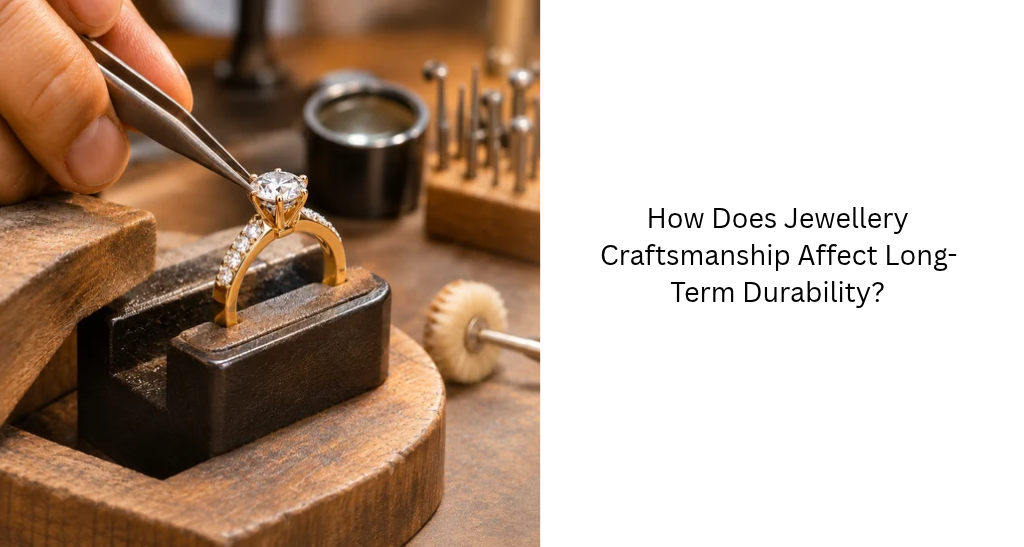
How Does Jewellery Craftsmanship Affect Long-Term Durability?
Jewellery is often bought to mark an important moment, celebrate a relationship, or become part of everyday life. But beyond how beautiful a piece looks, there is another factor buyers should pay attention to: how well it is made.
A diamond ring may look stunning in a product photograph, but its ability to withstand years of regular wear depends on several things, including the quality of the setting, the thickness of the metal, the strength of its joints, and the finishing work.
Good craftsmanship does more than improve the appearance of jewellery. It helps prevent loose stones, damaged settings, bent prongs, and other problems that can develop with regular use.
In this guide, we will look at how jewellery craftsmanship affects long-term durability and what buyers should check before purchasing a piece.
1. The Quality of the Metal Setting Keeps Diamonds Secure
One of the most important parts of jewellery craftsmanship is the setting. It is the structure that holds a diamond or gemstone in place. Even a high-quality diamond can become loose if the setting is poorly made.
Different settings offer different levels of protection.
-
Prong setting: Small metal claws hold the diamond in place. The prongs should be evenly positioned and strong enough to secure the stone. If they are too thin or poorly finished, they can bend or wear down over time.
-
Bezel setting: A metal rim surrounds the edges of the diamond. Since it covers more of the stone's edge, it offers good protection against everyday knocks.
-
Pavé setting: Small diamonds are placed close together and held by tiny metal beads or prongs. This setting requires careful workmanship because even one loose stone can affect the surrounding area.
-
Channel setting: Diamonds sit between two metal walls. The channels need to be properly aligned so the stones remain secure during regular wear.
When buying diamond jewellery, look closely at how the stones are held. The setting should feel stable, with no visibly uneven prongs or gaps around the stones.
2. Metal Thickness Makes a Difference to Durability
The amount of gold used in a jewellery piece affects how well it handles regular wear. A very thin band may look delicate, but it can be more likely to bend, especially if worn every day.
For example, a ring with a narrow band and a large centre diamond needs a well-planned structure to support the stone. If the band is too thin, it may lose its shape over time.
This is particularly important for:
-
Everyday diamond rings
-
Wedding and engagement rings
-
Gold bracelets and bangles
-
Heavy pendants with delicate chains
Buyers should not judge a ring only by its overall appearance. Ask about the band width and thickness, as well as the gold weight.
A well-designed piece balances its appearance with enough metal support for its intended use.
3. Strong Joints and Connections Prevent Breakage
Jewellery often has several parts connected together. A pendant may have a bail attached to its body, a bracelet may contain multiple links, and earrings may have posts, hinges, or clasps.
These small connections can become weak points if they are not made properly.
For example, a poorly joined bracelet link may open after repeated movement. A weak pendant bail may wear down from constant contact with a chain. Similarly, an earring clasp that does not close properly can increase the risk of losing the piece.
Good craftsmanship involves making these connections strong, properly aligned, and smooth.
Before buying, check:
-
Whether bracelet links move smoothly without feeling loose.
-
Whether the pendant bail is thick enough to support the pendant.
-
Whether earring clasps close securely.
-
Whether chain links have visible gaps or weak connections.
These details may seem minor, but they can make a considerable difference over years of use.
4. Proper Polishing and Finishing Help Maintain the Jewellery's Appearance
Finishing is the final stage of jewellery making. It includes polishing, smoothing rough edges, checking surfaces, and removing small imperfections.
A properly finished piece should not have sharp edges, rough surfaces, or visible marks caused by poor workmanship.
This matters for both comfort and durability. Rough edges can catch on clothes, while uneven surfaces may make jewellery uncomfortable to wear.
However, buyers should understand that polishing does not make gold scratch-proof. Gold jewellery can develop small scratches through regular use, and its surface may lose some of its original shine over time.
The quality of finishing helps a piece look better when new, but regular cleaning and occasional professional polishing may still be needed to maintain its appearance.
5. The Design Should Match the Way You Plan to Wear It
Not every jewellery design is suitable for every lifestyle. A delicate ring with several small diamonds may be perfect for occasional wear, while someone looking for an everyday ring may need a stronger and more practical design.
For example, a high-set solitaire ring allows more light to enter the diamond, but its raised setting may catch on clothing or hard surfaces. A lower-profile setting can be a more practical choice for someone who uses their hands frequently.
Similarly, a fine chain may look beautiful with a lightweight pendant, but it may not be suitable for a heavy pendant.
When choosing jewellery, consider:
-
How frequently you will wear it.
-
Whether you plan to wear it while working.
-
How much movement or physical activity it may experience.
-
Whether the design has delicate details that need extra care.
A good jeweller considers both appearance and practical use while designing a piece.
6. Secure Clasps and Hinges Are Important for Everyday Jewellery
Clasps and hinges are among the most frequently used parts of jewellery. Every time you wear or remove a bracelet, necklace, or pair of earrings, these components are handled.
If they are poorly made, they may become loose, stop closing properly, or break after repeated use.
For necklaces and bracelets, a lobster clasp or a well-made spring ring clasp should open and close smoothly. The connection between the clasp and the jewellery should also be strong.
For hinged bangles, the hinge should move smoothly, and the locking mechanism should close firmly without requiring excessive force.
Before purchasing, try opening and closing the clasp a few times. It should feel secure rather than loose or difficult to operate.
7. Good Craftsmanship Makes Jewellery Easier to Maintain and Repair
Even well-made jewellery needs maintenance. Daily use, accidental knocks, contact with hard surfaces, and natural wear can affect its condition over time.
However, jewellery made with proper construction is generally easier for a skilled jeweller to inspect and repair.
For example, a ring with accessible prongs can be checked and tightened when required. A bracelet with properly constructed links can be repaired more easily if one connection becomes damaged.
Before buying, ask whether the brand provides services such as:
-
Diamond setting inspection.
-
Prong tightening and repair.
-
Professional cleaning and polishing.
-
Clasp and hinge repairs.
-
Resizing, where the design allows it.
A good after-sales service policy is worth considering, especially when purchasing fine jewellery that you intend to wear for many years.
What Should Buyers Check Before Purchasing Jewellery?
You do not need to be a jewellery expert to identify some important signs of good craftsmanship. A few simple checks can help you make a more informed decision.
| What to check | Why it matters |
|---|---|
| Diamond setting | Helps keep diamonds securely in place |
| Band thickness | Reduces the risk of bending |
| Metal joints | Helps prevent links and connections from breaking |
| Clasp and hinges | Keeps necklaces, bracelets and earrings secure |
| Surface finishing | Improves comfort and prevents rough edges |
| Hallmarking | Helps verify the declared gold purity |
| After-sales service | Provides support for future maintenance and repairs |
It is also useful to ask for the gold purity, total metal weight, diamond details, and available warranty or service information before making a purchase.
Does Better Craftsmanship Mean Jewellery Will Never Get Damaged?
No. Even carefully crafted jewellery is not completely resistant to damage.
Gold is a relatively soft metal, and its resistance to bending and scratching depends on its purity, alloy composition, design, and construction. Diamonds are very hard, but they can still chip if struck at certain angles or against hard surfaces.
For example, 18KT gold contains 75% pure gold, while 14KT gold contains approximately 58.5%. The remaining metals form an alloy that influences the jewellery's physical properties. However, purity alone does not determine durability. The design, metal thickness, setting, and manufacturing quality also matter.
This is why good craftsmanship and proper care should go together. Remove jewellery before exercising, cleaning, or doing heavy physical work. Store individual pieces separately to reduce scratches, and have diamond settings checked periodically by a professional.
Final Thoughts
The long-term durability of jewellery depends on much more than the gold or diamond used in it. The way a piece is designed, assembled, set, and finished plays an equally important role.
A securely set diamond, a properly balanced band, strong connections, and a reliable clasp can help jewellery handle regular wear more comfortably.
When shopping for fine jewellery, take time to look beyond the design and ask questions about how the piece is made. A beautiful piece may catch your attention, but its construction is what helps it remain wearable and enjoyable for years to come.
The best jewellery is not simply the piece that looks good on the day you buy it. It is the one that is made thoughtfully enough to become a part of your life for years.


