








 All Earrings
 Stud Earrings
 Drop Earrings
 Solitaire
 Hoop Earrings
 Halo Earrings
 Vermeil Earrings
 Round
 Oval
 Emerald
 Pear
 Princess
 Heart
 Marquise
 All Rings
 Solitaire Rings
 Band Rings
 Halo Rings
 Cocktail Rings
 Eternity Rings
 Fashion Ring
 Stack Rings
 Men's Rings
 Vermeil Rings
 All Necklaces
 Necklet
 Mangalsutra
 Solitaire
 Tennis Necklace
 Statement Necklace
 Vermeil Necklace
 Alphabets
 Solitaire Pendant
 Halo Pendant
 Vermeil Pendants
 All Bracelets
 Solitaire Bracelet
 Tennis Bracelet
 Fashion Bracelet
 Mangalsutra
 Vermeil Bracelets
 All Vermeil
 Vermeil Earring
 Vermeil Pendant
 Vermeil Ring
 Vermeil Necklace
 Vermeil Mangalsutra
 Vermeil Bracelets
 Vermeil Bangles
 Vermeil Men’s
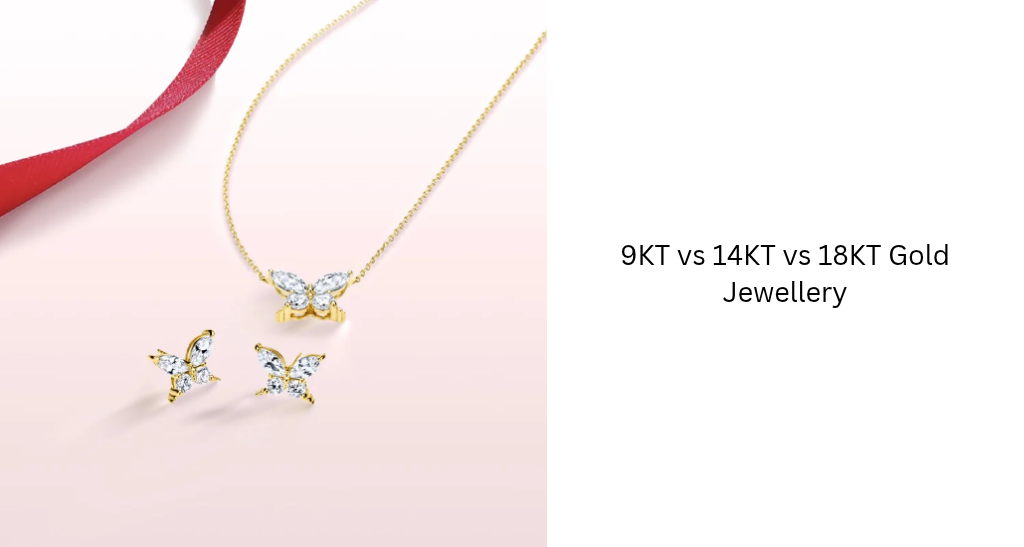
9KT vs 14KT vs 18KT Gold Jewellery: Which to Buy?
Choosing gold jewellery involves more than selecting a design or colour. The gold purity also determines how durable a piece will be, how much pure gold it contains, how it responds to everyday wear and how much maintenance it may require.
When shopping for gold jewellery, you will commonly come across three options: 9KT, 14KT and 18KT gold. Although they may look similar at first glance, their composition and practical properties are quite different.
The main difference lies in the proportion of pure gold mixed with other metals. A higher karat indicates a greater gold content, but it does not automatically mean the jewellery is better for every purpose. For example, a ring worn daily may benefit from a different gold composition than a pair of earrings reserved for special occasions.
Let's understand how these three gold purities compare and which one makes sense for your jewellery collection.
What Does KT Mean in Gold Jewellery?
Gold purity is measured using the karat system, which divides pure gold into 24 parts. Each karat represents a specific proportion of gold in the final alloy.
Pure gold is 24KT, meaning it contains approximately 99.9% gold. However, pure gold is relatively soft and can bend or scratch more easily than gold alloys. This is why jewellery manufacturers combine gold with other metals such as copper, silver, zinc and palladium.
These additional metals improve the physical properties of the jewellery and can also influence its colour.
Here is how the three commonly available gold purities are calculated:
| Gold Purity | Pure Gold Content | Other Metals |
|---|---|---|
| 9KT | 37.5% | 62.5% |
| 14KT | 58.5% | 41.5% |
| 18KT | 75% | 25% |
For instance, an 18KT gold ring weighing 10 grams contains approximately 7.5 grams of pure gold, while the remaining 2.5 grams consist of other metals.
This difference in composition affects the jewellery's value, colour, hardness and suitability for different types of use.
9KT Gold: A Practical Choice for Everyday Jewellery
9KT gold contains 37.5% pure gold and 62.5% other metals. Since it has a relatively high proportion of alloy metals, it is generally harder than higher-karat gold.
This makes it a practical option for jewellery that needs to withstand regular handling and everyday activities.
Key Characteristics of 9KT Gold
-
Gold purity: 37.5%
-
Hallmark identification: 375
-
Durability: Generally harder and more resistant to deformation than higher-karat gold.
-
Colour: Can have a slightly less rich yellow appearance, depending on the alloy composition.
-
Price: Usually more affordable than 14KT and 18KT gold of comparable weight.
When Should You Choose 9KT Gold?
9KT gold can be suitable for budget-conscious buyers who want genuine gold jewellery without paying for a higher gold content.
It is often considered for everyday rings, lightweight chains, earrings and contemporary jewellery designs.
However, there are a few considerations. Because it contains a higher proportion of other metals, its colour may differ from traditional high-purity yellow gold. Some alloy compositions may also cause skin sensitivity in people who react to particular metals, especially nickel.
If you are considering 9KT jewellery, check the alloy composition and hallmark rather than judging its quality by appearance alone.
14KT Gold: A Balance Between Purity and Durability
14KT gold contains 58.5% pure gold, with the remaining 41.5% made up of other metals.
It offers a middle ground between the durability of lower-karat gold and the higher gold content of 18KT jewellery. This balance makes it particularly popular for jewellery designed for frequent use.
Key Characteristics of 14KT Gold
-
Gold purity: 58.5%
-
Hallmark identification: 585
-
Durability: Offers good resistance to everyday wear and deformation.
-
Colour: Has a noticeable gold appearance, although the exact shade depends on the alloy.
-
Price: Generally costs less than 18KT gold of similar weight.
Why Is 14KT Gold Popular for Everyday Jewellery?
14KT gold is particularly useful for pieces that experience frequent contact with other surfaces.
For example, engagement rings, wedding bands, diamond rings and bracelets are regularly exposed to friction, accidental knocks and daily activities.
Its alloy composition provides additional hardness compared with 18KT gold, which can help a jewellery setting retain its shape.
It is also a popular choice for diamond jewellery because it offers a practical combination of metal strength and gold content.
However, durability does not mean that 14KT jewellery is scratch-proof. Prongs, clasps and other delicate components still require regular inspection.
If you want a piece that combines substantial gold content with practical everyday wearability, 14KT is worth considering.
18KT Gold: Higher Gold Purity and a Richer Appearance
18KT gold contains 75% pure gold, making it the highest-purity option among the three.
Its higher gold content gives it a richer yellow appearance in traditional yellow gold alloys. It is also widely used in fine jewellery, particularly in diamond and gemstone designs.
Key Characteristics of 18KT Gold
-
Gold purity: 75%
-
Hallmark identification: 750
-
Durability: Softer than comparable 9KT and 14KT alloys, although still suitable for many jewellery applications.
-
Colour: Generally offers a richer yellow tone.
-
Price: Typically more expensive because of its higher pure gold content.
Why Choose 18KT Gold Jewellery?
18KT gold is a popular choice for buyers who prioritise gold purity and the traditional appearance of fine gold jewellery.
It is frequently used in solitaire rings, diamond necklaces, pendants, earrings and other fine jewellery pieces.
For diamond jewellery, 18KT gold can also be a suitable option when the design and setting are engineered appropriately. However, the strength of a setting depends on more than just the karat. Its construction, thickness, design and craftsmanship matter as well.
One important consideration is that 18KT gold can be more susceptible to scratches and deformation than lower-karat alternatives. This does not make it unsuitable for everyday wear, but it does mean that proper care is important.
9KT vs 14KT vs 18KT Gold: A Detailed Comparison
Understanding the differences side by side makes it easier to decide which purity suits your requirements.
| Feature | 9KT Gold | 14KT Gold | 18KT Gold |
|---|---|---|---|
| Pure gold | 37.5% | 58.5% | 75% |
| Hallmark | 375 | 585 | 750 |
| Alloy metals | 62.5% | 41.5% | 25% |
| Relative hardness | Generally highest | Intermediate | Generally lowest |
| Yellow gold appearance | Depends on alloy | Depends on alloy | Generally richer |
| Gold content | Lowest | Medium | Highest |
| Relative price | Lowest | Medium | Highest |
| Common applications | Everyday jewellery | Rings and daily-wear jewellery | Fine and diamond jewellery |
Important: Hardness and durability are not determined by karat alone. The specific alloy, manufacturing process, design and thickness also influence how jewellery performs over time.
Does Gold Purity Affect Jewellery Colour?
Yes. Gold purity and alloy composition both influence the final colour of jewellery.
Pure gold has a naturally rich yellow colour. When it is mixed with other metals, the shade can change depending on which metals are used.
The three common gold colours include:
Yellow Gold
Yellow gold is made by combining gold with metals such as copper and silver. Higher-purity yellow gold generally has a richer, deeper yellow appearance.
White Gold
White gold is created by mixing gold with white-coloured alloy metals such as palladium or nickel. Many white gold pieces are also rhodium-plated to achieve a brighter white finish.
The plating can wear away with time and may require reapplication.
Rose Gold
Rose gold gets its pinkish appearance from a higher proportion of copper in the alloy. The copper gives the metal its distinctive warm tone.
An important point to remember is that 9KT, 14KT and 18KT gold can all be available in different colours. The karat indicates purity, not colour.
Which Gold Is Best for Diamond Jewellery?
The right gold purity for diamond jewellery depends on the design, setting and how frequently you intend to wear the piece.
For diamond rings: 14KT and 18KT are both popular choices. 14KT offers additional hardness, while 18KT provides higher gold content. For rings with delicate settings, the setting design and prong construction are especially important.
For diamond earrings: 18KT gold is a common choice for fine diamond earrings, while 14KT can be a practical alternative for frequent wear.
For diamond pendants: Both 14KT and 18KT work well. Since pendants generally experience less direct impact than rings, the choice often comes down to gold purity, design and budget.
For diamond bracelets: 14KT can be a practical choice for designs exposed to frequent movement and friction. 18KT is also suitable when the bracelet has been designed with appropriate structural strength.
Ultimately, the metal should complement the diamond setting rather than being selected on purity alone.
Factors to Consider Before Buying Gold Jewellery
Before choosing between 9KT, 14KT and 18KT gold, consider these factors:
1. Check the BIS Hallmark
In India, hallmarking helps buyers verify the declared purity of gold jewellery.
Look for the BIS logo, purity mark and six-digit HUID (Hallmark Unique Identification) number on applicable hallmarked jewellery.
You can use the BIS Care application to verify the HUID details and check the registered information associated with the jewellery.
2. Understand the Price Difference
The gold value of a jewellery piece depends on its net gold weight, purity and the applicable gold rate.
For example, two rings with identical designs and weights may have different gold values if one is made of 14KT gold and the other of 18KT gold.
However, the final price also includes making charges, applicable taxes, diamond or gemstone costs and other components.
Therefore, do not compare jewellery prices based only on the total weight or displayed price.
3. Consider Your Lifestyle
Think about how frequently you will wear the jewellery.
A ring worn every day experiences more friction and accidental impact than a pendant worn occasionally. If you work with your hands or regularly engage in physical activities, the construction and setting strength become particularly important.
4. Check the Jewellery's Maintenance Requirements
All gold jewellery requires some level of maintenance.
Over time, pieces can develop scratches, lose their shine or accumulate dirt around diamond settings.
White gold may also require rhodium replating to maintain its bright white finish. Regardless of karat, professional inspection is recommended for jewellery with diamond settings.
Final Verdict: Which Gold Should You Buy?
There is no single gold purity that works best for everyone. The right choice depends on what you value most: affordability, durability, gold content or appearance.
-
Choose 9KT if you want a more affordable gold jewellery option and are comfortable with its lower gold content.
-
Choose 14KT if you want a balance between gold purity and everyday practicality.
-
Choose 18KT if higher gold content and a richer gold appearance are your priorities.
For buyers investing in fine diamond jewellery, 18KT is worth considering for its higher gold content, while 14KT can be an excellent alternative for designs that benefit from additional hardness.
The most important thing is to understand what you are paying for. Check the hallmark, compare the net gold weight, understand the making charges and pay attention to the quality of the setting.
A well-made piece of jewellery should not only look good when you purchase it but should also suit the way you intend to wear and care for it.
Frequently Asked Questions
Is 18KT gold better than 14KT gold?
18KT gold contains more pure gold (75%) than 14KT gold (58.5%). However, 14KT is generally harder due to its higher alloy content. The better option depends on whether you prioritise gold purity or additional hardness.
Can 9KT gold be considered real gold?
Yes. 9KT gold is genuine gold containing 37.5% pure gold. It is identified by the 375 purity mark.
Which gold is best for everyday wear?
Both 14KT and 9KT gold are commonly considered for everyday jewellery because of their relative hardness. However, 18KT can also be worn daily when the jewellery is properly designed and maintained.
Does 18KT gold lose its colour over time?
Solid 18KT yellow gold does not typically lose its natural colour through normal wear. However, surface scratches and accumulated dirt can affect its appearance. White gold may need rhodium replating to maintain its bright finish.
Is 14KT gold suitable for diamond rings?
Yes. 14KT gold is widely used for diamond rings because its alloy composition generally provides good hardness and resistance to deformation. The quality of the setting and craftsmanship is equally important.
Which is more expensive: 14KT or 18KT gold?
18KT gold is generally more expensive than 14KT gold of comparable weight and design because it contains a higher proportion of pure gold.


