










 All Earrings
 Stud Earrings
 Drop Earrings
 Solitaire
 Hoop Earrings
 Halo Earrings
 Vermeil Earrings
 Round
 Oval
 Emerald
 Pear
 Princess
 Heart
 Marquise
 All Rings
 Solitaire Rings
 Band Rings
 Halo Rings
 Cocktail Rings
 Eternity Rings
 Fashion Ring
 Stack Rings
 Men's Rings
 Vermeil Rings
 All Necklaces
 Necklet
 Mangalsutra
 Solitaire
 Tennis Necklace
 Statement Necklace
 Vermeil Necklace
 Alphabets
 Solitaire Pendant
 Halo Pendant
 Vermeil Pendants
 All Bracelets
 Solitaire Bracelet
 Tennis Bracelet
 Fashion Bracelet
 Mangalsutra
 Vermeil Bracelets
 All Vermeil
 Vermeil Earring
 Vermeil Pendant
 Vermeil Ring
 Vermeil Necklace
 Vermeil Mangalsutra
 Vermeil Bracelets
 Vermeil Bangles
 Vermeil Men’s
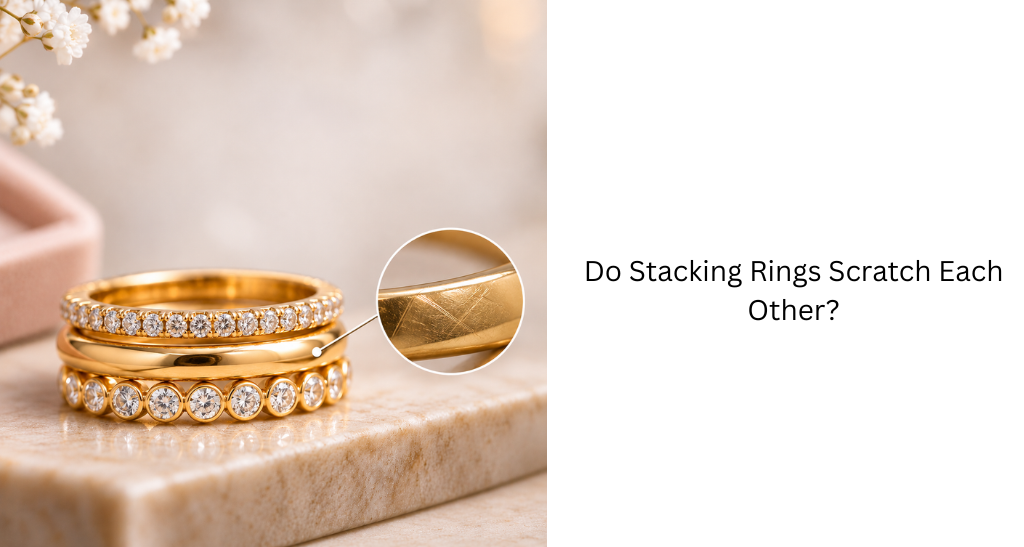
Do Stacking Rings Scratch Each Other? How to Prevent Damage
Yes, stacking rings can scratch each other when they rub together during everyday movement. The amount of wear depends on the metals, the setting styles, the amount of movement between the rings and how often they are worn together.
Small surface marks are a normal part of wearing jewellery, especially when multiple bands sit closely on the same finger. However, repeated friction can gradually affect the finish of the metal and may loosen certain settings if the rings have protruding or exposed parts.
The good news is that choosing compatible designs and following a few simple care habits can help reduce unnecessary wear.
Why Do Stacking Rings Scratch Each Other?
1. The Rings Move Against Each Other
Rings rarely stay completely still on the finger. As you move your hands, type, grip objects or go about your daily routine, stacked bands can shift and rub against one another.
This repeated contact can leave fine scratches, particularly on polished gold surfaces. Rings that fit loosely or have different shapes may move more than bands that sit securely together.
2. The Metals Have Different Hardness Levels
Not all jewellery metals respond to friction in the same way. Gold alloys vary in hardness depending on their karat and composition, while platinum and other metals have different wear characteristics.
When two rings rub together, the harder surface can mark the softer one under certain conditions. However, hardness alone does not determine whether scratching will occur. The shape of the rings, pressure and movement also matter.
Mixing metals is not automatically a problem, but rings with different finishes or construction may show wear differently over time.
3. Diamond Settings Can Cause Contact Damage
A ring with exposed prongs, raised diamond settings or sharp design details can come into contact with the neighbouring band. If the rings repeatedly knock against each other, the contact may damage the metal finish or put stress on delicate setting components.
This is especially important when stacking a diamond engagement ring with a plain band or another diamond-set ring. The goal is to ensure that the bands sit together without forcing their settings against each other.
4. The Rings Do Not Fit Together Properly
Two rings can fit the finger individually but still be unsuitable for wearing together. A curved band may leave a gap beside a straight engagement ring, while a raised setting may prevent another band from sitting flush.
These gaps allow the rings to move and collide. Over time, repeated contact at the same points can cause visible marks.
How to Prevent Stacking Rings From Getting Scratched
Choose Rings That Fit Together Properly
Before buying a new band, check how it sits beside your existing ring. The inner edges should feel comfortable, and the designs should not force the rings to tilt or press against each other.
If your engagement ring has a raised centre stone or an unusual setting, a contoured or curved band may fit better than a straight one. Try the rings together before purchasing whenever possible.
Avoid Excessive Movement Between Bands
A ring that spins or slides easily may rub against neighbouring rings more frequently. Make sure each band fits securely without feeling tight or restricting circulation.
Keep in mind that adding several rings increases the overall width of the stack. If the combination feels uncomfortable or presses against adjacent fingers, reconsider the fit rather than forcing all the rings onto one finger.
Check Prongs and Raised Settings
Inspect diamond-set rings periodically for bent prongs, loose stones or edges that catch against nearby bands. If a setting repeatedly touches another ring, ask a jeweller whether the designs can be adjusted or whether a different band would be more suitable.
Do not try to bend prongs or reshape a ring yourself. Even a small adjustment can affect the security of a diamond.
Be Careful When Mixing Ring Finishes
Polished, matte and textured bands can all be worn together, but friction may gradually change their appearance. A matte finish can become smoother at contact points, while polished metal may develop fine surface marks.
If maintaining a particular finish is important to you, avoid wearing rings that constantly rub against each other. Remove them separately when needed rather than twisting or sliding them against one another.
Remove Your Rings During Activities That Cause Impact
Take off your stacking rings before weightlifting, heavy manual work, gardening or other activities where your hands experience repeated pressure or impact. These situations can cause more than surface scratches: they may bend bands, damage settings or loosen stones.
Store the rings separately while they are off your hands so they do not knock against one another in a jewellery box or pouch.
Can You Wear Gold and Diamond Stacking Rings Together?
Yes, gold bands and diamond-set rings can be worn together, provided their designs are compatible. The presence of diamonds does not automatically make a ring safe from wear, and a plain gold band can still scratch another ring through repeated contact.
Pay attention to the setting height, prong placement, band width and how securely the rings sit together. If two rings repeatedly rub at the same point, changing their arrangement or choosing a better-fitting band may help reduce damage.
For everyday wear, prioritise a comfortable fit and a combination that does not place pressure on delicate settings.
How Should You Clean and Store Stacking Rings?
Clean your rings according to the care instructions for their metals and gemstones. For many gold and diamond pieces, lukewarm water, mild soap and a soft brush are suitable, but avoid this method if the jewellery contains delicate materials or has a finish that requires special care.
Cleaning removes dirt and residue that can collect between bands, but it does not remove scratches. Avoid abrasive cleaners, rough cloths and polishing products that are not suitable for your jewellery.
When you are not wearing the rings, store each piece in a separate soft pouch or a compartment in a jewellery box. This prevents the rings from rubbing against one another in storage.
When Should You Get Your Rings Checked?
Fine surface scratches are generally cosmetic, but certain signs need professional attention. Have your rings inspected if you notice a loose diamond, a bent prong, a distorted band or a setting that catches on clothing.
A jeweller can assess whether the ring needs tightening, repair or professional polishing. Polishing can improve the appearance of some scratches, but repeated polishing removes a small amount of metal, so it should not be treated as a routine solution for every mark.
Final Thoughts
Stacking rings can scratch each other, but the risk depends largely on how the rings fit, how their designs interact and how they are worn. Choose bands that sit comfortably together, check exposed settings regularly and remove your rings during activities that put them under pressure.
With the right combination and a little care, you can enjoy wearing multiple rings while reducing avoidable wear and keeping them in good condition for longer.


