




 All Earrings
 Stud Earrings
 Drop Earrings
 Solitaire
 Hoop Earrings
 Halo Earrings
 Vermeil Earrings
 Round
Round
 Oval
Oval
 Emerald
 Pear
Pear
 Princess
 Heart
Heart
 Marquise
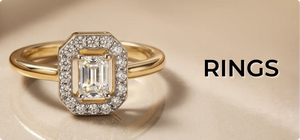
 All Rings
 Solitaire Rings
 Band Rings
 Halo Rings
 Cocktail Rings
 Eternity Rings
 Fashion Ring
 Stack Rings
 Men's Rings
 Vermeil Rings
 All Necklaces
 Necklet
 Mangalsutra
 Solitaire
 Tennis Necklace
 Statement Necklace
 Vermeil Necklace
 Alphabets
 Solitaire Pendant
 Halo Pendant
 Vermeil Pendants
 All Bracelets
 Solitaire Bracelet
 Tennis Bracelet
 Fashion Bracelet
 Mangalsutra
 Vermeil Bracelets
 All Vermeil
 Vermeil Earring
 Vermeil Pendant
 Vermeil Ring
 Vermeil Necklace
 Vermeil Mangalsutra
 Vermeil Bracelets
 Vermeil Bangles
 Vermeil Men’s
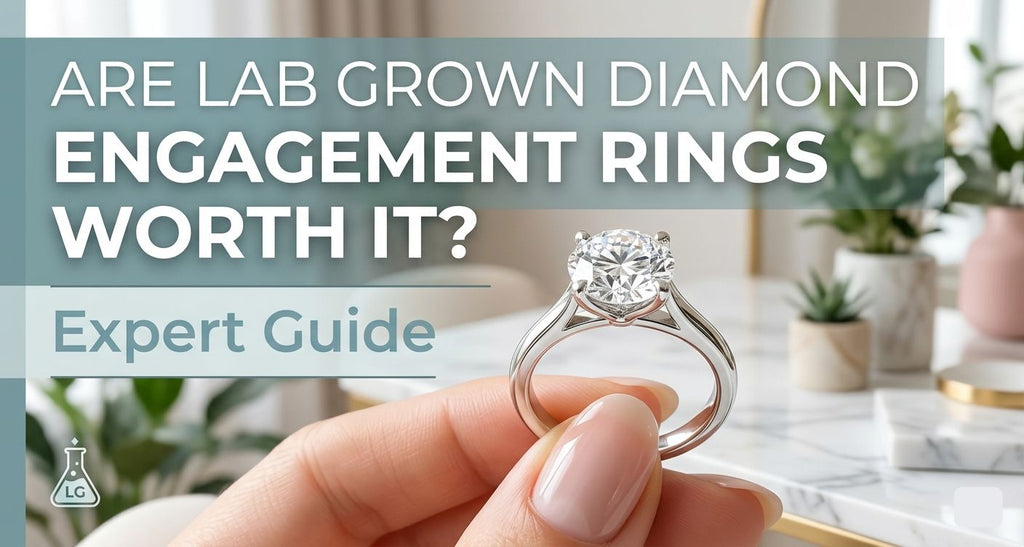
Are Lab Grown Diamond Engagement Rings Worth It? Expert Guide
Buying an engagement ring usually comes down to a few important things: how the ring looks, the diamond quality, how much you want to spend and what the ring means to you.
That is why more couples are now asking:
Are lab grown diamond engagement rings actually worth it?
For many buyers, yes.
Lab grown diamonds are real diamonds with essentially the same chemical, physical and optical properties as natural diamonds. The main difference is their origin. Natural diamonds form inside the Earth, while lab grown diamonds are created using controlled processes such as CVD or HPHT.
The bigger difference for buyers is price.
At Lukson, lab grown diamonds are priced from around ₹30,000 per carat. The final engagement ring price depends on the diamond carat weight, gold weight and purity, setting and overall design.
That gives buyers more freedom to choose the diamond and ring they actually want without putting most of their budget into the centre stone alone.
But lab grown diamonds also come with trade offs, especially around resale value and natural rarity.
So let us look at both sides.
Quick Answer: Are Lab Grown Diamond Engagement Rings Worth It?
Yes, a lab grown diamond engagement ring can be worth it if you want a real diamond, a larger or better quality stone within your budget, and more freedom with the overall ring design.
They make particular sense if:
-
You want a larger centre diamond
-
You have a fixed engagement ring budget
-
You care more about wearing the ring than its future resale
-
You want flexibility with cut, colour and clarity
-
You want more options for customisation
-
Natural origin is not a major priority for you
A natural diamond may still make more sense if natural rarity, geological origin or resale value is especially important to you.
Lab Grown vs Natural Diamonds: What Is the Difference?
The main difference is where the diamond comes from.
Natural diamonds form through geological processes within the Earth.
Lab grown diamonds are produced using technology that creates the conditions needed for diamond crystal growth. The two main methods are:
- CVD – Chemical Vapor Deposition
- HPHT – High Pressure High Temperature
Lab grown diamonds are not the same as moissanite or cubic zirconia. Those are different materials that can resemble a diamond.
A lab grown diamond is diamond material.
Here is the difference in simple terms:
| Factor | Lab Grown Diamond | Natural Diamond |
|---|---|---|
| Is it a real diamond? | Yes | Yes |
| Origin | Laboratory | Earth |
| Physical properties | Essentially the same | Diamond |
| Appearance | Can look the same to the unaided eye | Natural diamond |
| Price | Generally lower | Generally higher |
| Natural rarity | No | Yes |
| Certification | Available | Available |
| Resale expectations | Generally lower | Generally stronger |
| Best suited for | Size, quality and budget flexibility | Natural rarity and tradition |
So the decision is not really about real vs fake.
It is about price, origin, rarity and what matters to you personally.
Why Lab Grown Diamond Engagement Rings Can Be Worth It
1. You Get More Diamond for Your Budget
This is probably the biggest reason people choose lab grown diamonds.
If less of your total engagement ring budget goes towards the centre diamond, you have more room to decide where you actually want to spend.
You may prefer:
-
A larger centre stone
-
Better cut quality
-
Better colour or clarity
-
More gold in the ring
-
A more detailed setting
-
Side diamonds
-
A customised design
For example, if you have always wanted an oval or emerald cut engagement ring with a noticeable centre stone, a lab grown diamond may make that easier to achieve within the same budget.
That does not mean you should simply buy the largest diamond possible.
A beautiful engagement ring is about balance.
2. You Can Choose a Larger Diamond Without Sacrificing Everything Else
Carat weight matters to many engagement ring buyers because the centre stone is usually the main visual focus of the ring.
Lab grown diamonds can make larger carat sizes more accessible.
But carat alone should never decide which diamond you buy.
A well cut 0.80 carat diamond can look more attractive than a poorly cut 1 carat diamond.
A larger diamond with weak proportions may not reflect light as well as a slightly smaller diamond with a better cut.
So use the budget advantage of lab grown diamonds to get a better overall diamond, not simply a bigger number on the certificate.
3. They Are Suitable for Everyday Engagement Rings
An engagement ring is not usually jewellery that stays in a box.
It may be worn every day for years.
Lab grown diamonds have essentially the same physical properties as natural diamonds, including diamond's high hardness.
But remember that the diamond is only one part of the ring.
How durable your engagement ring is also depends on:
-
Prong thickness
-
Band thickness
-
Setting quality
-
Metal
-
Height of the centre stone
-
Overall construction
A good diamond in a weak setting is still not a good engagement ring.
The complete ring matters.
4. You Have More Freedom With Diamond Shape
Lab grown diamonds are available in the same popular shapes buyers usually consider for engagement rings, including:
-
Round
-
Oval
-
Emerald
-
Pear
-
Marquise
-
Princess
-
Cushion
-
Radiant
-
Heart
This gives you more freedom to choose based on the wearer's style instead of simply choosing the shape that fits the budget.
Some elongated shapes such as oval, pear and marquise can also give more visible spread across the finger.
Lab Grown Diamonds Are Becoming a Bigger Choice for Buyers
Lab grown diamonds are no longer a niche category.
According to Wazir Advisors' 2026 report, India's lab grown diamond jewellery market is estimated at around $0.4 billion and is projected to reach approximately $1.1 billion by 2030.
The report also estimates that around 70–75% of current Indian lab grown diamond demand comes from consumers moving from natural diamonds.
That is an important shift.
It suggests buyers are not considering lab grown diamonds only because they could not previously afford a diamond.
Many buyers are comparing the two and deciding that size, design and value matter more to them than natural origin.
What Are the Downsides of Lab Grown Diamond Engagement Rings?
Lower price and more choice sound attractive, but there are a few things you should understand before buying.
1. Resale Value Is the Biggest Concern
This is probably the biggest disadvantage of lab grown diamonds.
Natural diamonds currently have a more established resale market.
Lab grown diamond prices have also changed considerably as production has increased.
In Wazir Advisors' 2026 consumer study, 62% of respondents identified resale concerns as the biggest barrier to buying lab grown diamonds.
So if your main goal is investment or future resale, a lab grown diamond may not be the best choice.
But engagement rings are not normally bought only as investments.
If your priority is wearing and enjoying the ring for years, the lower resale expectation may matter less to you.
Still, always check the jeweller's:
-
Buyback policy
-
Exchange policy
-
Warranty
-
After sales terms
before purchasing.
2. They Do Not Have the Same Natural Rarity
A natural diamond has a geological history.
It formed naturally inside the Earth over an extremely long period.
For some buyers, that origin and rarity are an important part of what makes the diamond special.
A lab grown diamond does not have the same natural rarity.
That does not make it less suitable as jewellery.
It simply means you need to decide how important natural origin is to you.
3. Lab Grown Does Not Automatically Mean Zero Environmental Impact
Lab grown diamonds do not require traditional diamond mining.
However, producing diamonds through CVD or HPHT still requires specialised equipment and energy.
So it is better to avoid broad claims such as “zero environmental impact.”
If sustainability matters to you, look at the transparency of the producer and how the diamond was manufactured rather than relying only on the label “lab grown.”
Who Should Choose a Lab Grown Diamond Engagement Ring?
A lab grown diamond may be right for you if:
-
You have a fixed budget
-
You want a larger diamond
-
You want better diamond specifications for your budget
-
You want more freedom with the ring design
-
You plan to wear the ring rather than treat the diamond as an investment
-
Natural origin is not especially important to you
-
You want a certified diamond
-
You want to customise the ring
For these buyers, lab grown diamonds can offer strong value.
Who May Prefer a Natural Diamond?
A natural diamond may suit you better if:
-
Natural rarity matters to you
-
Your family strongly prefers natural diamonds
-
Geological origin adds meaning for you
-
Resale is an important part of your decision
-
You specifically want a naturally formed diamond
-
You are comfortable paying more for that rarity
There is no universal winner.
The right choice depends on what you expect from your engagement ring.
How Much Does a Lab Grown Diamond Engagement Ring Cost in India?
There is no single price for a lab grown engagement ring.
The final amount depends on both the diamond and the jewellery setting.
At Lukson, lab grown diamonds are priced from around ₹30,000 per carat.
But that does not mean every 1 carat engagement ring will cost ₹30,000.
The final ring price also depends on:
-
Diamond carat weight
-
Diamond shape
-
Cut
-
Colour
-
Clarity
-
Gold weight
-
Gold purity
-
Side diamonds
-
Setting
-
Design complexity
For example, two rings can both contain a 1 carat centre diamond but have very different final prices if one uses a simple solitaire setting and the other uses more gold, side diamonds or a detailed halo design.
That is why you should compare the complete ring price, not only the advertised diamond price.
How to Choose the Right Lab Grown Diamond Engagement Ring
Once you decide that lab grown makes sense for you, the next step is choosing the right diamond and setting.
1. Start With Cut
Cut has a major effect on how a diamond interacts with light.
Do not sacrifice cut simply to reach a particular carat weight.
A well cut diamond can look brighter and more attractive than a larger stone with weaker proportions.
2. Choose the Shape You Actually Like
Do not choose a shape only because it is currently trending.
Round diamonds give a classic look.
Oval and marquise shapes have an elongated appearance.
Emerald cuts have a cleaner, more structured look.
Pear diamonds have a distinctive combination of a rounded end and pointed tip.
Choose based on the wearer's personal style.
3. Do You Really Need D F Colour?
Not necessarily.
D, E and F sit in the colourless range, but many buyers can get a very good looking engagement ring without choosing the highest possible colour grade.
A G H colour diamond can still appear white to the eye in many settings while allowing more of the budget to go towards size, cut or the overall ring.
Metal colour matters too.
A slightly warmer diamond may be less noticeable in yellow or rose gold than in a bright white setting.
4. Do You Need VVS Clarity?
Again, not always.
VVS diamonds have very small inclusions, but those higher grades also usually cost more.
For many engagement rings, a well selected VS1 or VS2 diamond can look clean to the naked eye.
Instead of chasing the highest grade on paper, compare how the actual diamond looks.
5. Check Measurements, Not Only Carat Weight
Carat tells you weight.
It does not tell you exactly how large the diamond will look from the top.
Two diamonds with the same carat weight can have different visible dimensions.
For elongated shapes such as:
-
Oval
-
Pear
-
Emerald
-
Marquise
-
Radiant
check the length, width and length to width ratio before choosing.
These measurements can make a noticeable difference on the finger.
6. Match the Setting to Your Lifestyle
Think about how the ring will actually be worn.
A high set diamond may look prominent but can catch more easily on clothes.
A lower setting may be more practical for regular wear.
Prong settings leave more of the diamond visible.
Bezel settings surround more of the stone with metal and can offer additional protection.
The best setting is not simply the one that looks best in a photograph.
It should also work for everyday life.
7. Choose the Right Metal
Popular engagement ring metals include:
-
Yellow gold
-
White gold
-
Rose gold
-
Platinum
Consider appearance, budget, maintenance and the jewellery the wearer already owns.
Also check the gold purity, gold weight and hallmark rather than choosing only by colour.
Always Check Diamond Certification
Certification is important when comparing diamonds.
A diamond report can give you documented details such as:
-
Carat weight
-
Colour
-
Clarity
-
Cut, where applicable
-
Measurements
-
Diamond origin
-
Report number
Before purchasing, check which laboratory has issued the certificate.
Also verify the report number through the laboratory's website when online verification is available.
If the diamond has a laser inscription, check that it matches the report.
Certification helps you compare what you are actually buying instead of relying only on how the diamond looks under store lighting.
Why Choose Lukson for a Lab Grown Diamond Engagement Ring?
When buying an engagement ring, do not compare the centre diamond alone.
The quality of the complete ring also depends on the gold, setting, craftsmanship, certification and after sales support.
At Lukson, buyers can choose from lab grown diamond engagement rings across different diamond shapes, gold colours, settings and budgets.
You can also choose the diamond and ring specifications based on your own priorities rather than simply selecting a fixed design.
Before buying, compare:
-
Diamond specifications
-
Certification
-
Gold purity
-
Gold weight
-
Ring setting
-
Final price
-
Exchange and buyback policy
-
After sales support
The aim should be simple:
Know what you are paying for and choose the ring that gives you the right balance of diamond, gold, design and budget.
Final Verdict: Are Lab Grown Diamond Engagement Rings Worth It?
For many buyers, yes.
The biggest advantage of a lab grown diamond is not simply that it costs less.
It is what that lower diamond price allows you to do.
You may be able to choose:
-
A larger centre stone
-
Better specifications
-
More gold
-
A stronger setting
-
A more detailed design
without increasing your total engagement ring budget as much.
The biggest compromise is resale value and natural rarity.
So the choice becomes fairly simple.
Choose lab grown if size, quality, design and budget matter more to you.
Consider natural if geological rarity, natural origin and resale matter more.
Neither choice makes an engagement ring more meaningful.
That comes from the person, the proposal and the story attached to the ring.
If you want a certified diamond engagement ring that gives you more flexibility with size, quality and design, a lab grown diamond can be well worth considering.
quality, design and budget.


