






 All Earrings
 Stud Earrings
 Drop Earrings
 Solitaire
 Hoop Earrings
 Halo Earrings
 Vermeil Earrings
 Round
 Oval
 Emerald
 Pear
 Princess
 Heart
 Marquise
 All Rings
 Solitaire Rings
 Band Rings
 Halo Rings
 Cocktail Rings
 Eternity Rings
 Fashion Ring
 Stack Rings
 Men's Rings
 Vermeil Rings
 All Necklaces
 Necklet
 Mangalsutra
 Solitaire
 Tennis Necklace
 Statement Necklace
 Vermeil Necklace
 Alphabets
 Solitaire Pendant
 Halo Pendant
 Vermeil Pendants
 All Bracelets
 Solitaire Bracelet
 Tennis Bracelet
 Fashion Bracelet
 Mangalsutra
 Vermeil Bracelets
 All Vermeil
 Vermeil Earring
 Vermeil Pendant
 Vermeil Ring
 Vermeil Necklace
 Vermeil Mangalsutra
 Vermeil Bracelets
 Vermeil Bangles
 Vermeil Men’s
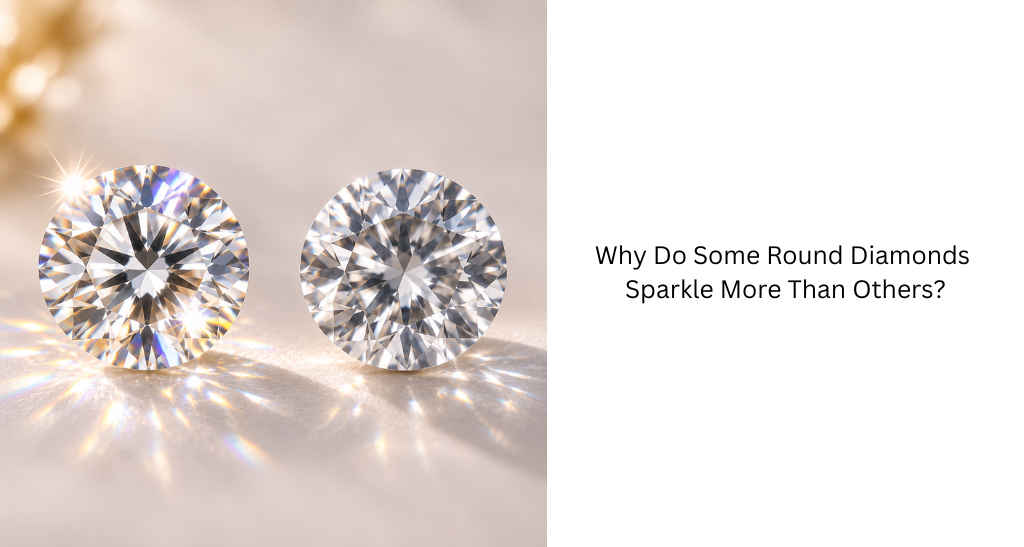
Why Do Some Round Diamonds Sparkle More Than Others?
Have you ever noticed that two round diamonds of the same carat size can look completely different? One may appear bright and full of sparkle, while the other looks comparatively dull. This difference is not always related to diamond size or price. It often comes down to how the diamond is cut, how its facets are arranged and how well it handles light.
A round diamond's sparkle depends on several factors working together. Understanding them can help you identify a diamond that looks bright and lively before making a purchase.
1. Diamond Cut Quality Makes the Biggest Difference
Cut quality is one of the most important factors affecting a round diamond's sparkle. It determines how effectively the diamond interacts with light.
When light enters a well-cut diamond, it reflects through its internal facets and returns towards the viewer. This creates the brightness and flashes of light associated with a sparkling diamond.
A poorly cut diamond may allow too much light to escape through its sides or bottom. As a result, it can look darker or less lively, even if it has a higher carat weight.
This is why two round diamonds with the same colour, clarity and carat weight can have noticeably different appearances.
2. Diamond Proportions Affect Light Reflection
A round brilliant diamond has several sections, including the table, crown, girdle and pavilion. Their proportions influence how light travels through the stone.
Three measurements are particularly important:
-
Table Percentage: The table is the flat surface at the top of the diamond. Its size affects how light enters and returns from the stone.
-
Crown Angle: The crown is the upper section between the table and the girdle. Its angle influences the balance of brightness and coloured light.
-
Pavilion Angle: The pavilion is the lower section of the diamond. Its angle plays an important role in directing light back towards the viewer.
These measurements work together. A diamond with well-balanced proportions can return more light through its top, creating better brightness and visual appeal.
3. Symmetry and Polish Influence the Diamond's Appearance
Cut quality is not just about proportions. The precision of the diamond's finish also matters.
Symmetry refers to how accurately the facets are aligned and positioned. In a round brilliant diamond, well-aligned facets help create balanced light patterns. Poor symmetry can affect the way the diamond reflects light.
Polish refers to the smoothness of the diamond's surface after cutting and polishing. Visible polishing marks or surface imperfections can affect its finish.
When comparing diamonds, look for good symmetry and polish grades along with an excellent or very good cut grade.
4. Understand the Three Types of Diamond Sparkle
Diamond sparkle is not just one effect. It is made up of three different visual properties.
-
Brilliance: The white light reflected from the diamond towards your eyes. It gives the stone its bright appearance.
-
Fire: The coloured flashes of light that appear when white light separates into different colours.
-
Scintillation: The flashes of light and dark areas you see when the diamond or viewing angle changes.
A well-cut round diamond balances all three, creating a lively appearance rather than just looking bright from one angle.
5. Can Diamond Clarity and Colour Affect Sparkle?
Yes, but their impact is different from cut quality.
Clarity refers to internal inclusions and external blemishes. If inclusions are large, numerous or positioned in noticeable areas, they can affect the diamond's transparency and appearance.
Colour refers to the natural body colour of a diamond. In the near-colourless range, differences in colour grades generally have less impact on sparkle than differences in cut quality.
If your priority is brilliance, focus on cut quality first, then compare clarity and colour based on your budget and visual preference.
6. Does Lighting Change How a Diamond Sparkles?
Absolutely. A diamond can look different under different lighting conditions.
Under direct sunlight, you may notice bright flashes and coloured reflections. Under indoor spotlights, the diamond may show more noticeable flashes as you move your hand. In softer lighting, its sparkle may appear more subtle.
This is why you should not judge a diamond only under bright showroom lights. Look at it under different lighting conditions to understand how it performs in everyday surroundings.
7. How to Choose a Round Diamond with Better Sparkle
Before buying a round diamond, consider these practical points:
-
Check the cut grade and prioritise Excellent or Ideal cut options where reliable grading information is available.
-
Compare the table, crown and pavilion proportions rather than relying on carat weight alone.
-
Look for good symmetry and polish grades.
-
Ask for clear photographs or videos showing the diamond from different angles.
-
Check the diamond under natural and indoor lighting.
-
Review its grading certificate to understand its quality characteristics.
For lab-grown round diamonds, the same cut and light-performance principles apply as they do to natural diamonds.
Final Thoughts
The sparkle of a round diamond depends on much more than its size. Cut quality, proportions, symmetry and polish all influence how the stone handles light. Clarity, colour and lighting conditions also contribute to its overall appearance.
When choosing a round diamond, look beyond carat weight and pay attention to how the stone performs visually. A well-cut diamond with balanced proportions can deliver impressive brilliance, fire and scintillation without needing to be the largest stone.


