








 All Earrings
 Stud Earrings
 Drop Earrings
 Solitaire
 Hoop Earrings
 Halo Earrings
 Vermeil Earrings
 Round
Round
 Oval
Oval
 Emerald
 Pear
Pear
 Princess
 Heart
Heart
 Marquise
 All Rings
 Solitaire Rings
 Band Rings
 Halo Rings
 Cocktail Rings
 Eternity Rings
 Fashion Ring
 Stack Rings
 Men's Rings
 Vermeil Rings
 All Necklaces
 Necklet
 Mangalsutra
 Solitaire
 Tennis Necklace
 Statement Necklace
 Vermeil Necklace
 Alphabets
 Solitaire Pendant
 Halo Pendant
 Vermeil Pendants
 All Bracelets
 Solitaire Bracelet
 Tennis Bracelet
 Fashion Bracelet
 Mangalsutra
 Vermeil Bracelets
 All Vermeil
 Vermeil Earring
 Vermeil Pendant
 Vermeil Ring
 Vermeil Necklace
 Vermeil Mangalsutra
 Vermeil Bracelets
 Vermeil Bangles
 Vermeil Men’s
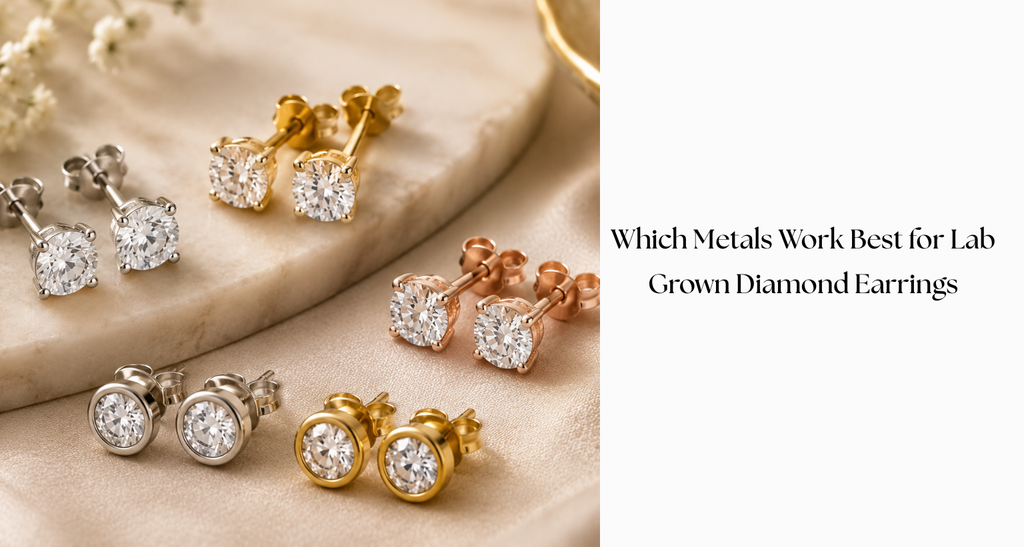
Which Metals Work Best for Lab Grown Diamond Earrings
When buying lab grown diamond earrings, most people spend time choosing the diamond shape, size and design. But the metal matters just as much.
The metal holds the diamonds in place, affects how the earrings look, and can also make a difference to comfort and everyday wear. A well-chosen metal can make the diamonds look brighter, while the wrong choice may not suit your skin tone, lifestyle or the design of the earrings.
Lab grown diamonds have the same chemical, physical and optical properties as mined diamonds. So, when choosing the metal, you do not need a different type of metal just because the diamond is lab grown.
The best choice depends on the earring design, your budget, skin sensitivity and how often you plan to wear the earrings.
What Metals Are Commonly Used for Diamond Earrings?
The most common options are:
-
14K gold
-
18K gold
-
9K gold
-
Platinum
-
White gold
-
Yellow gold
-
Rose gold
Each has its own advantages. Let's look at them one by one.
1. 14K Gold
14K gold is a practical choice for everyday lab grown diamond earrings.
It contains 58.5% pure gold, with the remaining portion made up of other metals that give the jewellery more strength. Because it is harder than higher-purity gold, it can handle regular wear well.
This makes 14K gold a good option for earrings that you plan to wear often, such as diamond studs, small hoops and everyday drop earrings.
Why choose 14K gold?
-
Good durability for everyday use
-
Usually more affordable than 18K gold
-
Available in yellow, white and rose gold
-
Less likely to bend compared with softer, higher-purity gold
If you want a pair of lab grown diamond earrings that you can wear regularly without spending too much on the metal, 14K gold is worth considering.
2. 18K Gold
18K gold contains 75% pure gold. Because it has a higher gold content, it has a richer colour and a more premium feel than 14K gold.
It is available in yellow, white and rose gold.
18K gold works particularly well with larger diamond earrings, statement designs and pieces bought for special occasions. It is also a popular choice when the jewellery is meant to feel more luxurious while still being practical.
The trade-off is that 18K gold is softer than 14K gold. This means it can show scratches more easily with frequent rough use.
For earrings, however, this is usually less of an issue because earrings do not experience the same level of impact as rings or bracelets.
3. Platinum
If durability and a naturally white metal are your main priorities, platinum is one of the strongest choices.
Platinum is naturally white, so it does not need rhodium plating to give it a white appearance. It is also dense and strong, which makes it a good choice for holding diamonds securely.
Platinum can work especially well for solitaire studs, diamond drops and other designs where you want the metal to have a clean white appearance.
It is usually more expensive than gold, so it may not be the first choice for someone working with a tighter budget.
Platinum is worth considering if:
-
You want a naturally white metal
-
You prefer a premium metal
-
You want a strong setting for your diamonds
-
You are looking for jewellery that can be worn for many years
4. White Gold
White gold is made by mixing gold with other metals to give it a white appearance. It is a popular choice for diamond earrings because the white metal creates a clean background around the stone.
One thing to know about white gold is that many pieces are finished with rhodium plating. Rhodium gives white gold its bright white surface, but the plating can wear away over time.
When that happens, the earrings may need to be replated to restore the original finish.
White gold is a good choice if you like the look of platinum but want a gold-based option that is generally more affordable.
5. Yellow Gold
Yellow gold is a classic choice and works surprisingly well with lab grown diamonds.
The warm colour of yellow gold creates contrast with the bright diamond, which can make the stone stand out.
Yellow gold is available in different purities, such as 9K, 14K and 18K. The higher the karat, the higher the percentage of pure gold.
For everyday earrings, 14K yellow gold can be a practical option. If you prefer a richer gold colour and do not mind paying more, 18K yellow gold is another choice.
Yellow gold is particularly good for people who like traditional jewellery or want their diamond earrings to have a warmer appearance.
6. Rose Gold
Rose gold gets its pinkish colour from the addition of copper to gold.
It has become popular for earrings because it gives diamond jewellery a softer and warmer look without changing the diamond itself.
Rose gold works well with many diamond shapes, including round, oval, pear and heart-shaped diamonds.
It can also be a good choice if you already wear other rose gold jewellery and want your earrings to match.
What About 9K Gold?
9K gold contains 37.5% pure gold and is often chosen because it is more affordable than 14K or 18K gold.
It can be suitable for everyday earrings, especially when you want to keep the overall price lower.
However, the exact alloy used in 9K gold can affect its colour, strength and how it feels against the skin. If you have sensitive skin, it is worth checking which metals are included in the alloy before buying.
Which Metal Makes Lab Grown Diamonds Look Bigger?
The metal itself does not change the actual size of the diamond. But it can affect how the stone looks.
White metals such as platinum and white gold create less colour contrast around a colourless diamond. This can give the earrings a clean and bright appearance.
Yellow and rose gold create more contrast between the metal and the diamond. Some people prefer this because the diamond becomes more noticeable against the warmer metal.
The setting and design also play a major role. A well-designed setting can make a smaller diamond look more prominent than simply choosing a larger stone.
Which Metal Is Best for Sensitive Ears?
If you have sensitive ears, do not choose a metal only based on its colour or karat.
Some people react to metals used in jewellery alloys, particularly nickel. The exact composition matters more than simply seeing the words "gold" or "white gold" on the product page.
Before buying, check whether the earrings are nickel-free and ask the jeweller about the alloy used.
Platinum is often considered a good option for people with metal sensitivities because jewellery-grade platinum is typically very high in purity. However, you should still check the exact composition of the piece.
Which Metal Is Best for Everyday Lab Grown Diamond Earrings?
For everyday wear, there is no single answer for everyone.
14K gold is a strong all-round choice because it offers a balance of durability, appearance and price.
18K gold is better if you prefer a higher gold content and richer colour.
Platinum is a good choice if you want a naturally white, durable and premium metal.
9K gold can make sense when price is the main consideration, provided the alloy works well for you.
Does the Metal Affect the Diamond's Quality?
No.
Choosing white gold instead of yellow gold does not make a lab grown diamond better or worse. The diamond's quality is determined by factors such as its cut, colour, clarity and carat weight.
The metal affects the jewellery around the diamond, not the quality of the diamond itself.
This is why it is useful to think about the diamond and the setting separately when shopping for earrings.
How to Choose the Right Metal for Your Earrings
Instead of choosing a metal only because it looks good in a product photo, think about how you will actually wear the earrings.
For everyday wear
14K gold is a practical option because it offers good strength without the higher cost of platinum or 18K gold.
For special occasions
18K gold or platinum can be worth considering if you want a more premium piece that you will wear mainly for occasions.
For a lower budget
9K or 14K gold can help keep the price more manageable.
For a white-metal look
Platinum and white gold are the obvious choices. Just remember that white gold may need rhodium replating over time.
For a traditional look
Yellow gold works especially well if you already wear yellow gold jewellery.
For a warmer, modern look
Rose gold can be a good option if you like pink or warm-toned jewellery.
The Bottom Line
The best metal for lab grown diamond earrings depends on how you plan to wear them.
For most people, 14K gold is a practical all-round option for everyday earrings. If you want more gold content, 18K gold is worth considering. If you prefer a naturally white and durable metal and have a higher budget, platinum is a strong choice.
Most importantly, look beyond the colour of the metal. Check its purity, alloy composition, durability, maintenance requirements and how comfortable it will be for your ears.
The lab grown diamond and the metal should work together, but you do not need to spend more on the metal simply because the diamond is lab grown. Choose the combination that fits your daily use, personal style and budget.
When buying lab grown diamond earrings, most people spend time choosing the diamond shape, size and design. But the metal matters just as much.
The metal holds the diamonds in place, affects how the earrings look, and can also make a difference to comfort and everyday wear. A well-chosen metal can make the diamonds look brighter, while the wrong choice may not suit your skin tone, lifestyle or the design of the earrings.
Lab grown diamonds have the same chemical, physical and optical properties as mined diamonds. So, when choosing the metal, you do not need a different type of metal just because the diamond is lab grown.
The best choice depends on the earring design, your budget, skin sensitivity and how often you plan to wear the earrings.
What Metals Are Commonly Used for Diamond Earrings?
The most common options are:
-
14K gold
-
18K gold
-
9K gold
-
Platinum
-
White gold
-
Yellow gold
-
Rose gold
Each has its own advantages. Let's look at them one by one.
1. 14K Gold
14K gold is a practical choice for everyday lab grown diamond earrings.
It contains 58.5% pure gold, with the remaining portion made up of other metals that give the jewellery more strength. Because it is harder than higher-purity gold, it can handle regular wear well.
This makes 14K gold a good option for earrings that you plan to wear often, such as diamond studs, small hoops and everyday drop earrings.
Why choose 14K gold?
-
Good durability for everyday use
-
Usually more affordable than 18K gold
-
Available in yellow, white and rose gold
-
Less likely to bend compared with softer, higher-purity gold
If you want a pair of lab grown diamond earrings that you can wear regularly without spending too much on the metal, 14K gold is worth considering.
2. 18K Gold
18K gold contains 75% pure gold. Because it has a higher gold content, it has a richer colour and a more premium feel than 14K gold.
It is available in yellow, white and rose gold.
18K gold works particularly well with larger diamond earrings, statement designs and pieces bought for special occasions. It is also a popular choice when the jewellery is meant to feel more luxurious while still being practical.
The trade-off is that 18K gold is softer than 14K gold. This means it can show scratches more easily with frequent rough use.
For earrings, however, this is usually less of an issue because earrings do not experience the same level of impact as rings or bracelets.
3. Platinum
If durability and a naturally white metal are your main priorities, platinum is one of the strongest choices.
Platinum is naturally white, so it does not need rhodium plating to give it a white appearance. It is also dense and strong, which makes it a good choice for holding diamonds securely.
Platinum can work especially well for solitaire studs, diamond drops and other designs where you want the metal to have a clean white appearance.
It is usually more expensive than gold, so it may not be the first choice for someone working with a tighter budget.
Platinum is worth considering if:
-
You want a naturally white metal
-
You prefer a premium metal
-
You want a strong setting for your diamonds
-
You are looking for jewellery that can be worn for many years
4. White Gold
White gold is made by mixing gold with other metals to give it a white appearance. It is a popular choice for diamond earrings because the white metal creates a clean background around the stone.
One thing to know about white gold is that many pieces are finished with rhodium plating. Rhodium gives white gold its bright white surface, but the plating can wear away over time.
When that happens, the earrings may need to be replated to restore the original finish.
White gold is a good choice if you like the look of platinum but want a gold-based option that is generally more affordable.
5. Yellow Gold
Yellow gold is a classic choice and works surprisingly well with lab grown diamonds.
The warm colour of yellow gold creates contrast with the bright diamond, which can make the stone stand out.
Yellow gold is available in different purities, such as 9K, 14K and 18K. The higher the karat, the higher the percentage of pure gold.
For everyday earrings, 14K yellow gold can be a practical option. If you prefer a richer gold colour and do not mind paying more, 18K yellow gold is another choice.
Yellow gold is particularly good for people who like traditional jewellery or want their diamond earrings to have a warmer appearance.
6. Rose Gold
Rose gold gets its pinkish colour from the addition of copper to gold.
It has become popular for earrings because it gives diamond jewellery a softer and warmer look without changing the diamond itself.
Rose gold works well with many diamond shapes, including round, oval, pear and heart-shaped diamonds.
It can also be a good choice if you already wear other rose gold jewellery and want your earrings to match.
What About 9K Gold?
9K gold contains 37.5% pure gold and is often chosen because it is more affordable than 14K or 18K gold.
It can be suitable for everyday earrings, especially when you want to keep the overall price lower.
However, the exact alloy used in 9K gold can affect its colour, strength and how it feels against the skin. If you have sensitive skin, it is worth checking which metals are included in the alloy before buying.
Which Metal Makes Lab Grown Diamonds Look Bigger?
The metal itself does not change the actual size of the diamond. But it can affect how the stone looks.
White metals such as platinum and white gold create less colour contrast around a colourless diamond. This can give the earrings a clean and bright appearance.
Yellow and rose gold create more contrast between the metal and the diamond. Some people prefer this because the diamond becomes more noticeable against the warmer metal.
The setting and design also play a major role. A well-designed setting can make a smaller diamond look more prominent than simply choosing a larger stone.
Which Metal Is Best for Sensitive Ears?
If you have sensitive ears, do not choose a metal only based on its colour or karat.
Some people react to metals used in jewellery alloys, particularly nickel. The exact composition matters more than simply seeing the words "gold" or "white gold" on the product page.
Before buying, check whether the earrings are nickel-free and ask the jeweller about the alloy used.
Platinum is often considered a good option for people with metal sensitivities because jewellery-grade platinum is typically very high in purity. However, you should still check the exact composition of the piece.
Which Metal Is Best for Everyday Lab Grown Diamond Earrings?
For everyday wear, there is no single answer for everyone.
14K gold is a strong all-round choice because it offers a balance of durability, appearance and price.
18K gold is better if you prefer a higher gold content and richer colour.
Platinum is a good choice if you want a naturally white, durable and premium metal.
9K gold can make sense when price is the main consideration, provided the alloy works well for you.
Does the Metal Affect the Diamond's Quality?
No. Choosing white gold instead of yellow gold does not make a lab grown diamond better or worse. The diamond's quality is determined by factors such as its cut, colour, clarity and carat weight.
The metal affects the jewellery around the diamond, not the quality of the diamond itself.
This is why it is useful to think about the diamond and the setting separately when shopping for earrings.
How to Choose the Right Metal for Your Earrings
Instead of choosing a metal only because it looks good in a product photo, think about how you will actually wear the earrings.
For everyday wear
14K gold is a practical option because it offers good strength without the higher cost of platinum or 18K gold.
For special occasions
18K gold or platinum can be worth considering if you want a more premium piece that you will wear mainly for occasions.
For a lower budget
9K or 14K gold can help keep the price more manageable.
For a white-metal look
Platinum and white gold are the obvious choices. Just remember that white gold may need rhodium replating over time.
For a traditional look
Yellow gold works especially well if you already wear yellow gold jewellery.
For a warmer, modern look
Rose gold can be a good option if you like pink or warm-toned jewellery.
The Bottom Line
The best metal for lab grown diamond earrings depends on how you plan to wear them.
For most people, 14K gold is a practical all-round option for everyday earrings. If you want more gold content, 18K gold is worth considering. If you prefer a naturally white and durable metal and have a higher budget, platinum is a strong choice.
Most importantly, look beyond the colour of the metal. Check its purity, alloy composition, durability, maintenance requirements and how comfortable it will be for your ears.
The lab grown diamond and the metal should work together, but you do not need to spend more on the metal simply because the diamond is lab grown. Choose the combination that fits your daily use, personal style and budget.


