








 All Earrings
 Stud Earrings
 Drop Earrings
 Solitaire
 Hoop Earrings
 Halo Earrings
 Vermeil Earrings
 Round
 Oval
 Emerald
 Pear
 Princess
 Heart
 Marquise
 All Rings
 Solitaire Rings
 Band Rings
 Halo Rings
 Cocktail Rings
 Eternity Rings
 Fashion Ring
 Stack Rings
 Men's Rings
 Vermeil Rings
 All Necklaces
 Necklet
 Mangalsutra
 Solitaire
 Tennis Necklace
 Statement Necklace
 Vermeil Necklace
 Alphabets
 Solitaire Pendant
 Halo Pendant
 Vermeil Pendants
 All Bracelets
 Solitaire Bracelet
 Tennis Bracelet
 Fashion Bracelet
 Mangalsutra
 Vermeil Bracelets
 All Vermeil
 Vermeil Earring
 Vermeil Pendant
 Vermeil Ring
 Vermeil Necklace
 Vermeil Mangalsutra
 Vermeil Bracelets
 Vermeil Bangles
 Vermeil Men’s
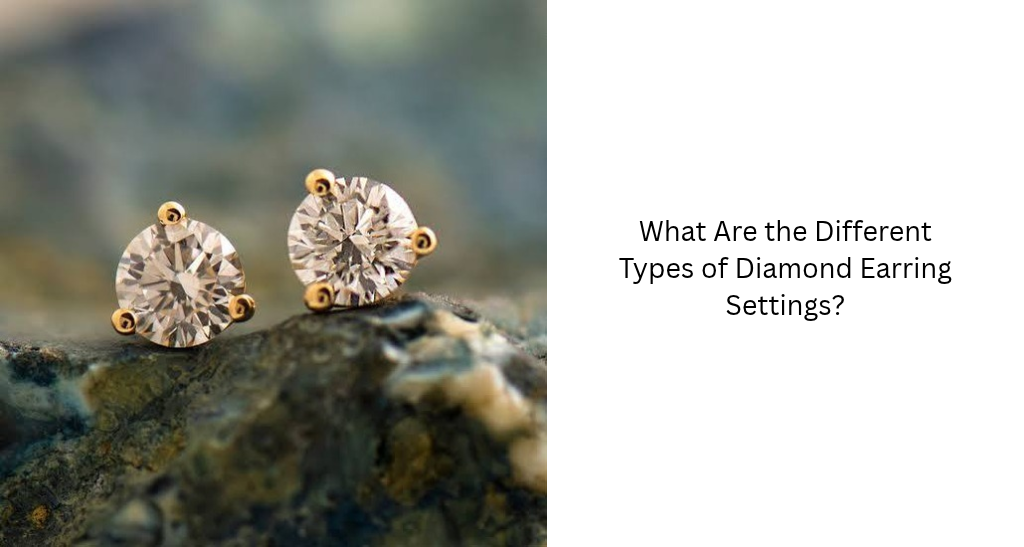
What Are the Different Types of Diamond Earring Settings?
The setting of a diamond earring affects how the diamond looks, how much of it remains visible and how securely it is held. A simple prong setting creates an open appearance, while a bezel setting surrounds the diamond with a metal rim. Other designs, such as halo and cluster settings, add more detail by combining multiple diamonds.
Whether you are choosing classic diamond studs or detailed drop earrings, understanding different setting styles can help you find a design that suits your preference and everyday needs.
1. Prong Setting

A prong setting uses small metal claws to hold the diamond in place. Usually, three or four prongs are used for round diamond stud earrings, although the number can vary depending on the design and stone size.
Since the metal covers only small portions of the diamond's edge, more of its surface remains visible. This allows light to enter the stone and makes the diamond the main focus of the earring.
Prong settings are commonly used for solitaire diamond studs and other classic earring designs.
2. Bezel Setting

A bezel setting holds the diamond with a metal rim that surrounds its outer edge. Unlike prong settings, where small claws secure the stone, a bezel provides continuous metal coverage around the diamond's circumference.
This design creates a smooth outline and gives the earring a clean, modern appearance. It also helps protect the diamond's edges from accidental knocks.
Bezel settings work particularly well for everyday diamond studs and minimalist jewellery designs.
3. Martini Setting

A martini setting is a popular choice for round diamond stud earrings. Its name comes from its three-pronged structure, which resembles the shape of a martini glass.
The diamond sits in a setting with three supporting points, creating a relatively compact profile behind the earlobe. This design helps the earring sit close to the ear while keeping the diamond visible from the front.
It is often preferred for solitaire studs because of its simple construction and neat appearance.
4. Basket Setting

A basket setting holds the diamond within a small metal framework beneath the stone. The prongs extend from the basket to secure the diamond, while the supporting structure forms an open space underneath it.
This design provides support without completely surrounding the diamond with metal. Depending on its construction, a basket setting can also allow the diamond to sit slightly higher or lower against the earlobe.
It is commonly used for round diamond studs and other solitaire earrings.
5. Halo Setting

A halo setting features a centre diamond surrounded by a circle of smaller diamonds. These smaller stones form a border around the main diamond, creating a fuller appearance.
Halo settings can make the overall earring look larger than a single centre stone of the same size. They are available in different shapes, including round, oval and cushion designs.
This setting is a good option for people who prefer more detail and additional diamond coverage in their earrings.
6. Pavé Setting

In a pavé setting, several small diamonds are placed closely together and secured with tiny metal beads or prongs. The arrangement creates a surface that appears almost completely covered in diamonds.
This setting is often used on earring fronts, hoops and decorative sections of drop earrings. It adds diamond detailing along the metal surface rather than focusing on just one centre stone.
Pavé settings are particularly suitable for people who prefer earrings with continuous sparkle.
7. Channel Setting
A channel setting places small diamonds in a row between two parallel metal walls. The metal holds the stones along their sides, creating a smooth and organised arrangement.
Unlike pavé settings, which use small beads to secure individual diamonds, channel settings create a continuous line without prominent prongs between the stones.
This style is often seen in diamond hoop earrings, huggies and other designs featuring a row of diamonds.
8. Cluster Setting

A cluster setting brings several small diamonds together to create the appearance of one larger design. The stones may be arranged in floral, geometric or other decorative patterns.
Unlike a halo setting, which has a clearly defined centre diamond surrounded by smaller stones, a cluster design can use multiple diamonds of similar or different sizes to form the overall pattern.
Cluster settings are commonly used in floral studs, statement earrings and decorative diamond designs.
9. Illusion Setting

An illusion setting uses carefully arranged metalwork to make a diamond or group of smaller diamonds appear larger than their actual size.
The metal is designed to blend with the stones, creating the visual impression of a larger diamond surface. This can be useful when a design aims to achieve a fuller look without using one large centre stone.
Illusion settings are often found in diamond stud earrings and traditional jewellery designs.
10. Tension Setting
A tension setting holds the diamond between two sections of metal using pressure and carefully engineered support. This creates the appearance that the diamond is suspended between the ends of the setting.
The design leaves much of the diamond exposed, giving it a distinctive and contemporary appearance.
Tension settings require precise construction to maintain the stone's position and security. They are less common than traditional prong and bezel settings in everyday stud earrings.
[products 15450729906388, 10202315260144, 10202347176176 | Shop Diamond Earrings | stud-earrings | View All Earrings]
How to Choose the Right Diamond Earring Setting?
The right setting depends on the diamond shape, earring design and how frequently you plan to wear it.
-
For everyday diamond studs: Prong, martini, basket and bezel settings are popular choices.
-
For a larger appearance: Halo and cluster settings create more visual coverage around the diamonds.
-
For a modern look: Bezel and tension settings offer clean and distinctive designs.
-
For diamond hoops: Channel and pavé settings work well for designs featuring multiple small diamonds.
-
For added protection: Bezel settings cover the diamond's edge, while a well-made basket or prong setting can also provide reliable support.
It is also important to consider the earring backs. Screw backs, push backs and secure locking backs are fastening mechanisms rather than diamond settings. The right backing helps keep the earrings comfortably and securely in place.
Final Thoughts
Diamond earring settings influence both the appearance and construction of an earring. From the open structure of prong and martini settings to the protective design of bezels and the detailed patterns of halo and cluster settings, each option offers something different.
Before choosing a pair, consider the diamond size, setting structure, comfort and intended use. A well-designed setting should complement the diamond while providing the support it needs for regular wear.


