




 All Earrings
 Stud Earrings
 Drop Earrings
 Solitaire
 Hoop Earrings
 Halo Earrings
 Vermeil Earrings
 Round
Round
 Oval
Oval
 Emerald
 Pear
Pear
 Princess
 Heart
Heart
 Marquise
 All Rings
 Solitaire Rings
 Band Rings
 Halo Rings
 Cocktail Rings
 Eternity Rings
 Fashion Ring
 Stack Rings
 Men's Rings
 Vermeil Rings
 All Necklaces
 Necklet
 Mangalsutra
 Solitaire
 Tennis Necklace
 Statement Necklace
 Vermeil Necklace
 Alphabets
 Solitaire Pendant
 Halo Pendant
 Vermeil Pendants
 All Bracelets
 Solitaire Bracelet
 Tennis Bracelet
 Fashion Bracelet
 Mangalsutra
 Vermeil Bracelets
 All Vermeil
 Vermeil Earring
 Vermeil Pendant
 Vermeil Ring
 Vermeil Necklace
 Vermeil Mangalsutra
 Vermeil Bracelets
 Vermeil Bangles
 Vermeil Men’s
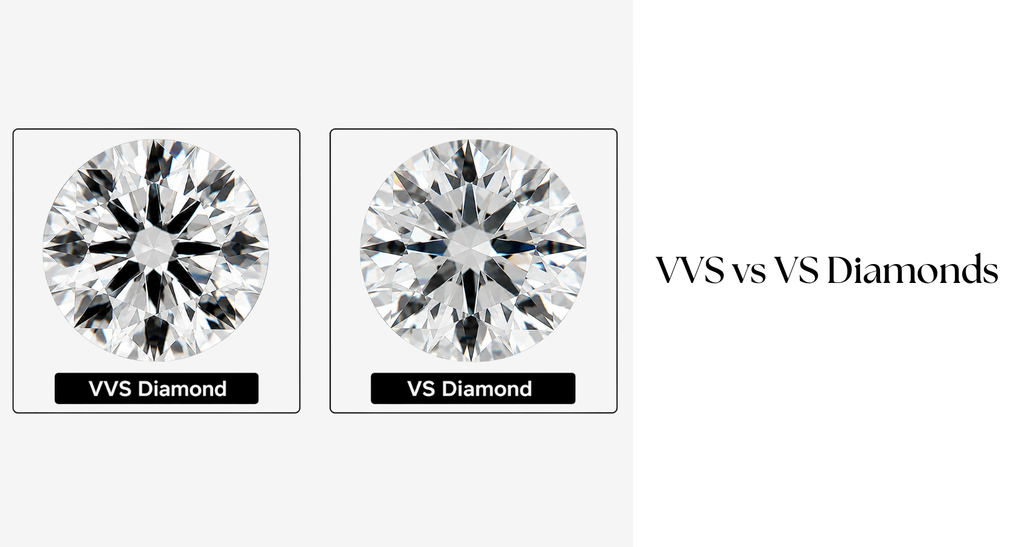
VVS vs VS Diamonds : Understanding the Real Difference in Clarity
Introduction
Many diamond buyers assume that a higher clarity grade automatically means a better-looking diamond. This is why VVS and VS diamonds are often compared when shopping for an engagement ring or fine jewellery.
At first sight, the choice seems simple. VVS diamonds sit higher on the clarity scale and usually cost more than VS diamonds. However, once you understand what these grades actually represent, the decision becomes much less straightforward.
Both VVS and VS diamonds are considered high-quality clarity grades. Both can appear completely clean to the naked eye, both offer excellent durability, and both are commonly used in premium jewellery. Yet the price difference between them can sometimes be significant.
So does a VVS diamond actually look better than a VS diamond? Will anyone notice the difference once the diamond is set in a ring or pendant? And is the additional cost worth paying?
The answer depends on understanding how diamond clarity is graded and how much those grades affect what you see in real life. In this guide, we'll break down the differences between VVS and VS diamonds and help you decide which clarity grade makes the most sense for your needs and budget.
What Is Diamond Clarity?
Diamond clarity refers to the presence of tiny natural characteristics found inside or on the surface of a diamond.
Internal characteristics are called inclusions, while external characteristics are known as blemishes.
These characteristics form naturally during the diamond growth process and are present in almost every diamond. The number, size, location, and visibility of these characteristics determine a diamond's clarity grade.
When grading clarity, gemologists consider:
-
The size of inclusions
-
The number of inclusions
-
Their position within the diamond
-
Their visibility under magnification
-
Their overall effect on appearance
The fewer and less visible the inclusions, the higher the clarity grade.
Understanding the Diamond Clarity Scale
Before comparing VVS and VS diamonds, it helps to understand where they sit on the clarity scale.
The standard diamond clarity scale includes:
-
FL (Flawless)
-
IF (Internally Flawless)
-
VVS1 (Very Very Slightly Included)
-
VVS2 (Very Very Slightly Included)
-
VS1 (Very Slightly Included)
-
VS2 (Very Slightly Included)
-
SI1 (Slightly Included)
-
SI2 (Slightly Included)
-
I1, I2, I3 (Included)
Both VVS and VS diamonds fall within the premium range of the clarity scale and are considered excellent choices for fine jewellery.
What Are VVS Diamonds?
VVS stands for Very Very Slightly Included.
Diamonds in this category contain extremely small inclusions that are exceptionally difficult for a trained grader to locate under 10x magnification.
These inclusions are so tiny that they have virtually no impact on the diamond's visible appearance.
VVS diamonds are divided into two grades:
VVS1
VVS1 diamonds contain inclusions that are extremely difficult to detect even under magnification.
VVS2
VVS2 diamonds also contain very small inclusions, although they may be slightly easier to locate compared to VVS1 diamonds.
To the naked eye, both VVS1 and VVS2 diamonds appear exceptionally clean and bright.
Many buyers choose VVS diamonds because they appreciate the rarity and purity associated with higher clarity grades.
What Are VS Diamonds?
VS stands for Very Slightly Included.
VS diamonds contain inclusions that are slightly easier to locate under magnification compared to VVS diamonds. However, these inclusions remain small and are generally invisible during normal viewing.
One of the reasons VS diamonds are so popular is that most are considered eye-clean. This means the inclusions cannot be seen without magnification when the diamond is viewed from a normal distance.
As a result, a VS diamond often looks just as clean and beautiful as a VVS diamond in everyday wear while costing less.
VS diamonds are divided into two grades:
VS1
VS1 diamonds contain small inclusions that are difficult to identify even under magnification.
VS2
VS2 diamonds contain inclusions that may be slightly easier to locate under magnification but still remain invisible to the naked eye in most cases.
For many buyers, VS diamonds provide the ideal balance between beauty, quality, and value.
VVS vs VS Diamonds: Quick Comparison
| Feature | VVS Diamonds | VS Diamonds |
|---|---|---|
| Inclusion Visibility | Extremely difficult to detect | Difficult to detect |
| Appearance to the Naked Eye | Clean | Clean |
| Sparkle | Excellent | Excellent |
| Durability | Excellent | Excellent |
| Rarity | Higher | Lower |
| Price | Higher | Lower |
| Value for Money | Premium option | Excellent value |
Can You Actually See the Difference?
This is the question most buyers really want answered.
In everyday conditions, most people cannot see the difference between a VVS and VS diamond.
When viewed in a ring, pendant, bracelet, or pair of earrings, both grades appear bright, clean, and beautiful. The inclusions that separate these clarity grades are usually too small to be noticed without magnification.
Even trained jewellery professionals often need specialised tools to identify the difference.
This is why many buyers are surprised to learn that a VS diamond can look virtually identical to a VVS diamond once it is worn.
How VVS and VS Look in Real Jewellery
A diamond certificate tells you about a diamond's technical characteristics. Real-life appearance can be very different.
Whether a diamond is set in a solitaire ring, pendant, bracelet, or pair of earrings, it is viewed from a normal distance rather than under magnification.
At normal viewing distances:
-
VVS diamonds appear clean
-
VS diamonds appear clean
-
Both sparkle beautifully
-
Both look bright and attractive
For most buyers, the difference exists on the grading report rather than in what they actually see every day.
Does VVS Sparkle More Than VS?
No.
One of the most common misconceptions is that a higher clarity grade automatically creates more sparkle. In reality, sparkle depends primarily on the quality of the cut.
A well-cut VS diamond can easily appear more brilliant than a poorly cut VVS diamond. This is because cut quality determines how effectively a diamond reflects and returns light, making it one of the most important factors influencing sparkle.
Factors that affect sparkle include:
-
Cut quality
-
Proportions
-
Symmetry
-
Polish
-
Light performance
If maximum brilliance is your goal, cut quality should always take priority over a small clarity upgrade.
Does Clarity Affect Durability?
At the VVS and VS levels, durability is generally not a concern.
Both grades contain only minor inclusions and are suitable for everyday wear.
Whether used in engagement rings, wedding bands, earrings, pendants, or bracelets, both VVS and VS diamonds offer excellent durability and long-term wearability.
Price Differences Between VVS and VS Diamonds
One of the biggest differences between VVS and VS diamonds is price.
Although both grades appear clean to the naked eye, VVS diamonds are rarer. Their inclusions are smaller and more difficult to detect, which places them higher on the clarity scale and increases their value.
As a result, a VVS diamond can cost noticeably more than a VS diamond with the same cut, colour, and carat weight.
The price difference becomes even more significant as diamond size increases. In larger diamonds, moving from VS to VVS clarity can require a substantial increase in budget.
This is why many buyers choose VS clarity. Rather than paying a premium for inclusions that cannot be seen during normal viewing, they often use that budget to increase carat weight, improve colour, or select a better cut.
Which Clarity Grade Should You Choose for Different Types of Jewellery?
For Engagement Rings
VS diamonds are often considered the sweet spot for engagement rings because they offer a clean appearance and excellent value.
VVS diamonds may appeal to buyers who want exceptionally high clarity or who are purchasing a solitaire ring where the centre diamond is the main focus.
For Earrings
VS diamonds work exceptionally well for earrings because they are viewed from a greater distance.
The inclusions are virtually impossible to see when worn, making VS an excellent practical choice.
For Necklaces and Pendants
VS clarity is an excellent option for pendants because the diamond sits further away from the eye.
A VVS diamond can be selected for a premium solitaire pendant, but it is rarely necessary for visual beauty.
For Bracelets
Bracelets constantly move and reflect light, making inclusions even less noticeable.
For most bracelet designs, VS clarity provides all the quality needed without paying the premium associated with VVS diamonds.
When Does a VVS Diamond Make Sense?
A VVS diamond can be a good choice in several situations.
You Value Exceptional Clarity
Some buyers simply enjoy knowing their diamond contains extremely minute inclusions and sits near the top of the clarity scale.
You Appreciate Premium Specifications
For some people, higher clarity provides additional satisfaction, even if the difference is not visible during normal wear.
You Are Buying a Smaller Diamond
In smaller carat weights, the price difference between VS and VVS is often more manageable.
You Are Choosing a Solitaire Design
When a piece of jewellery revolves around a single diamond, some buyers prefer the reassurance of a higher clarity grade.
When Is a VS Diamond the Smarter Choice?
For most jewellery buyers, VS diamonds represent one of the best combinations of beauty, quality, and value.
A VS diamond appears clean to the naked eye, offers excellent brilliance, and costs less than a comparable VVS diamond.
This becomes particularly important as diamond size increases. By choosing VS clarity, buyers can often allocate more of their budget toward:
-
A larger diamond
-
A better cut grade
-
A higher colour grade
-
A more elaborate setting
For engagement rings and everyday jewellery, VS clarity is often considered one of the most practical and cost-effective choices available.
Does Higher Clarity Increase a Diamond's Value?
Because VVS diamonds are rarer than VS diamonds, they generally command higher prices. However, when purchasing jewellery, clarity is only one factor that influences a diamond's overall value.
Cut, colour, carat weight, certification, and craftsmanship also play important roles in determining both appearance and price. While VVS diamonds sit higher on the clarity scale, buyers should not assume that a higher clarity grade automatically makes a diamond a better purchase.
A diamond's colour can also influence its overall appearance, as higher colour grades generally appear brighter and more colourless than lower grades.
In many cases, a well-cut VS diamond can appear just as beautiful as a VVS diamond during everyday wear. This is why many experienced buyers evaluate the diamond as a whole rather than focusing solely on clarity.
For most jewellery buyers, the goal should be finding the right balance of cut, colour, clarity, and carat weight rather than simply choosing the highest clarity grade available.
Which Clarity Grade Offers Better Value?
For most jewellery buyers, VS diamonds offer the strongest balance between appearance and cost.
Since many VS diamonds appear completely clean to the naked eye, the additional money spent on VVS clarity often results in a higher technical grade rather than a visible improvement in beauty.
This is particularly true for engagement rings and everyday jewellery, where the diamond is viewed under normal conditions rather than magnification.
Choosing VS clarity can free up budget for factors that often have a greater impact on appearance, such as a larger carat weight, a better cut grade, or a higher colour grade.
That does not mean VVS diamonds are a poor choice. Buyers who appreciate exceptionally high clarity, rarity, or premium specifications may find the upgrade worthwhile. However, for those focused on overall value, VS clarity is often the more practical option.
Common Myths About VVS and VS Diamonds
Myth: VVS Diamonds Sparkle More Than VS Diamonds
Fact: Sparkle depends primarily on cut quality rather than clarity. A well-cut VS diamond can appear more brilliant than a poorly cut VVS diamond.
Myth: VS Diamonds Have Visible Inclusions
Fact: Most VS diamonds are eye-clean, meaning their inclusions cannot be seen without magnification during normal viewing.
Myth: Higher Clarity Always Means Better Value
Fact: Higher clarity grades are rarer, but they do not always provide a noticeable visual advantage. Many buyers prefer VS diamonds because they offer a clean appearance at a lower price.
Myth: Only VVS Diamonds Are Suitable for Engagement Rings
Fact: VS diamonds are among the most popular clarity grades used in engagement rings and fine jewellery because they balance beauty, quality, and cost.
Final Thoughts
Both VVS and VS diamonds are high-quality clarity grades that offer beautiful appearance, excellent durability, and long-term wearability.
The main difference lies in the visibility of inclusions under magnification rather than what you see in everyday wear. In most situations, the average person cannot distinguish a VVS diamond from a VS diamond without specialised equipment.
For buyers who value rarity and exceptionally high clarity, a VVS diamond may be worth the premium. For those focused on beauty and value, a VS diamond often delivers everything they need at a more accessible price point.
Ultimately, the best choice is the diamond that balances cut, colour, clarity, and carat weight in a way that suits your personal preferences, budget, and jewellery goals.


