










 All Earrings
 Stud Earrings
 Drop Earrings
 Solitaire
 Hoop Earrings
 Halo Earrings
 Vermeil Earrings
 Round
Round
 Oval
Oval
 Emerald
 Pear
Pear
 Princess
 Heart
Heart
 Marquise
 All Rings
 Solitaire Rings
 Band Rings
 Halo Rings
 Cocktail Rings
 Eternity Rings
 Fashion Ring
 Stack Rings
 Men's Rings
 Vermeil Rings
 All Necklaces
 Necklet
 Mangalsutra
 Solitaire
 Tennis Necklace
 Statement Necklace
 Vermeil Necklace
 Alphabets
 Solitaire Pendant
 Halo Pendant
 Vermeil Pendants
 All Bracelets
 Solitaire Bracelet
 Tennis Bracelet
 Fashion Bracelet
 Mangalsutra
 Vermeil Bracelets
 All Vermeil
 Vermeil Earring
 Vermeil Pendant
 Vermeil Ring
 Vermeil Necklace
 Vermeil Mangalsutra
 Vermeil Bracelets
 Vermeil Bangles
 Vermeil Men’s
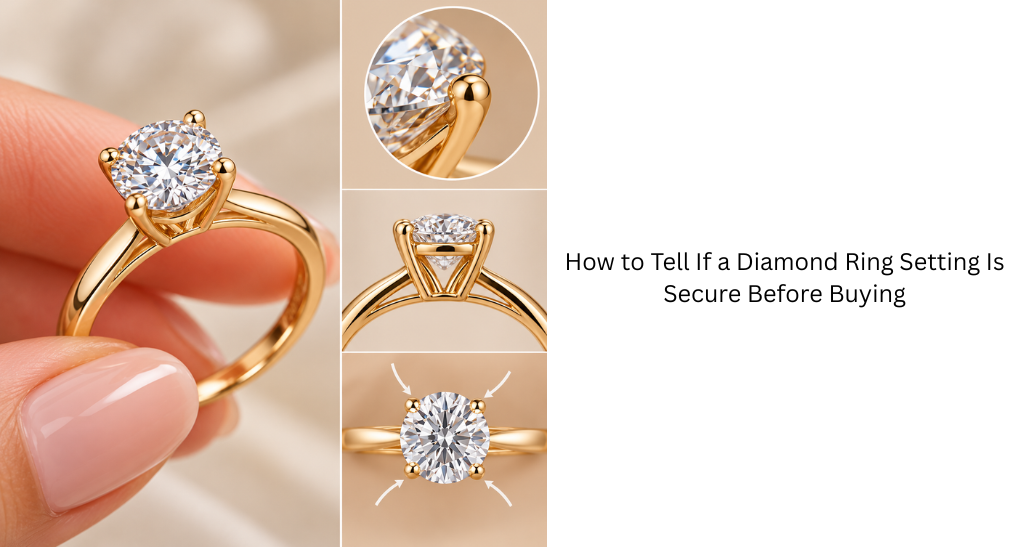
How to Tell If a Diamond Ring Setting Is Secure Before Buying
When buying a diamond ring, it is easy to focus on the diamond's shape, sparkle and overall design. However, the setting that holds the diamond in place is just as important. Even a beautiful diamond can become loose if the setting is poorly made or does not hold the stone securely.
A well-made setting helps protect the diamond during everyday wear while allowing it to look its best. Before purchasing a diamond ring, there are a few details you can check to understand how securely the stone is held and whether the ring is built to last.
1. Check How the Diamond Is Held in Place
The first thing to examine is the part of the ring that holds the diamond. Different settings use different structures to keep the stone secure, and each has its own advantages.
For example, a prong setting uses small metal claws to hold the diamond, while a bezel setting surrounds the stone with a rim of metal. Both can be secure when properly designed and crafted.
Look closely at the area around the diamond. The metal should appear evenly finished, without obvious gaps, bent prongs or irregular edges. If the diamond looks unevenly positioned or the setting appears poorly finished, ask the jeweller to explain how the stone is secured.
2. Inspect the Prongs Carefully
Prongs are small metal claws that hold a diamond in place. They are commonly used in solitaire and other diamond engagement rings because they allow light to enter the stone from different angles.
Before buying a ring with a prong setting, check the following:
-
Even placement: The prongs should be positioned consistently around the diamond.
-
Proper contact: Each prong should appear to hold the stone securely rather than sitting noticeably away from it.
-
Smooth finishing: The metal should not have sharp edges or visible signs of poor workmanship.
-
Balanced appearance: The diamond should sit straight rather than appearing tilted or uneven.
The number of prongs alone does not determine how secure a ring is. Their shape, thickness, placement and overall craftsmanship also matter.
If you are unsure whether the prongs are holding the diamond correctly, ask the jeweller to inspect the setting before you make the purchase.
3. Understand the Different Types of Diamond Settings
The setting affects both the appearance of a ring and how the diamond is protected. Understanding the main options can help you choose a design that suits your lifestyle.
Prong Setting
A prong setting holds the diamond with small metal claws. It is popular for solitaire rings because it allows much of the stone to remain visible.
However, exposed prongs can catch on clothing or other materials if they are poorly finished or damaged. Check that the prongs are evenly placed and that the diamond does not appear loose.
Bezel Setting
A bezel setting uses a rim of metal around the diamond's edge. Because the metal surrounds the stone, it can offer additional protection against certain knocks and impacts.
Check that the rim follows the diamond's outline evenly and holds the stone securely. An uneven or poorly finished bezel may indicate a problem with the setting.
Pavé Setting
A pavé setting features small diamonds set closely together along the ring's surface. Tiny metal beads or prongs hold these diamonds in place.
Since pavé rings contain multiple small stones, the quality of the setting is especially important. Look for consistent spacing and neat finishing. Ask the jeweller about inspection and maintenance, as small stones can become loose over time.
Channel Setting
In a channel setting, diamonds sit between two parallel strips of metal. This design is often used for wedding bands and diamond bands.
The metal edges should appear straight and evenly finished. Check for visible gaps, irregular spacing or diamonds that appear higher or lower than their neighbours.
No setting type is automatically secure in every situation. The quality of its construction and how well it suits the diamond both matter.
4. Look at the Ring from Different Angles
A ring may look attractive from the top, but examining it from the side and underneath can reveal details that are easy to miss.
View the ring from several angles and check whether the diamond sits straight in its setting. The metal around the stone should look properly finished, without obvious gaps, rough edges or uneven construction.
For a raised solitaire ring, pay attention to the basket or structure beneath the diamond. It should look balanced and properly connected to the band.
You can also ask the jeweller to show you the underside of the setting. This provides a better understanding of how the diamond is supported and how the ring has been constructed.
5. Check the Height of the Diamond Setting
Some diamond rings feature a high setting that raises the stone above the band. This can create a prominent look, but the raised design may also make the diamond more likely to catch on clothing or come into contact with surrounding objects.
A lower-profile setting keeps the diamond closer to the finger and may be more practical for people who use their hands frequently.
When comparing rings, consider how high the diamond sits and whether the design suits your daily activities. Check that the setting looks balanced and that there are no obvious weak or poorly finished areas.
A high setting is not necessarily insecure. Its suitability depends on the design, construction and how the ring will be worn.
6. Examine the Ring Band and Its Connection to the Setting
The band supports the setting and contributes to the ring's overall structure. Before buying, inspect the band for visible defects and check how it connects to the part holding the diamond.
Look for uneven metalwork, cracks, rough joints or noticeable irregularities in the band's shape. The band should appear well finished and proportionate to the overall design.
Very thin bands and intricate designs are not automatically weak, but their construction deserves attention, particularly if you plan to wear the ring every day.
If the ring has a delicate band, ask the jeweller whether its design is suitable for regular wear and what maintenance may be required.
7. Ask About the Diamond Setting and Craftsmanship
A ring's appearance cannot tell you everything about the quality of its construction. Speaking with the jeweller can help you understand how the diamond has been set and what support is available after purchase.
Consider asking these questions:
-
Was the setting designed specifically for this diamond?
-
Is the diamond held securely within the setting?
-
Is the ring suitable for everyday wear?
-
Can the setting be inspected or repaired if a prong becomes damaged?
-
Does the purchase include a warranty covering setting-related issues?
The answers can help you understand the ring's construction and the options available if maintenance is needed later.
8. Request a Professional Inspection if You Have Concerns
If you notice uneven prongs, a visibly tilted diamond or signs of poor finishing, do not rely on appearance alone to decide whether the ring is safe to wear.
Ask the jeweller to inspect the setting before purchasing it. A qualified professional can assess the prongs, bezel, surrounding metalwork and other components to determine whether the diamond is held correctly.
Avoid pressing, twisting or pulling the diamond to test its security yourself. These actions may loosen the stone or damage the setting.
If you are buying a valuable diamond ring, a professional assessment can provide additional confidence in the quality of its construction.
Final Thoughts
A secure diamond ring setting is an important part of protecting your diamond and ensuring the ring remains suitable for regular wear. Before buying, examine how the stone is held, inspect the prongs or surrounding metal, look at the ring from different angles and ask questions about its construction.
The right setting should suit both the diamond and the way you plan to wear the ring. Taking time to check these details before purchasing can help you choose a ring that balances design, comfort and practical durability.


