





 All Earrings
 Stud Earrings
 Drop Earrings
 Solitaire
 Hoop Earrings
 Halo Earrings
 Vermeil Earrings
 Round
Round
 Oval
Oval
 Emerald
 Pear
Pear
 Princess
 Heart
Heart
 Marquise
 All Rings
 Solitaire Rings
 Band Rings
 Halo Rings
 Cocktail Rings
 Eternity Rings
 Fashion Ring
 Stack Rings
 Men's Rings
 Vermeil Rings
 All Necklaces
 Necklet
 Mangalsutra
 Solitaire
 Tennis Necklace
 Statement Necklace
 Vermeil Necklace
 Alphabets
 Solitaire Pendant
 Halo Pendant
 Vermeil Pendants
 All Bracelets
 Solitaire Bracelet
 Tennis Bracelet
 Fashion Bracelet
 Mangalsutra
 Vermeil Bracelets
 All Vermeil
 Vermeil Earring
 Vermeil Pendant
 Vermeil Ring
 Vermeil Necklace
 Vermeil Mangalsutra
 Vermeil Bracelets
 Vermeil Bangles
 Vermeil Men’s
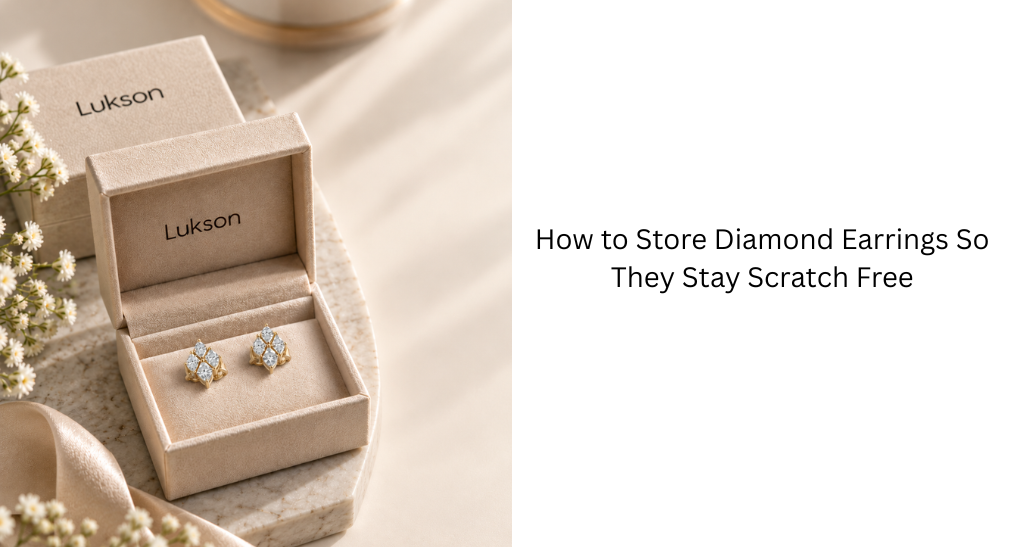
How to Store Diamond Earrings So They Stay Scratch Free
Diamond earrings spend much of their time inside a jewellery box, but that doesn't mean they are completely protected from damage. When different pieces are kept together, they can rub against each other, get tangled or put pressure on delicate settings.
Diamonds are very hard, which makes them suitable for everyday jewellery. But their hardness also means they can scratch softer materials, including some metals and gemstones. Proper storage is therefore less about finding a fancy jewellery box and more about preventing unnecessary contact between your earrings and other pieces.
A few simple storage habits can help keep your diamond earrings looking clean, polished and well maintained.
Why Diamond Earrings Can Get Scratched in Storage
Jewellery can move around more than you think when it is stored in a drawer, pouch or box. Every time you open the drawer or move the box, loose pieces may shift and come into contact with one another.
A diamond earring stored alongside rings, bracelets or other earrings can rub against:
-
Gold surfaces
-
Other gemstones
-
Diamond settings
-
Earring posts and backs
-
Chains and clasps
The risk is higher when several pieces are packed into a small space. Even if you don't notice any damage immediately, repeated friction can leave marks on polished metal or affect delicate components.
Should Diamond Earrings Be Stored Separately?
Keeping each pair in its own space is one of the easiest ways to reduce scratching.
You don't necessarily need a separate jewellery box for every pair. A box with individual compartments works just as well, provided the pieces aren't touching each other.
For earrings that have larger diamonds, intricate settings or delicate details, giving them their own compartment is particularly useful.
Choose a Soft-Lined Jewellery Box
A jewellery box with a soft interior provides a protective surface for your earrings. Look for compartments that are large enough for the earrings to sit comfortably without being pressed against other pieces.
Velvet, suede-like or other soft jewellery linings are commonly used for this purpose. What matters most is that the surface isn't rough or abrasive.
Avoid filling every compartment to the point where jewellery is touching or stacked on top of one another.
Individual Jewellery Pouches Work Well Too
You don't need a large organiser if you only have a few pairs of earrings.
An individual soft pouch can keep a pair together and prevent it from coming into direct contact with other jewellery. This is also useful for pieces that you don't wear regularly.
Make sure the earrings are clean and completely dry before placing them inside a closed pouch. Any moisture, makeup or product residue left on the jewellery will remain there during storage.
Keep Diamond Earrings Away From Other Jewellery
Different types of jewellery have different shapes and surfaces, so storing them together creates unnecessary friction.
Rings
Rings often have raised settings and edges that can come into contact with an earring's metal or diamond. Keep them in a separate compartment rather than placing them on top of your earrings.
Bracelets
Bracelets can move freely inside a jewellery box, particularly those with chains or multiple links. Their clasps and decorative sections can catch on earrings or rub against them.
Necklaces
Necklaces are best kept separately because chains can easily wrap around earring posts, hooks or drop elements. Untangling them later can put unnecessary stress on delicate parts.
Other Earrings
Several pairs of earrings stored together can knock against one another. Studs, hoops and drop earrings should ideally have separate spaces, especially when their designs are different.
Keep the Earring and Its Back Together
Small earring backs are easy to lose when they are stored separately.
For stud earrings, secure the back onto the post before putting the pair away. This keeps the components together and prevents the backing from moving around inside the jewellery box.
For hook, hoop and drop earrings, close the clasp or fastening where possible before storage.
This also reduces the chance of the earring catching on other pieces or the storage fabric.
How to Store Diamond Stud Earrings
Studs can be stored flat inside an individual compartment or soft pouch.
Before storing them, check that:
-
The backing is secure
-
The post isn't bent
-
The diamond isn't loose
-
The setting doesn't have visible damage
If you own several pairs, avoid putting all the studs into one small compartment. Their settings can hit each other when you take them out or put them back.
How to Store Diamond Hoop Earrings
Hoops need enough space to retain their shape.
Close the clasp before storing them and place each pair in a compartment where they won't be pressed under heavier jewellery.
Pay attention to the hinge and clasp. These areas can be more delicate than the rest of the hoop, so avoid forcing them into a tight pouch or compartment.
How to Store Drop and Dangle Earrings
Long earrings can become tangled very easily, especially when they have chains, hooks or several hanging sections.
Lay them flat in a separate compartment or pouch. Keep the hanging sections away from other jewellery and avoid placing rings or bracelets on top of them.
For very fine chains, an organiser with dedicated earring slots can make storage easier.
Clean Your Earrings Before Long-Term Storage
If you are storing a pair for several weeks or months, clean it before putting it away.
Skin oils, makeup, perfume and hair products can remain on the jewellery and collect more dust over time.
After cleaning, rinse the earrings properly and dry them completely with a soft cloth.
The storage process should be:
Clean → Rinse → Dry → Store
Putting damp jewellery directly into a closed box or pouch is best avoided.
Keep Your Jewellery Storage Area Dry
Bathrooms may seem convenient for storing jewellery, but the regular exposure to steam and humidity makes them less suitable for fine jewellery storage.
A dry drawer, wardrobe or dressing area is generally a better option.
Keep the jewellery box away from direct water and areas where it can be exposed to excessive moisture.
Don't Put Heavy Jewellery on Top
Heavy jewellery can put pressure on smaller or more delicate earrings.
This is particularly important for earrings with:
-
Thin posts
-
Fine hooks
-
Delicate chains
-
Hinged components
-
Intricate settings
Give delicate earrings enough room to sit without anything pressing against them.
Avoid Loose Storage in a Jewellery Drawer
A drawer full of loose jewellery may be convenient, but it gives every piece the opportunity to move around.
If you prefer storing jewellery in a drawer, use a compartment organiser or small individual pouches. This creates separate spaces without requiring a large jewellery cabinet.
How to Store Diamond Earrings While Travelling
Travel adds more movement, so loose jewellery is especially likely to rub against other items.
A compact jewellery travel case with separate sections can keep earrings secure. Place each pair in its own section and keep the case away from toiletries that could leak.
Perfume, moisturiser, shampoo and other products should not come into direct contact with your diamond jewellery.
For valuable earrings, keep the jewellery case somewhere secure rather than leaving it loose inside checked luggage or an overcrowded handbag.
Can Lab Grown Diamond Earrings Be Stored the Same Way?
Yes. The same storage principles apply to lab grown diamond earrings.
Lab grown diamonds have the same crystal structure and chemical composition as diamonds formed naturally. Their hardness means they should be stored with the same care as other diamond jewellery.
The metal and setting still need attention. Whether the earrings are made with lab grown diamonds or mined diamonds, separating them from other jewellery helps reduce unnecessary scratches and impact.
Common Storage Mistakes to Avoid
Some jewellery damage happens simply because of how pieces are put away.
Avoid these habits:
- Throwing earrings into a jewellery box: Loose pieces can rub against each other.
- Keeping several pairs in one tiny pouch: The settings and diamonds can come into direct contact.
- Storing jewellery while it is damp: Moisture can remain trapped inside the storage space.
- Putting heavy pieces on delicate earrings: Pressure can bend posts, hooks or other components.
- Leaving necklaces mixed with earrings: Chains can tangle around posts and hooks.
- Forcing jewellery into small compartments: Tight storage can put pressure on delicate parts.
Check Your Earrings Before Wearing Them Again
Storage is a good time to notice small changes in your jewellery.
Before putting on a pair you haven't worn for a while, take a quick look at the setting, prongs, post and backing. Check whether the diamond appears secure and whether anything looks bent or damaged.
If a stone seems loose or a prong is damaged, avoid wearing the earring until a professional jeweller has inspected it. Continuing to wear jewellery with a compromised setting can increase the risk of losing the stone.
A Simple Storage Routine for Everyday Jewellery
You don't need to spend much time caring for your earrings after every wear.
At the end of the day, wipe away any visible residue with a soft cloth. Check the backing and setting, then place the pair in its own compartment or pouch.
For earrings that aren't worn regularly, give them a proper clean before long-term storage and make sure they are completely dry.
The main rule is simple: keep diamond earrings separate, dry and protected from unnecessary contact.
Final Thoughts
The right storage can prevent many of the scratches and small problems that happen when jewellery is left loose or mixed together.
A soft-lined jewellery box, individual pouch or compartment organiser is enough for most collections. Keep each pair separate, avoid putting heavy jewellery on top, protect delicate components and store everything in a dry place.
Diamond earrings are durable, but good storage helps protect the diamond as well as the gold, setting, posts and clasps around it. A little organisation goes a long way toward keeping your earrings looking their best for years.


