







 All Earrings
 Stud Earrings
 Drop Earrings
 Solitaire
 Hoop Earrings
 Halo Earrings
 Vermeil Earrings
 Round
Round
 Oval
Oval
 Emerald
 Pear
Pear
 Princess
 Heart
Heart
 Marquise
 All Rings
 Solitaire Rings
 Band Rings
 Halo Rings
 Cocktail Rings
 Eternity Rings
 Fashion Ring
 Stack Rings
 Men's Rings
 Vermeil Rings
 All Necklaces
 Necklet
 Mangalsutra
 Solitaire
 Tennis Necklace
 Statement Necklace
 Vermeil Necklace
 Alphabets
 Solitaire Pendant
 Halo Pendant
 Vermeil Pendants
 All Bracelets
 Solitaire Bracelet
 Tennis Bracelet
 Fashion Bracelet
 Mangalsutra
 Vermeil Bracelets
 All Vermeil
 Vermeil Earring
 Vermeil Pendant
 Vermeil Ring
 Vermeil Necklace
 Vermeil Mangalsutra
 Vermeil Bracelets
 Vermeil Bangles
 Vermeil Men’s
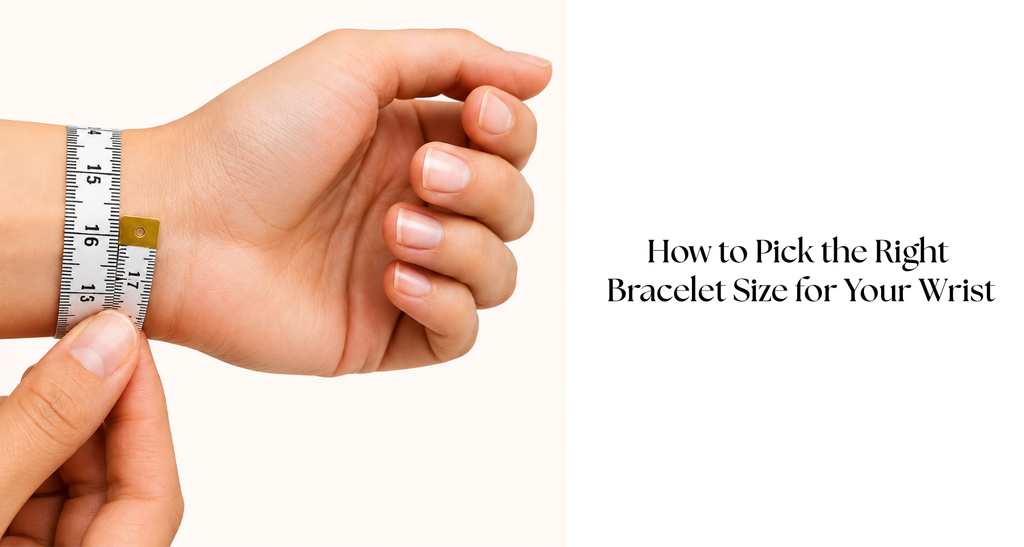
How to Pick the Right Bracelet Size for Your Wrist
Choosing a bracelet is not only about its design. The size and fit are equally important. A bracelet that is too tight can leave marks or restrict wrist movement, while one that is too loose may keep sliding around or even fall off.
Whether you are buying a bracelet for yourself or as a gift, measuring the wrist correctly can help you select a comfortable size. This guide explains how to measure your wrist, how much extra length to add and how sizing changes for different bracelet styles.
Why Bracelet Size Matters
A correctly sized bracelet sits comfortably on the wrist without pressing into the skin or slipping over the hand.
The right size can also help the bracelet maintain its shape. When a bracelet is worn too tightly, its clasp, links and setting may experience unnecessary pressure. A bracelet that is too loose may hit surrounding surfaces more often and become more prone to scratches.
How to Measure Your Wrist at Home
You can measure your wrist at home using a flexible measuring tape, string or a strip of paper.
Measure the area just below your wrist bone, where you would normally wear the bracelet.
Method 1: Use a Measuring Tape
A flexible measuring tape is the easiest way to measure your wrist.
-
Wrap the measuring tape around your wrist just below the wrist bone.
-
Keep it close to the skin without pulling it too tightly.
-
Note the measurement in centimetres or inches.
This number is your wrist measurement, not the final bracelet size.
Method 2: Use a String or Paper Strip
If you do not have a measuring tape, you can use a piece of string or a strip of paper.
-
Wrap the string or paper around your wrist.
-
Mark the point where both ends meet.
-
Place it flat against a ruler.
-
Note the measured length.
Make sure the string does not stretch while measuring.
How to Choose the Right Bracelet Size
After measuring your wrist, add a little extra length depending on how you prefer the bracelet to fit.
-
Snug fit: Add approximately 0.5 cm
-
Comfort fit: Add approximately 1 to 1.5 cm
-
Loose fit: Add approximately 2 cm
For example, if your wrist measures 16 cm, a bracelet between 17 and 17.5 cm will usually provide a comfortable fit.
The bracelet style also matters. Wider bracelets, large links, beads and charms take up more space around the wrist and may require slightly more length.
Bracelet Size Chart
The following chart provides a general starting point for choosing a comfortable bracelet size.
| Wrist Measurement | Recommended Bracelet Size |
|---|---|
| 13 cm / 5.1 in | 14–14.5 cm / 5.5–5.7 in |
| 14 cm / 5.5 in | 15–15.5 cm / 5.9–6.1 in |
| 15 cm / 5.9 in | 16–16.5 cm / 6.3–6.5 in |
| 16 cm / 6.3 in | 17–17.5 cm / 6.7–6.9 in |
| 17 cm / 6.7 in | 18–18.5 cm / 7.1–7.3 in |
| 18 cm / 7.1 in | 19–19.5 cm / 7.5–7.7 in |
| 19 cm / 7.5 in | 20–20.5 cm / 7.9–8.1 in |
| 20 cm / 7.9 in | 21–21.5 cm / 8.3–8.5 in |
| 21 cm / 8.3 in | 22–22.5 cm / 8.7–8.9 in |
| 22 cm / 8.7 in | 23–23.5 cm / 9.1–9.3 in |
Choose the lower end of the recommended range if you prefer a closer fit and the higher end if you want the bracelet to sit more loosely.
These measurements are general recommendations. Always check the actual bracelet length mentioned on the product page before placing an order.
Does Bracelet Size Differ for Men and Women?
The basic measuring method is the same for both men and women. The main difference usually comes from bracelet design, wrist size and preferred fit rather than gender alone.
Men's bracelets often use wider chains, larger links, leather or heavier designs. These styles may require slightly more room around the wrist. If you are also interested in the meaning and tradition behind them, read our guide on Why Do Indian Men Wear Bracelets.
Women's tennis bracelets and fine chain bracelets are often worn closer to the wrist, while wider bracelets, charm bracelets and statement designs may need additional space.
Instead of selecting a size only because it is labelled men's or women's, use your actual wrist measurement and check the dimensions of the bracelet you are buying.
Quick Bracelet Size Examples
Here are a few simple examples for a comfortable fit:
-
15 cm wrist: Choose around 16–16.5 cm
-
16 cm wrist: Choose around 17–17.5 cm
-
17 cm wrist: Choose around 18–18.5 cm
-
18 cm wrist: Choose around 19–19.5 cm
-
19 cm wrist: Choose around 20–20.5 cm
If the bracelet has large beads, thick links or several charms, you may need slightly more room.
A tennis bracelet or delicate chain can usually be worn closer to the wrist, while wider and heavier designs may feel more comfortable with some additional space.
Does Bracelet Style Affect the Size?
Yes. Two bracelets with the same listed length may fit differently because of their width, construction and available inner space.
Tennis Bracelets
A tennis bracelet should sit comfortably around the wrist without hanging too loosely.
A fit that allows approximately one finger between the bracelet and your wrist is generally comfortable.
Too much extra length can cause the bracelet to rotate around the wrist or catch on clothing.
Chain Bracelets
Fine chain bracelets can usually be worn closer to the wrist.
Thicker chains with large links may require slightly more room because the links take up more space around the wrist.
Always check the total bracelet length and whether the design includes an extension chain.
Cuff Bracelets
Cuff bracelets have an open-ended design and are usually worn by gently sliding them over the side of the wrist.
Check the cuff's:
-
Inner circumference
-
Width
-
Opening size
The cuff should remain secure without pressing into the skin.
Avoid repeatedly bending a cuff bracelet to put it on or take it off, as this may weaken the bracelet or change its shape over time.
Bangles
Closed bangles are measured differently because they must pass over the widest part of your hand before reaching the wrist.
To measure for a bangle:
-
Bring your thumb and little finger together as though you are putting on a bangle.
-
Wrap a measuring tape around the widest part of your hand.
-
Note the circumference.
-
Compare the measurement with the brand's bangle size chart.
You can also measure the inner diameter of a bangle that already fits you comfortably.
Charm Bracelets
Charm bracelets usually need slightly more room because the charms occupy space on the inner side of the bracelet.
You can add approximately 1.5 to 2 cm to your wrist measurement, depending on the number and size of charms you plan to wear.
If you expect to add more charms later, consider this before selecting the bracelet length.
Beaded Bracelets
Bead size affects the available inner space of the bracelet.
A bracelet made with large beads may feel tighter than a thin chain bracelet of the same listed length.
Also check whether the bracelet is:
-
Elastic
-
Adjustable
-
Made in a fixed size
This can make a significant difference to the final fit.
Common Bracelet Sizing Mistakes to Avoid
A small measuring mistake can result in a bracelet that feels uncomfortable.
Avoid these common mistakes:
-
Pulling the measuring tape too tightly around your wrist
-
Using your exact wrist measurement as the final bracelet size
-
Assuming every brand follows the same sizing system
-
Ignoring the width and structure of the bracelet
-
Measuring only the wrist when buying a closed bangle
-
Forgetting that charms and large beads reduce inner space
-
Selecting a standard size without checking the actual product measurements
Taking a few minutes to measure properly can reduce the chances of ordering the wrong size.
Tips for Buying a Bracelet as a Gift
Buying a bracelet as a gift can be difficult when you do not know the person's wrist size.
A few simple methods can help.
Measure a Bracelet They Already Wear
If possible, take a bracelet that the person already wears comfortably and measure it.
For chain bracelets, measure the bracelet from one end to the other when laid flat.
Make sure the bracelet you measure is similar in style to the one you plan to purchase.
Ask Someone Close to Them
A friend or family member may already know their bracelet or wrist size.
This can be useful when you want to keep the gift a surprise.
Choose an Adjustable Bracelet
Adjustable chains and bracelets with multiple fastening points are easier to buy when the exact wrist measurement is unknown.
They provide some flexibility in the fit.
Check the Exchange or Resizing Policy
Before buying, check whether the bracelet can be exchanged or resized if the fit is not right.
This is particularly useful for fixed-size bracelets and gifts.
How to Check Whether a Bracelet Fits Properly
After wearing the bracelet, move your wrist and hand naturally.
A correctly fitted bracelet should:
-
Feel secure without pressing into your skin
-
Allow normal wrist movement
-
Fasten without pulling or stretching
-
Stay on the wrist without sliding over the hand
-
Leave enough room for approximately one finger, depending on the design
A very wide or heavy bracelet may need slightly more room than a thin chain bracelet.
If the bracelet constantly rotates, falls too far down the hand or catches on objects, it may be too large.
If it leaves deep marks, feels restrictive or is difficult to fasten, it may be too small.
Final Thoughts
Getting the right bracelet size is simple once you know your wrist measurement and the type of bracelet you are buying.
Start with an accurate wrist measurement, then add a little extra room based on how you want the bracelet to sit. A delicate chain or tennis bracelet may need less extra space, while charm, beaded or wider bracelets usually need more.
For bangles, wrist measurement alone is not enough because the bangle must pass over the widest part of the hand.
Before placing an order, always check the bracelet's actual length, width and sizing details on the product page. A small difference in design can change how the same size feels on the wrist.


