




 All Earrings
 Stud Earrings
 Drop Earrings
 Solitaire
 Hoop Earrings
 Halo Earrings
 Vermeil Earrings
 Round
Round
 Oval
Oval
 Emerald
 Pear
Pear
 Princess
 Heart
Heart
 Marquise
 All Rings
 Solitaire Rings
 Band Rings
 Halo Rings
 Cocktail Rings
 Eternity Rings
 Fashion Ring
 Stack Rings
 Men's Rings
 Vermeil Rings
 All Necklaces
 Necklet
 Mangalsutra
 Solitaire
 Tennis Necklace
 Statement Necklace
 Vermeil Necklace
 Alphabets
 Solitaire Pendant
 Halo Pendant
 Vermeil Pendants
 All Bracelets
 Solitaire Bracelet
 Tennis Bracelet
 Fashion Bracelet
 Mangalsutra
 Vermeil Bracelets
 All Vermeil
 Vermeil Earring
 Vermeil Pendant
 Vermeil Ring
 Vermeil Necklace
 Vermeil Mangalsutra
 Vermeil Bracelets
 Vermeil Bangles
 Vermeil Men’s
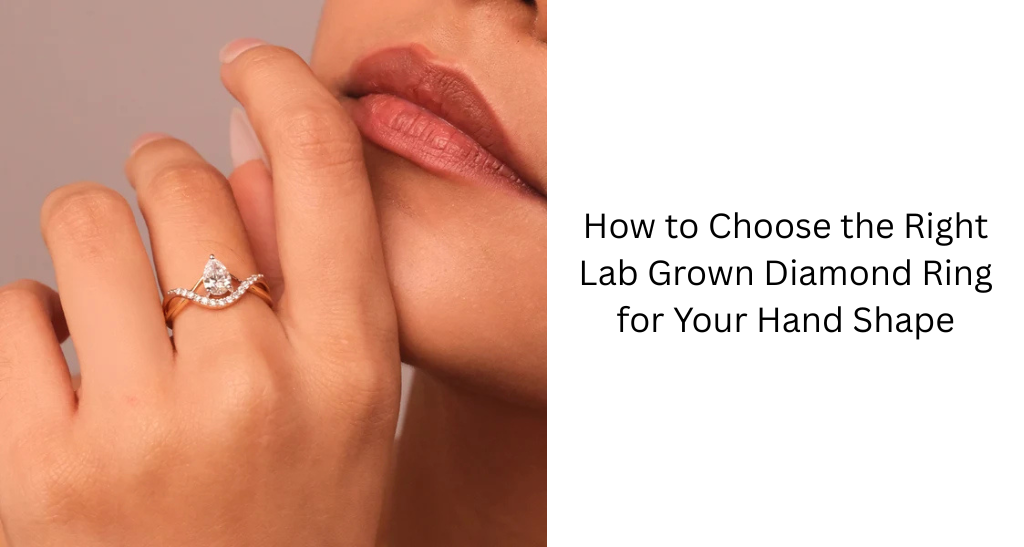
How to Choose the Right Lab Grown Diamond Ring for Your Hand Shape
Choosing a lab grown diamond ring is not only about the diamond's carat weight or the design you like in a product photo. The shape of your fingers, their length, width and overall proportions can also affect how a ring looks when you wear it.
The right diamond shape and ring setting can complement your hand and create a balanced appearance. An elongated diamond can add visual length to shorter fingers, while a wider design can work well when you want more coverage on broader fingers.
There is no single diamond shape that is perfect for every hand. The best choice depends on your finger proportions, personal style and how you want the ring to look when worn.
Why Does Hand Shape Matter When Choosing a Diamond Ring?
Two people can wear the same lab grown diamond ring and get completely different visual results. This is because the ring sits differently depending on finger length and width.
For example, an elongated oval diamond can create more visual length on a shorter finger, while a round diamond can give a balanced appearance without adding too much length.
Your hand shape can help you decide:
-
Which diamond shape may suit you best
-
Whether a narrow or wider band will look balanced
-
Whether a vertical or horizontal setting works better
-
How much finger coverage you want
-
Which ring proportions feel comfortable for everyday wear
Instead of following a fixed rule, look at the relationship between the centre diamond, band and your finger.
How to Choose a Lab Grown Diamond Ring Based on Your Hand Shape
1. Short Fingers
If your fingers are shorter, you may want a ring that creates a little more visual length.
Elongated diamond shapes can work particularly well because they draw the eye along the length of the finger.
Best diamond shapes for short fingers:
-
Oval
-
Marquise
-
Pear
-
Emerald
-
Elongated radiant
An oval lab grown diamond ring gives a soft elongated appearance without sharp corners. A marquise shape creates even more visual length because of its pointed ends.
Pear-shaped diamonds can also work well because their pointed tip creates a directional effect.
A slim band can further support this look by keeping the design from appearing too wide across the finger.
2. Long Fingers
Long fingers give you more flexibility when choosing a lab grown diamond ring. Both round and elongated shapes can work well.
If you prefer a classic look, a round diamond can create a balanced appearance. If you want stronger finger coverage, an oval, emerald or marquise diamond can make use of the available length.
Good options for long fingers:
-
Round
-
Oval
-
Emerald
-
Cushion
-
Radiant
-
Marquise
Wider bands and larger centre stones can also work beautifully on longer fingers because they create more visual balance.
If you prefer a minimal look, however, you do not need a large diamond simply because you have long fingers. A smaller centre stone on a slim band can look just as balanced.
3. Wide Fingers
For wider fingers, the proportions of the ring become especially important.
Elongated shapes such as oval, marquise and pear can add visual length while covering the finger naturally.
A slightly wider band or a ring with side stones can also provide better visual balance than an extremely thin band.
Consider these diamond shapes:
-
Oval
-
Marquise
-
Pear
-
Emerald
-
Radiant
A halo setting can also add width and presence around the centre diamond. However, if you prefer a clean and minimal appearance, an elongated solitaire may be a better choice.
4. Slim or Narrow Fingers
If you have slim fingers, you can experiment with both round and elongated diamonds.
A round lab grown diamond can create a balanced centre point without overwhelming the hand. Oval and pear shapes can add length while keeping the overall design visually light.
Good choices include:
-
Round
-
Oval
-
Pear
-
Cushion
-
Princess
A slim band works particularly well if you want the centre diamond to remain the main focus.
If you prefer a more noticeable ring, a halo or side-stone setting can add extra width without requiring an extremely large centre diamond.
Which Diamond Shape Is Best for Your Fingers?
The shape of the centre diamond can significantly change the appearance of a ring.
Round Cut
Round diamonds have a symmetrical shape and strong brilliance. They are one of the easiest choices if you want a classic and balanced appearance.
A round lab grown diamond ring can suit both shorter and longer fingers and works well with solitaire, halo and side-stone settings.
Best for: Almost every hand shape, especially if you prefer a classic look.
Oval Cut
Oval diamonds have an elongated outline that can make the finger appear longer.
They are a popular choice for people who want the visual length of an elongated diamond without the pointed ends of a marquise or pear.
Best for: Shorter, wider or average-width fingers.
Pear Cut
Pear diamonds combine a rounded end with a pointed tip. This creates an elongated, directional appearance on the finger.
The orientation also changes the look. Wearing the point towards the fingertip creates a longer visual line.
Best for: Short or wider fingers and anyone who wants a distinctive shape.
Marquise Cut
Marquise diamonds have pointed ends and a long, narrow outline.
Because of their proportions, they can provide strong finger coverage while creating the appearance of longer fingers.
Best for: Shorter or wider fingers.
When choosing a marquise ring, pay attention to the diamond's length-to-width ratio and tip protection. The proportion can significantly change how the stone looks on the hand.
Emerald Cut
Emerald cut diamonds have a rectangular outline with step-cut facets.
Instead of intense sparkle, they create broad flashes of light and a clean, structured appearance.
Best for: Long fingers or anyone who prefers a sleek geometric look.
Cushion Cut
Cushion diamonds have softer corners and a fuller appearance.
Their rounded shape can create a balanced look, especially when paired with a halo or slightly wider band.
Best for: Long fingers and those who prefer softer, classic designs.
Radiant Cut
Radiant diamonds combine a rectangular or square outline with brilliant-cut facets.
They can provide good finger coverage while offering plenty of sparkle.
Best for: Long, short or wider fingers depending on the length-to-width ratio.
Does Ring Band Width Matter?
Yes. The band can change how the centre diamond looks on your hand.
A thin band allows the centre diamond to stand out and can make it appear more prominent.
A wider band creates more visual weight and can work well if you want the ring to look substantial.
For shorter or narrow fingers, a very wide band may make the finger look visually shorter. A slim or medium-width band can create better balance.
For longer or wider fingers, you have more freedom to experiment with wider bands, side stones and detailed settings.
How Does the Ring Setting Affect Your Hand?
The setting is just as important as the diamond shape.
Solitaire Setting
A solitaire keeps attention on the centre diamond. It is a good option if you want a clean and simple ring.
Halo Setting
A halo adds smaller diamonds around the centre stone, increasing the overall visual spread of the ring.
This can work well when you want more coverage without choosing a much larger centre diamond.
Three-Stone Setting
Three-stone rings create more width across the finger and can give a fuller appearance.
They are especially useful if you prefer a ring with more diamond presence.
East-West Setting
In an east-west setting, an elongated diamond is placed horizontally instead of vertically.
This creates a wider appearance across the finger and gives traditional shapes such as oval and marquise a completely different look.
Should You Choose the Diamond Shape or Carat Weight First?
For many buyers, it is tempting to start with carat weight.
However, carat weight alone does not determine how large a diamond looks on the finger.
Two diamonds with the same carat weight can have different visible dimensions because their shapes, proportions and depth are different. Elongated shapes such as oval, pear and marquise can often provide greater visible length than a round diamond of the same weight.
When comparing lab grown diamonds, look at:
-
Carat weight
-
Length and width measurements
-
Diamond shape
-
Length-to-width ratio
-
Cut quality
-
Setting design
-
Band width
-
Overall ring proportions
This gives you a better idea of how the finished ring will look on your hand.
How to Find the Right Lab Grown Diamond Ring for Your Hand
Before ordering a ring online, use these simple steps:
Step 1: Look at Your Finger Proportions
Check whether your fingers appear short, long, narrow or wide.
You do not need to fit perfectly into one category. Most hands have a combination of characteristics.
Step 2: Choose Your Preferred Diamond Shape
Think about whether you want a rounded, elongated, geometric or distinctive shape.
For example, choose round for a classic appearance, oval for an elongated look, or marquise for stronger length and definition.
Step 3: Compare Diamond Measurements
Do not compare rings only by carat weight.
Check the actual length and width of the centre diamond to understand how much space it will cover on your finger.
Step 4: Consider the Band
A thin band can make a centre stone look more prominent, while a wider band gives the ring more visual weight.
Step 5: Check the Setting Height
If you plan to wear the ring regularly, consider how high the centre diamond sits above the finger.
A lower-profile design may feel more practical for everyday use.
Step 6: Look at the Ring on a Hand
Product images on a plain background do not always show the actual scale of a ring.
Whenever possible, check hand images or videos to understand the proportion of the ring against the finger.
Can the Same Diamond Shape Suit Different Hand Shapes?
Yes.
There are no strict rules when choosing a diamond shape. An oval diamond may look beautiful on both short and long fingers, but the band width, diamond size and setting can change the final appearance.
For example, a small oval on a thin band may create a subtle look, while a larger oval with a halo can create significantly more finger coverage.
This is why it is better to use hand shape as a starting point rather than a strict rule.
Quick Guide: Diamond Shapes by Hand Type
| Hand or Finger Type | Diamond Shapes to Consider | Ring Style to Consider |
|---|---|---|
| Short fingers | Oval, marquise, pear, emerald | Slim band, elongated solitaire |
| Long fingers | Round, oval, emerald, cushion, radiant | Solitaire, wider band, three-stone |
| Wide fingers | Oval, marquise, pear, radiant | Halo, side stones, medium-width band |
| Slim fingers | Round, oval, pear, cushion | Slim band, solitaire, delicate side stones |
| Short and wide fingers | Oval, marquise, pear | Elongated centre stone, slim band |
| Long and narrow fingers | Round, emerald, cushion, radiant | Wider band, three-stone, statement settings |
What Else Should You Check Before Buying a Lab Grown Diamond Ring?
Hand shape is only one part of the decision.
Before purchasing, also consider the diamond's certification, proportions, setting and the metal used for the ring.
If you are buying a certified lab grown diamond, check that the grading report matches the diamond details provided by the seller. Important details include the diamond's origin, shape, carat weight, measurements, colour and clarity.
At Lukson, lab grown diamond rings are available in multiple diamond shapes, including round, oval, pear, emerald, marquise and other designs.
Final Thoughts
The right lab grown diamond ring is not simply the one with the biggest diamond or the highest carat weight. It is the one whose proportions work well with your hand and match the way you want to wear it.
If you have shorter fingers, elongated shapes such as oval, pear and marquise can create more visual length. If you have longer fingers, you have more flexibility and can experiment with round, emerald, cushion, radiant and other shapes.
Most importantly, do not treat hand shape as a strict rule. Your personal style matters just as much.
Compare different diamond shapes, ring proportions and settings, then choose the lab grown diamond ring that feels right when you see it on your own hand.


