








 All Earrings
 Stud Earrings
 Drop Earrings
 Solitaire
 Hoop Earrings
 Halo Earrings
 Round
 Oval
 Emerald
 Pear
 Princess
 Heart
 Marquise
 All Rings
 Solitaire Rings
 Band Rings
 Halo Rings
 Cocktail Rings
 Eternity Rings
 Fashion Ring
 Stack Rings
 Men's Rings
 All Necklaces
 Necklet
 Mangalsutra
 Solitaire
 Tennis Necklace
 Statement Necklace
 Alphabets
 Solitaire Pendant
 Halo Pendant
 All Bracelets
 Solitaire Bracelet
 Tennis Bracelet
 Fashion Bracelet
 Mangalsutra
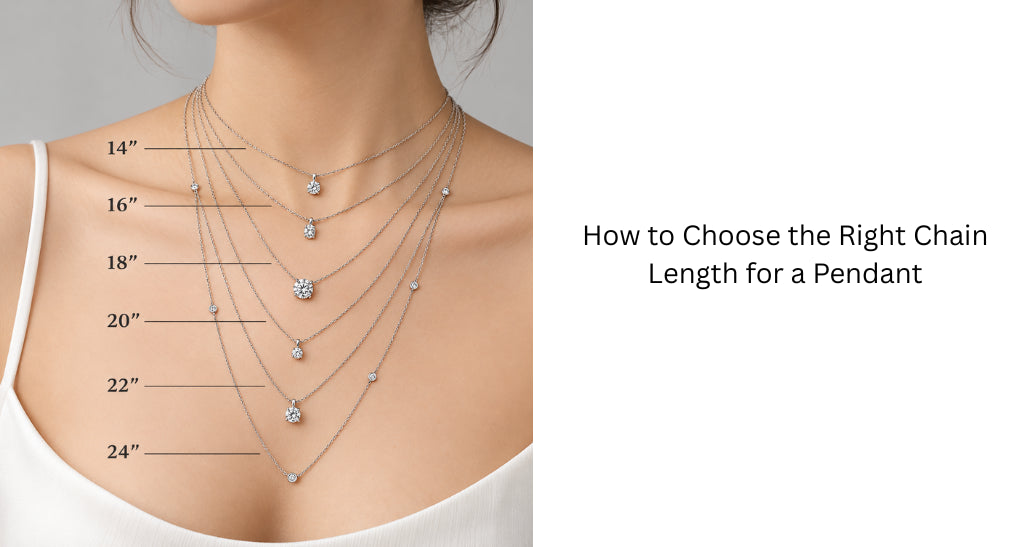
How to Choose the Right Chain Length for a Pendant
The length of a necklace chain affects where a pendant sits, how visible it is and how it works with different outfits. A chain that looks right on one person may sit differently on another because of differences in neck size, height and body proportions.
Choosing the right length involves more than following standard measurements. You also need to consider the pendant's dimensions, the neckline of your clothing and whether you prefer a close-fitting necklace or one that hangs lower on the chest.
1. Understand Standard Pendant Chain Lengths
Necklace chains are available in different lengths, and each creates a different look depending on where it sits on the chest. These standard categories can help you narrow down your options before choosing a chain for your pendant.
| Chain length | Approximate placement | Best suited for |
|---|---|---|
| 14–16 inches | Close to the neck or near its base | Small pendants and choker-style looks |
| 18 inches | Around the collarbone | Everyday pendants and delicate solitaire designs |
| 20–22 inches | Below the collarbone, toward the upper chest | Medium-sized pendants and layered necklaces |
| 24 inches and above | Mid-chest or lower, depending on length | Larger pendants and longer necklace styles |
A 14–16-inch chain creates a close-fitting look and can work well with strapless, scoop-neck and off-the-shoulder outfits. Check the fit carefully, especially if you plan to wear a pendant, as the chain should not feel tight around your neck.
An 18-inch chain is a popular everyday choice because it usually rests around the collarbone. It works with many pendant designs and can complement crew-neck and V-neck tops, depending on the neckline's depth.
A 20–22-inch chain places the pendant lower on the chest, giving it more space to stand out. This length can work well with medium-sized designs, open necklines and layered necklaces.
A 24-inch or longer chain creates a longer drop and can suit statement pendants or outfits such as tunics and sweaters. Check the pendant's size and weight to make sure it hangs comfortably and the chain can support it.
These placements are approximate. Neck size, body proportions and pendant dimensions can all affect the final fit.
2. Consider the Pendant's Dimensions
A pendant's physical size influences how it looks at different chain lengths. A small diamond pendant may be clearly visible near the collarbone, whereas a larger design may look more balanced when it hangs slightly lower.
For a delicate solitaire pendant, a 16-inch or 18-inch chain can keep the stone close to the neckline. Medium-sized pendants often work well with 18-inch or 20-inch chains, while larger or elongated designs may suit longer lengths.
The pendant's shape also matters. A vertical design can create a longer visual line, while a round pendant occupies less vertical space. Consider the pendant's actual dimensions rather than relying on carat weight alone, as carat weight measures the diamond's weight, not the overall size of the finished pendant.
Also consider how much of the pendant you want to see above your clothing. A small design may get lost against a high neckline, while a larger pendant may need more space to sit comfortably without competing with the fabric.
3. Match the Chain Length to Your Neckline
Your neckline determines how much space is available for the necklace and where the pendant will sit in relation to your clothing.
-
Crew neck: A shorter chain may sit above the neckline, while a slightly longer one can place the pendant below it.
-
V-neck: A pendant that falls within the V-shaped opening can complement the neckline without competing with the fabric.
-
Scoop neck: An 18-inch or 20-inch chain may work well, depending on the depth of the neckline.
-
High-neck tops: A longer chain can make the pendant more visible against the fabric.
-
Collared shirts: Shorter chains can sit beneath the collar, while longer ones can be worn over the shirt.
-
Strapless outfits: A shorter chain can highlight the collarbone, while a longer pendant can add contrast against an open neckline.
If you want a chain that works with most of your wardrobe, consider the necklines you wear most often rather than choosing a length for one particular outfit.
4. Measure the Length Before Ordering
Product photographs can make it difficult to judge how long a necklace will look in real life. Measuring your preferred placement before buying is particularly useful when ordering jewellery online.
Use a measuring tape or string: Wrap a soft measuring tape loosely around your neck, positioning it where you want the chain to rest. If you are using string, mark the point where the ends meet and measure it against a ruler.
Check the fit you want: If you prefer a close-fitting necklace, start with a shorter length. For a pendant that hangs below the collarbone, compare longer options against your preferred placement. Do not add a fixed number of inches without checking where the chain will actually sit.
Account for the pendant: A pendant hangs below the point where the chain rests on your neck. Its height and shape affect the overall drop, so check the position of the complete necklace rather than the chain alone.
Compare with a necklace you already own: Lay a necklace with a comfortable fit flat and measure its full length, including the clasp. This gives you a useful reference when ordering another chain.
Remember that a chain's stated length does not guarantee the same fit for everyone. Your neck circumference and the pendant's dimensions can affect where it rests.
5. Check the Chain Thickness and Pendant Weight
Chain length should not be considered separately from chain construction. The chain must be suitable for the pendant's weight and have an opening that accommodates its bail, the small connector through which the chain passes.
A delicate chain may complement a lightweight diamond pendant, but a heavier pendant may require a stronger chain. Check the jeweller's recommendations to ensure that the chain and clasp can support the pendant safely.
Chain thickness also affects the overall appearance. A fine chain keeps attention on a small diamond, while a thicker chain creates a more noticeable look. Choose a combination that suits the pendant without making the necklace feel unbalanced.
If you are buying a chain separately, check that the pendant's bail can slide over the chain comfortably. The chain should not be so thick that the pendant cannot move freely, nor so delicate that it struggles to support the design.
6. When Should You Choose an Adjustable Chain?
An adjustable chain is useful if you want to wear the same pendant at different lengths. Many designs include an extension that allows the chain to be shortened or lengthened within a set range.
This flexibility can help when wearing the pendant with different necklines or layering it with other necklaces. For example, you can keep the pendant closer to the collarbone with one outfit and let it hang lower with another.
Check the adjustment range before purchasing, as some extensions offer only a small change in length. Also consider where the clasp and extension will sit when worn, particularly if you plan to wear your hair up or prefer a clean look at the back of your neck.
If you prefer a consistent fit and rarely change your styling, a fixed-length chain may be all you need.
Final Thoughts
The right chain length depends on the pendant's dimensions, your measurements and where you want the necklace to sit. An 18-inch chain is a practical starting point for many pendant styles, but it is not a universal choice.
Measure before purchasing a diamond pendant, consider your usual clothing necklines and make sure the chain is suitable for the pendant's weight. These checks will help you choose a chain that fits comfortably and allows your pendant to sit as intended.


