




 All Earrings
 Stud Earrings
 Drop Earrings
 Solitaire
 Hoop Earrings
 Halo Earrings
 Vermeil Earrings
 Round
Round
 Oval
Oval
 Emerald
 Pear
Pear
 Princess
 Heart
Heart
 Marquise
 All Rings
 Solitaire Rings
 Band Rings
 Halo Rings
 Cocktail Rings
 Eternity Rings
 Fashion Ring
 Stack Rings
 Men's Rings
 Vermeil Rings
 All Necklaces
 Necklet
 Mangalsutra
 Solitaire
 Tennis Necklace
 Statement Necklace
 Vermeil Necklace
 Alphabets
 Solitaire Pendant
 Halo Pendant
 Vermeil Pendants
 All Bracelets
 Solitaire Bracelet
 Tennis Bracelet
 Fashion Bracelet
 Mangalsutra
 Vermeil Bracelets
 All Vermeil
 Vermeil Earring
 Vermeil Pendant
 Vermeil Ring
 Vermeil Necklace
 Vermeil Mangalsutra
 Vermeil Bracelets
 Vermeil Bangles
 Vermeil Men’s
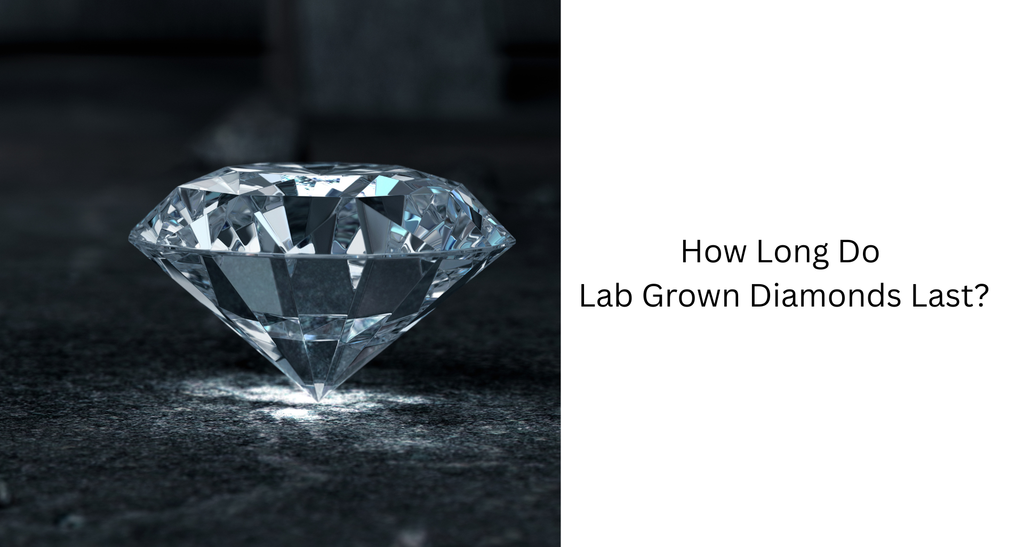
How Long Do Lab Grown Diamonds Last?
When buying a diamond, one of the first questions people often have is how long it will actually last. With lab grown diamonds becoming more common in engagement rings and everyday jewellery, the question comes up just as often: Can a lab grown diamond last a lifetime?
The short answer is yes. A properly cared for lab grown diamond can last for generations.
Lab grown diamonds are real diamonds. They have the same crystal structure and chemical composition as diamonds formed naturally underground. Their origin is different, but their basic physical properties are the same. This includes their hardness and durability, which is why lab grown diamonds can be used in jewellery designed for everyday wear.
Do Lab Grown Diamonds Last a Lifetime?
A lab grown diamond can last a lifetime and can be passed down to future generations when it is properly cared for.
The diamond itself does not have a fixed expiry date. It doesn't gradually wear out simply because you have been wearing it for many years.
What usually changes over time is the jewellery around the diamond.
The metal can develop scratches, settings can become worn, and prongs can loosen with regular use. If these parts are maintained properly, the diamond can remain securely set and continue to be worn for many years.
Are Lab Grown Diamonds Durable?
Lab grown diamonds are highly durable because they have the same crystal structure as natural diamonds.
Diamond ranks at 10 on the Mohs scale of mineral hardness, making it the hardest mineral on that scale. This hardness gives diamonds strong resistance to scratching during everyday wear.
However, hardness and toughness are not exactly the same thing.
Hardness refers mainly to resistance to scratching, while toughness describes how well a material can withstand impact or breaking. A diamond is hard, but it is not impossible to chip or damage. A strong impact in the wrong place, particularly around certain edges or points, can cause damage.
That is why durability doesn't mean a diamond is completely indestructible.
Do Lab Grown Diamonds Lose Their Sparkle?
A lab grown diamond does not naturally become dull with age.
If a diamond that once looked bright starts appearing less sparkly, the issue is usually related to its surface or the jewellery setting rather than the diamond becoming old.
Everyday substances can form a layer over the diamond, including:
-
Skin oils
-
Makeup
-
Moisturiser
-
Sunscreen
-
Hair products
-
Soap
-
Dust
Even a very clean diamond can look less lively when its surface is covered with residue.
Regular cleaning helps remove this buildup and allows light to enter and reflect through the stone properly.
Why Does an Older Diamond Sometimes Look Less Bright?
A diamond's appearance depends heavily on how light interacts with it.
When dirt and oils accumulate on the surface, they can interfere with the way light enters the stone. This can make the diamond appear cloudy or less bright.
The same thing can happen with lab grown diamond jewellery that is worn frequently.
For example, an engagement ring worn every day may come into contact with hand creams, soap, cooking oils and dust. The diamond hasn't become less durable. It simply needs cleaning.
This is why regular jewellery care is important for maintaining the appearance of a lab grown diamond over the years.
Can Lab Grown Diamonds Get Scratched?
Diamonds are highly resistant to scratching, but that doesn't mean they should be stored carelessly.
A diamond can scratch other jewellery because of its hardness. This is particularly relevant when several pieces are stored together.
For example, placing diamond earrings, gold rings and other gemstones in the same compartment allows them to rub against one another whenever the jewellery box is moved.
Separate storage helps reduce unnecessary contact and protects the jewellery surrounding the diamond.
Can Lab Grown Diamonds Chip or Break?
Yes, although this isn't something that happens simply because a diamond is worn for a long time.
A diamond can chip if it receives a strong impact at a vulnerable point. Certain diamond shapes with pointed corners or edges may need additional protection from knocks.
The setting also plays an important role. A secure setting protects the diamond during normal wear, while a damaged or weakened setting can leave the stone more exposed.
If you notice a loose stone, bent prong or damaged setting, have the jewellery inspected rather than continuing to wear it as normal.
How Long Do Lab Grown Diamond Rings Last?
A lab grown diamond ring can last for decades and can be passed from one generation to another.
The lifespan of the ring as a whole depends on more than the diamond. It also depends on the metal, setting style, craftsmanship and how the ring is worn and maintained.
Over time, the ring may need maintenance such as:
-
Prong inspection
-
Setting checks
-
Cleaning
-
Polishing
-
Resizing
-
Repair of worn components
These services don't mean the diamond has reached the end of its life. They help maintain the jewellery around it.
What Can Affect the Life of a Lab Grown Diamond?
The diamond itself is highly durable, but the way you wear and care for the jewellery can affect its long-term condition.
Frequent Hard Impacts
Activities that involve repeated impact can put unnecessary stress on both the diamond and its setting.
Poorly Maintained Settings
A loose prong can increase the risk of the diamond moving or becoming lost.
Harsh Chemicals
Some chemicals can affect jewellery metals and finishes. It's better to follow the care instructions provided with your jewellery instead of using household chemicals.
Improper Storage
Loose jewellery stored together can scratch metals, damage settings and cause pieces to become tangled.
Lack of Cleaning
Dirt doesn't usually damage the diamond itself, but buildup can make the jewellery look dull and can collect around the setting.
How to Make Your Lab Grown Diamond Jewellery Last Longer
You don't need an elaborate routine to care for a lab grown diamond.
A few everyday habits can make a difference.
Remove Jewellery During Heavy Work
Take your ring or other diamond jewellery off when doing activities where it could experience strong impact, pressure or abrasion.
Keep It Away From Beauty Products
Perfume, creams, sunscreen and hair products can leave residue on jewellery. Putting your jewellery on after applying these products can help keep the diamond cleaner.
Clean It Regularly
A mild soap solution and lukewarm water can be suitable for routine cleaning, provided the jewellery doesn't have specific care requirements. A soft brush can help remove buildup around the setting.
Store Each Piece Separately
Keep diamond jewellery in its own compartment or soft pouch rather than leaving it loose with other pieces.
Check the Setting
Every so often, look closely at the prongs and setting. If something looks loose or damaged, get it checked by a jeweller.
Does Lab Grown Diamond Durability Differ From Natural Diamonds?
The durability of a lab grown diamond is not fundamentally different from that of a natural diamond simply because it was grown in a laboratory.
Both are diamond, with the same basic crystal structure and carbon composition.
The major difference is their origin. Natural diamonds form through geological processes over very long periods, while lab grown diamonds are produced using controlled technological processes that recreate the conditions needed for diamond growth.
That difference in origin does not mean a lab grown diamond automatically wears out faster.
Can You Wear a Lab Grown Diamond Every Day?
Lab grown diamonds are suitable for everyday jewellery, provided the piece is designed appropriately and cared for properly.
Engagement rings, wedding rings, earrings, pendants and other diamond jewellery can all be worn regularly.
Daily wear does mean the jewellery will come into contact with more dirt, oils and potential impacts. The diamond can handle normal wear well, but the setting and metal still need regular attention.
For rings in particular, removing the jewellery during activities involving heavy lifting, sports, cleaning or strong impact can reduce unnecessary wear.
Will a Lab Grown Diamond Look the Same After 20 or 30 Years?
The diamond itself can continue to look the same after decades if it is properly cared for.
What may change is the condition of the jewellery around it. Gold can develop surface scratches, a polished finish can become less reflective, and prongs may require maintenance.
This is normal for jewellery that has been worn regularly.
A professional cleaning and inspection can help restore the appearance of the jewellery and identify small issues before they become more serious.
Can Lab Grown Diamonds Be Passed Down?
Yes. A well-maintained lab grown diamond can become a piece of jewellery that stays in a family for generations.
If you plan to keep a piece as an heirloom, storing it properly and having the setting inspected from time to time becomes even more important.
The diamond doesn't need to be replaced simply because it has been owned for many years.
Frequently Asked Questions
1. How long do lab grown diamonds last?
A lab grown diamond can last a lifetime and can be passed down through generations. Its long-term condition depends mainly on how the jewellery is worn, maintained and stored.
2. Do lab grown diamonds last a lifetime?
Yes. Lab grown diamonds can last a lifetime because they have the same basic physical properties as natural diamonds, including their high hardness.
3. Are lab grown diamonds durable?
Yes. Lab grown diamonds are highly resistant to scratching and are suitable for everyday jewellery. However, they can still chip or become damaged by a strong impact, so reasonable care is important.
Do lab grown diamonds lose their sparkle?
The diamond itself does not lose its sparkle simply with age. Dirt, oils, makeup and other residue can make it appear dull. Regular cleaning helps maintain its appearance.
4. Can lab grown diamonds be worn every day?
Yes. They are suitable for everyday jewellery, including rings and earrings. Activities involving heavy impact should still be avoided while wearing diamond jewellery.
5. Can a lab grown diamond be passed down to future generations?
Yes. With proper care and maintenance of the jewellery setting, a lab grown diamond can be kept and passed down as an heirloom.
Final Thoughts
A lab grown diamond isn't something you buy expecting to replace after a few years. It can last a lifetime and, with proper care, remain part of a family for generations.
Its durability comes from the same fundamental properties that make diamond suitable for jewellery in the first place. The bigger focus should be on caring for the complete piece, including its setting, metal and any other components.
Keep it clean, store it properly, avoid unnecessary hard impacts and have the setting checked when needed. With those simple habits, your lab grown diamond jewellery can stay beautiful and wearable for many years.


