




 All Earrings
 Stud Earrings
 Drop Earrings
 Solitaire
 Hoop Earrings
 Halo Earrings
 Vermeil Earrings
 Round
Round
 Oval
Oval
 Emerald
 Pear
Pear
 Princess
 Heart
Heart
 Marquise
 All Rings
 Solitaire Rings
 Band Rings
 Halo Rings
 Cocktail Rings
 Eternity Rings
 Fashion Ring
 Stack Rings
 Men's Rings
 Vermeil Rings
 All Necklaces
 Necklet
 Mangalsutra
 Solitaire
 Tennis Necklace
 Statement Necklace
 Vermeil Necklace
 Alphabets
 Solitaire Pendant
 Halo Pendant
 Vermeil Pendants
 All Bracelets
 Solitaire Bracelet
 Tennis Bracelet
 Fashion Bracelet
 Mangalsutra
 Vermeil Bracelets
 All Vermeil
 Vermeil Earring
 Vermeil Pendant
 Vermeil Ring
 Vermeil Necklace
 Vermeil Mangalsutra
 Vermeil Bracelets
 Vermeil Bangles
 Vermeil Men’s
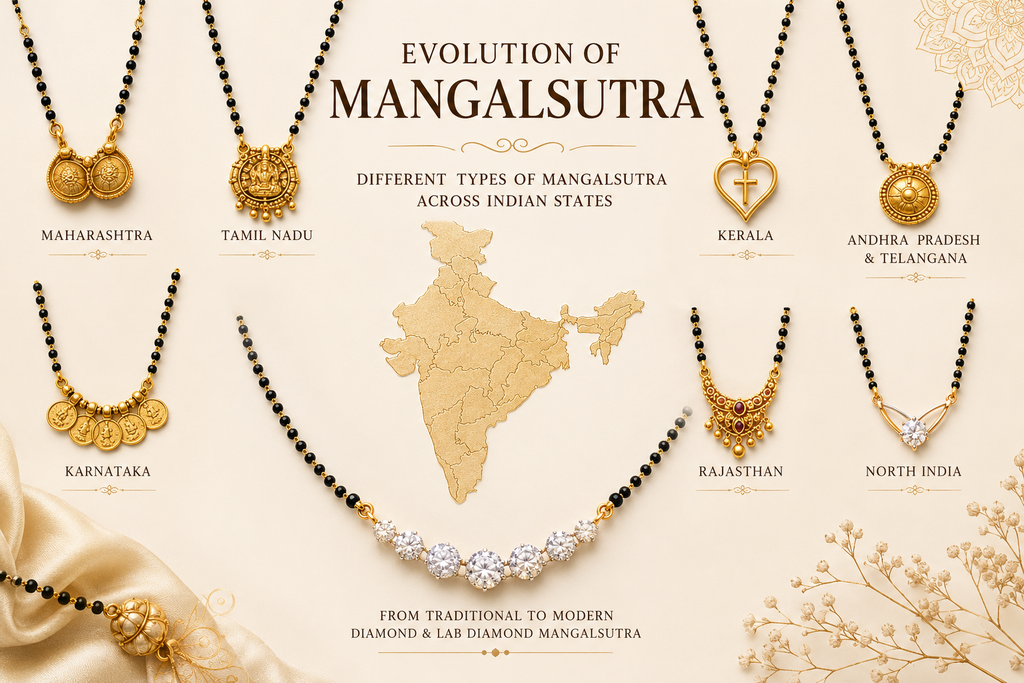
Evolution of Mangalsutra & Different Types of Mangalsutra Across Indian States
India is a country where jewellery is connected with traditions, family emotions, and cultural beliefs. Among all traditional jewellery pieces, the Mangalsutra has a very special place in Indian weddings. For many families, it is not just jewellery worn after marriage. It represents a new beginning, togetherness, blessings, and the bond between husband and wife.
Even today, when jewellery trends keep changing, the importance of the Mangalsutra has remained strong. The styles may look different now, but the emotions connected with it are still the same. One interesting thing about Mangalsutra traditions in India is that every state has its own design and way of wearing it.
How the Mangalsutra Started in India
The word Mangalsutra comes from two Sanskrit words - “Mangal,” meaning auspicious, and “Sutra,” meaning thread. In earlier times, the Mangalsutra was much simpler than what we see today. During marriage ceremonies, brides were tied with sacred yellow threads coated with turmeric. Turmeric was considered pure in many Indian traditions.
Slowly, gold became part of wedding jewellery, and these sacred threads started turning into necklaces with gold pendants. Different communities across India added their own symbols, patterns, and beliefs into the design. Over time, every region created its own Mangalsutra style.
Black beads also became an important part of many Mangalsutra designs. People believed these beads protected married couples from negativity and evil eyes. Gold represented prosperity, purity, and blessings for married life.
As jewellery-making improved, Mangalsutra designs became more detailed. Today, people can find everything from traditional gold Mangalsutras to diamond and lab-grown diamond styles designed for daily wear. Even after so many changes, the emotional value connected with the Mangalsutra still remains important in Indian weddings.
Different Types of Mangalsutra Across Indian States
India has many cultures and traditions, and this can clearly be seen in Mangalsutra designs as well. Every state has its own style that reflects local customs, family traditions, and community beliefs.
Maharashtra – The Vati Mangalsutra

In Maharashtra, the Vati Mangalsutra is one of the most common traditional styles. It usually contains two small bowl-shaped pendants called Vatis. These are believed to represent the husband and wife coming together after marriage.
The necklace mostly includes black beads connected with gold chains. Many Maharashtrian brides still wear this style after marriage because it is strongly connected with their traditions and family customs.
Today, jewellers also create newer versions with diamond pendants and lighter chains, but the traditional Vati design continues to remain popular.
Tamil Nadu – The Thali Tradition

In Tamil Nadu, the Mangalsutra is commonly called Thali or Thirumangalyam. The design changes from one community to another, and many families follow their own traditional pendant styles.
Unlike many North Indian Mangalsutras, Tamil Thalis are often worn on plain gold chains instead of black beads. Some pendants include religious symbols and patterns connected with temple traditions.
During South Indian weddings, the moment when the groom ties the Thali around the bride’s neck is considered one of the most important parts of the ceremony.
Kerala – The Minnu

In Kerala, Christian brides traditionally wear a Mangalsutra called Minnu. The pendant is usually small and often includes a cross symbol made with tiny gold beads.
One special tradition connected with the Minnu is that it is tied using threads taken from the bride’s wedding saree. This custom has been followed in many Kerala Christian weddings for generations.
The Minnu has a different look compared to many other Mangalsutra styles seen across India, and many brides in Kerala still continue this tradition today.
Andhra Pradesh and Telangana – The Bottu Style
In Andhra Pradesh and Telangana, the Mangalsutra is known as Bottu. It usually includes a round gold pendant attached to black beads or gold chains.
Many families believe the Bottu represents prosperity and happiness in married life. In some households, these Mangalsutras are passed from one generation to another, making them emotionally valuable for the family.
Over time, lighter and smaller Bottu designs also became popular among younger brides.
Karnataka – Gold Coin and Temple-Inspired Designs
In Karnataka, many Mangalsutra styles are inspired by traditional South Indian temple jewellery. Some designs include small coin-shaped patterns called Kasu along with detailed gold work.
These Mangalsutras are often chosen during weddings because of their traditional appearance and cultural connection. Temple jewellery art has influenced Karnataka jewellery for many years, and that influence can still be seen in Mangalsutra designs today.
North India – Changing Mangalsutra Trends
In many North Indian states such as Delhi, Punjab, Uttar Pradesh, and Haryana, Mangalsutra designs have changed a lot over the years.
Earlier, longer black bead chains with traditional gold pendants were more common. Today, many women prefer shorter chains, lightweight pendants, and styles that can be worn comfortably every day.
Diamond pendants and smaller Mangalsutra designs have become especially popular among younger brides because they match both Indian and western outfits easily.
The Rise of Diamond Mangalsutra

Over the last few years, diamond Mangalsutras have become very popular in India. Earlier, Mangalsutras were mostly heavy gold necklaces worn after marriage ceremonies and during family functions. But today’s brides often look for designs that they can wear daily without feeling uncomfortable.
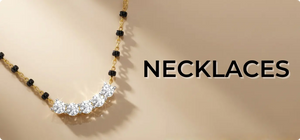
This is where diamond Mangalsutras started gaining attention. They brought a new style to traditional Mangalsutra designs. Many women now prefer small diamond pendants, solitaire styles, floral patterns, infinity symbols, and sleek chain designs that are easier to wear with different outfits.
Jewellery brands also started creating office-wear Mangalsutras and shorter chain designs because many women wanted something that looked stylish but still stayed connected with their marriage tradition.
Diamond Mangalsutras are now commonly chosen not only for weddings but also as anniversary gifts and special occasion jewellery.
How Lab-Grown Diamond Mangalsutras Became Popular

As diamond jewellery demand increased, lab grown diamond Mangalsutras also started becoming popular in India. Many younger buyers today look for jewellery that offers good designs, better pricing, and larger-looking diamonds within budget.
Lab grown diamonds made this possible for many couples. These diamonds are created using advanced technology but look the same as natural diamonds to the eyes. Because of this, many brides now choose lab grown diamond Mangalsutras for wedding jewellery and daily wear.
Another reason behind their growing popularity is design flexibility. Jewellers are now creating trendy pendant styles, lightweight chains, and newer Mangalsutra patterns using lab grown diamonds.
For many young couples, lab grown diamond Mangalsutras feel like a practical option because they allow them to choose attractive designs at comparatively lower prices than natural diamond jewellery.
The growing interest in lab-grown diamond jewellery has also changed how younger generations look at bridal jewellery shopping in India.
Why the Mangalsutra Still Matters Today
Even after fashion trends changed, the Mangalsutra still holds emotional importance in many Indian families. For some women, it represents the beginning of married life. For others, it is connected with family traditions and memories passed through generations.
Many brides today want jewellery that feels traditional but also fits comfortably into their daily lifestyle. This is one of the reasons why Mangalsutra designs continue evolving with time.
Still, no matter how much the designs change, the emotions connected with the Mangalsutra remain the same for many people.
Final Thoughts
The evolution of the Mangalsutra shows how Indian traditions changed with time while still keeping their cultural identity alive. From sacred yellow threads in ancient weddings to diamond and lab-grown diamond Mangalsutras worn today, every design tells a story connected with marriage, traditions, and family values.
What makes Mangalsutra traditions special is the diversity seen across India. Whether it is the Vati style in Maharashtra, the Thali in Tamil Nadu, the Minnu in Kerala, or the Bottu in Andhra Pradesh, every design reflects the culture and customs of that region.
Even today, the Mangalsutra continues to remain an important part of Indian wedding traditions.


