





 All Earrings
 Stud Earrings
 Drop Earrings
 Solitaire
 Hoop Earrings
 Halo Earrings
 Vermeil Earrings
 Round
 Oval
 Emerald
 Pear
 Princess
 Heart
 Marquise
 All Rings
 Solitaire Rings
 Band Rings
 Halo Rings
 Cocktail Rings
 Eternity Rings
 Fashion Ring
 Stack Rings
 Men's Rings
 Vermeil Rings
 All Necklaces
 Necklet
 Mangalsutra
 Solitaire
 Tennis Necklace
 Statement Necklace
 Vermeil Necklace
 Alphabets
 Solitaire Pendant
 Halo Pendant
 Vermeil Pendants
 All Bracelets
 Solitaire Bracelet
 Tennis Bracelet
 Fashion Bracelet
 Mangalsutra
 Vermeil Bracelets
 All Vermeil
 Vermeil Earring
 Vermeil Pendant
 Vermeil Ring
 Vermeil Necklace
 Vermeil Mangalsutra
 Vermeil Bracelets
 Vermeil Bangles
 Vermeil Men’s
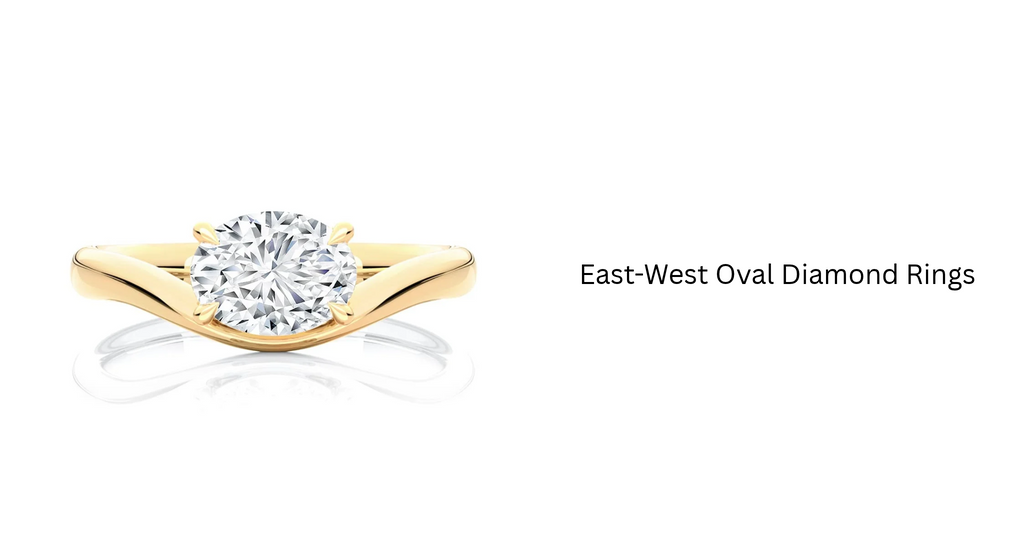
East-West Oval Diamond Rings: A Different Way to Wear an Oval Cut
Oval diamond rings are usually designed with the longer side of the diamond running from the fingertip towards the hand. This is the traditional north-south setting, and it remains a popular choice for engagement rings. But there is another way to set an oval diamond that gives the ring a completely different appearance.
In an east-west setting, the oval diamond is placed horizontally across the finger rather than vertically. The result is a wider-looking design that feels different from a traditional solitaire without changing the diamond's familiar oval shape.
This setting is worth exploring if you like oval diamonds but want something less conventional. Let's look at how east-west oval rings are designed, which settings work well with them and what to consider before choosing one.
What Is an East-West Oval Diamond Ring?

An east-west oval diamond ring features an oval-shaped centre stone positioned horizontally across the ring band. Instead of following the length of the finger, the diamond sits from left to right.
The diamond itself is no different from a traditional oval cut. What changes is its orientation and how it is secured in the setting.
This small design change makes a noticeable difference to the overall appearance. The horizontal placement gives the ring a wider profile and draws attention across the finger. It also creates more room for interesting band and setting designs.
East-west settings are not limited to engagement rings. They can also be used in dress rings and everyday diamond jewellery.
Why Choose an East-West Oval Setting?
The appeal of an east-west oval ring comes from its different proportions. It uses a familiar diamond shape but presents it in a way that feels less traditional.
Here are a few reasons why people consider this setting:
-
A different look: The horizontal diamond placement gives a fresh appearance to a classic oval cut.
-
A wider profile: The centre stone extends across the finger, creating a more noticeable horizontal design.
-
More setting options: The orientation works with solitaire, bezel and other contemporary settings.
-
Easy to personalise: Different band styles, metal colours and diamond accents can change the overall look.
If you already like oval diamonds but find traditional solitaire designs too familiar, an east-west setting offers another way to wear the same shape.
Popular East-West Oval Diamond Ring Styles
The horizontal placement can be used with different settings. Each one changes how much of the diamond is visible and how the ring looks from different angles.
1. East-West Oval Solitaire Rings

An east-west solitaire keeps the design focused on one oval centre diamond. The stone is positioned horizontally and held by prongs, leaving most of its surface visible.
This style works well if you want the unusual orientation to be the main feature of the ring. A slim gold band keeps the design simple, while a slightly wider band gives it a more substantial appearance.
The prongs need to be positioned carefully to hold the oval securely without covering too much of its outline. The setting should also provide enough support at the ends of the diamond.
2. East-West Bezel Set Oval Rings

A bezel setting surrounds the diamond with a thin metal rim. In an east-west oval ring, this creates a smooth outline around the horizontally placed centre stone.
One advantage of this design is that the metal protects the diamond's edges from everyday knocks. It also gives the ring a clean, finished appearance without visible prongs.
Bezel settings can make the centre stone look slightly more integrated into the band. They are a good option if you prefer a contemporary design with fewer exposed details.
3. East-West Oval Rings With Diamond Bands
Adding small diamonds along the band brings extra detail to an east-west oval ring. Pavé settings, where small diamonds are placed closely together along the band, create a continuous line of sparkle around the centre stone.
This combination works particularly well when the oval diamond is set in a simple solitaire-style head. The centre stone remains the main focus, while the diamond band adds detail without requiring another large stone.
You can choose a narrow pavé band for a delicate look or a wider diamond-set band for a more noticeable design.
4. East-West Oval Three-Stone Rings
Three-stone rings offer another way to personalise the east-west setting. The oval centre diamond can be paired with smaller stones on either side, following the horizontal direction of the ring.
Tapered baguettes are a popular design choice because their straight edges complement the oval centre. Round diamonds can also be used to create a contrast between the shapes.
The size and placement of the side stones matter here. They should complement the centre diamond rather than make the ring look too wide or crowded.
5. East-West Oval Rings With Twisted Bands

A twisted or crossover band adds movement to the ring design. Instead of a straight band leading directly towards the centre stone, the metal curves or crosses as it approaches the oval diamond.
This creates a more detailed appearance while keeping the horizontal centre stone as the main feature.
The design can be made with plain gold, diamond accents or a combination of both. If you prefer a ring with some detail but do not want a traditional halo, this style is worth considering.
East-West Oval Diamond Twited Band
Both settings use the same oval diamond cut, but the direction in which the stone is placed changes the overall appearance.
|
Feature |
East-West Setting |
North-South Setting |
|---|---|---|
|
Diamond position |
Horizontal across the finger |
Vertical along the finger |
|
Overall appearance |
Wider and more contemporary |
Traditional and elongated |
|
Design style |
Unconventional and modern |
Classic and familiar |
|
Band options |
Works with straight, twisted and detailed bands |
Works with a wide range of traditional settings |
|
Visual focus |
Draws attention across the finger |
Follows the length of the finger |
Neither orientation is better than the other. The choice comes down to the design you prefer and how you want the ring to sit on your hand.
What to Consider Before Buying an East-West Oval Diamond Ring
An east-west setting looks simple, but the placement of the centre stone needs careful attention. A few details are worth checking before you make a purchase.
1. Check the Diamond's Proportions
Oval diamonds come in different length-to-width ratios. Some look longer and slimmer, while others have a fuller, rounder outline.
When the diamond is placed horizontally, these proportions become especially noticeable. A longer oval creates a wider visual effect across the finger, while a shorter oval gives the ring a more compact appearance.
Look at the actual diamond measurements rather than relying only on its carat weight.
2. Pay Attention to the Setting
The setting should hold the diamond securely while keeping its outline visible. Prongs need to support the stone properly, particularly around its curved ends.
If you prefer a bezel setting, check that the metal follows the oval's shape without covering more of the diamond than necessary.
The height of the setting is also important. A lower profile can feel more practical for everyday wear, provided the design gives the diamond enough support.
3. Choose a Band That Balances the Centre Stone
The band should complement the width and proportions of the oval diamond. A very thin band can make a large centre stone look more prominent, while a wider band creates a stronger overall design.
If you are adding diamonds to the band, consider their size and placement. Too many details can compete with the centre stone.
4. Consider Your Everyday Routine
Think about how often you plan to wear the ring and the kind of activities you do while wearing it.
A raised setting may catch on clothing or other objects more easily than a lower-profile design. Bezel settings offer more coverage around the diamond's edges, while prong settings leave more of the stone exposed.
Whichever design you choose, regular cleaning and occasional setting checks will help maintain the ring.
5. Select the Right Gold Colour
East-west oval rings can be made in different gold colours, and each gives the design a slightly different appearance.
-
Yellow gold: Creates a warm contrast with the diamond and works well with classic solitaire designs.
-
White gold: Gives the ring a bright, clean finish and keeps the focus on the diamond.
-
Rose gold: Adds a soft pink tone that makes the horizontal setting stand out in a different way.
You can also consider the colour of the jewellery you already wear if you want your engagement ring to coordinate with your other pieces.
How to Style an East-West Oval Diamond Ring
A twisted or crossover band adds movement to the ring design. Instead of a straight band leading directly towards the centre stone, the metal curves or crosses as it approaches the oval diamond.
This creates a more detailed appearance while keeping the horizontal centre stone as the main feature.
The design can be made with plain gold, diamond accents or a combination of both. If you prefer a ring with some detail but do not want a traditional halo, this style is worth considering.
East-West vs North-South Oval Diamond Rings
Both settings use the same oval diamond cut, but the direction in which the stone is placed changes the overall appearance.
|
Feature |
East-West Setting |
North-South Setting |
|---|---|---|
|
Diamond position |
Horizontal across the finger |
Vertical along the finger |
|
Overall appearance |
Wider and more contemporary |
Traditional and elongated |
|
Design style |
Unconventional and modern |
Classic and familiar |
|
Band options |
Works with straight, twisted and detailed bands |
Works with a wide range of traditional settings |
|
Visual focus |
Draws attention across the finger |
Follows the length of the finger |
Neither orientation is better than the other. The choice comes down to the design you prefer and how you want the ring to sit on your hand.
What to Consider Before Buying an East-West Oval Diamond Ring
An east-west setting looks simple, but the placement of the centre stone needs careful attention. A few details are worth checking before you make a purchase.
1. Check the Diamond's Proportions
Oval diamonds come in different length-to-width ratios. Some look longer and slimmer, while others have a fuller, rounder outline.
When the diamond is placed horizontally, these proportions become especially noticeable. A longer oval creates a wider visual effect across the finger, while a shorter oval gives the ring a more compact appearance.
Look at the actual diamond measurements rather than relying only on its carat weight.
2. Pay Attention to the Setting
The setting should hold the diamond securely while keeping its outline visible. Prongs need to support the stone properly, particularly around its curved ends.
If you prefer a bezel setting, check that the metal follows the oval's shape without covering more of the diamond than necessary.
The height of the setting is also important. A lower profile can feel more practical for everyday wear, provided the design gives the diamond enough support.
3. Choose a Band That Balances the Centre Stone
The band should complement the width and proportions of the oval diamond. A very thin band can make a large centre stone look more prominent, while a wider band creates a stronger overall design.
If you are adding diamonds to the band, consider their size and placement. Too many details can compete with the centre stone.
4. Consider Your Everyday Routine
Think about how often you plan to wear the ring and the kind of activities you do while wearing it.
A raised setting may catch on clothing or other objects more easily than a lower-profile design. Bezel settings offer more coverage around the diamond's edges, while prong settings leave more of the stone exposed.
Whichever design you choose, regular cleaning and occasional setting checks will help maintain the ring.
5. Select the Right Gold Colour
East-west oval rings can be made in different gold colours, and each gives the design a slightly different appearance.
-
Yellow gold: Creates a warm contrast with the diamond and works well with classic solitaire designs.
-
White gold: Gives the ring a bright, clean finish and keeps the focus on the diamond.
-
Rose gold: Adds a soft pink tone that makes the horizontal setting stand out in a different way.
You can also consider the colour of the jewellery you already wear if you want your engagement ring to coordinate with your other pieces.
How to Style an East-West Oval Diamond Ring
An east-west oval ring can be worn on its own or paired with other rings. Its horizontal setting already gives it a distinct appearance, so the styling does not need to be complicated.
If you prefer a minimal look, wear it alone and let the centre diamond stand out. For a layered combination, pair it with a slim gold band or a delicate diamond band.
When choosing a wedding band, check how it sits against the engagement ring. A straight band may leave a gap depending on the setting, while a curved or open band can follow the shape more closely.
You can also pair the ring with simple diamond studs or a delicate pendant for a coordinated look without making the jewellery feel too matched.
Final Thoughts
An east-west oval diamond ring is a simple change from the traditional way of setting an oval stone, but it gives the design a noticeably different character. The horizontal placement creates a wider profile and opens up possibilities for solitaire, bezel, three-stone and diamond-band styles.
When choosing one, pay attention to the diamond's proportions, setting height and band design. These details affect both the appearance and comfort of the ring.
If you love the oval cut but want a design that feels less conventional, an east-west setting is worth considering.


