






 All Earrings
 Stud Earrings
 Drop Earrings
 Solitaire
 Hoop Earrings
 Halo Earrings
 Vermeil Earrings
 Round
Round
 Oval
Oval
 Emerald
 Pear
Pear
 Princess
 Heart
Heart
 Marquise
 All Rings
 Solitaire Rings
 Band Rings
 Halo Rings
 Cocktail Rings
 Eternity Rings
 Fashion Ring
 Stack Rings
 Men's Rings
 Vermeil Rings
 All Necklaces
 Necklet
 Mangalsutra
 Solitaire
 Tennis Necklace
 Statement Necklace
 Vermeil Necklace
 Alphabets
 Solitaire Pendant
 Halo Pendant
 Vermeil Pendants
 All Bracelets
 Solitaire Bracelet
 Tennis Bracelet
 Fashion Bracelet
 Mangalsutra
 Vermeil Bracelets
 All Vermeil
 Vermeil Earring
 Vermeil Pendant
 Vermeil Ring
 Vermeil Necklace
 Vermeil Mangalsutra
 Vermeil Bracelets
 Vermeil Bangles
 Vermeil Men’s
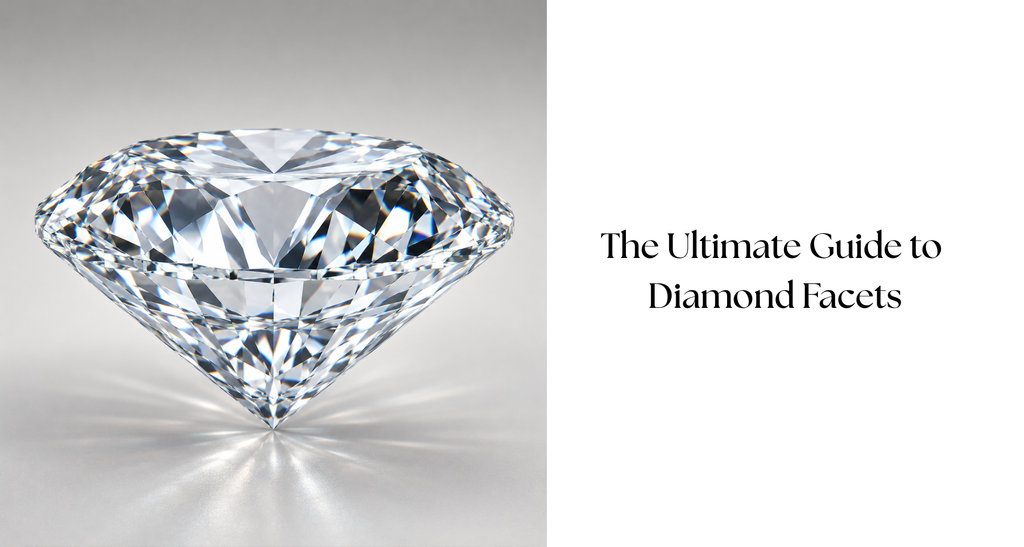
The Ultimate Guide to Diamond Facets
Two diamonds can have the same carat weight, colour, and clarity, yet one may sparkle noticeably more than the other. The reason often comes down to something many buyers overlook: facets.
When you see a diamond catching the light and flashing brilliantly from across the room, you're actually seeing the work of dozens of carefully polished surfaces directing light through the stone. These surfaces, known as facets, are responsible for much of a diamond's beauty and visual appeal.
While carat weight often gets the most attention, facets play an equally important role in determining how bright, lively, and eye-catching a diamond appears. Whether you're shopping for an engagement ring, a pair of diamond studs, or a tennis bracelet, understanding facets can help you make a more informed choice.
Why Understanding Diamond Facets Matters
Many buyers spend hours comparing carat weight, colour, and clarity but pay little attention to facets. In reality, facets play a major role in determining how a diamond looks once it is worn.
A diamond with excellent faceting can appear brighter, livelier, and more impressive than a larger diamond with poor light performance. Understanding facets not only helps you appreciate a diamond's craftsmanship but can also help you make a smarter buying decision.
What Exactly Is a Diamond Facet?

A diamond facet is a flat, polished surface cut onto a diamond. These surfaces are strategically positioned to control the way light enters, travels through, and exits the stone.
Imagine sunlight hitting a diamond ring. The flashes of white light and rainbow colours you see are not coming from the diamond itself. Instead, they are created by light bouncing between dozens of tiny polished facets inside the stone.
Before a diamond is cut, it resembles a rough crystal and lacks the sparkle we associate with fine jewellery. It is only after skilled diamond cutters carefully shape and polish facets onto the stone that a diamond comes to life.
Think of each facet as a tiny mirror. Working together, these mirrors create the brilliance and sparkle that make diamonds so captivating.
Why Are Diamond Facets Important?
Facets do far more than give a diamond its shape. They determine how effectively a diamond handles light.
When facets are cut with precision, they maximise three important visual effects:

Brilliance
Brilliance refers to the white light reflected from a diamond. It is what makes a diamond appear bright and radiant.
Fire
Fire describes the flashes of rainbow colours that appear when light is dispersed within a diamond.
Scintillation
Scintillation refers to the sparkle and flashes of light that occur when a diamond moves.
A well-faceted diamond displays all three qualities beautifully. Poorly cut facets, however, can cause light to leak out of the stone, reducing its sparkle and making it appear dull.
Understanding the Parts of a Diamond
To understand how facets work, it helps to know the basic structure of a diamond.

Table
The table is the large flat facet on the top of the diamond. It acts as the main window through which light enters and exits the stone.
Crown
The crown is the upper portion of the diamond between the table and the girdle. Its facets help create fire and brilliance.
Girdle
The girdle forms the outer edge of the diamond and separates the crown from the pavilion.
Pavilion
The pavilion is the lower section of the diamond. Its facets are responsible for reflecting light back through the top of the stone.
Culet
The culet is a small facet at the very bottom tip of some diamonds. Modern diamonds often have extremely small culets or none at all.
How Many Facets Does a Diamond Have?
The answer depends on the shape and cutting style.
The most common diamond shape, the round brilliant cut, typically has 57 or 58 facets. This arrangement has been refined over generations to maximise sparkle and light return.
However, different diamond shapes require different facet patterns. Some shapes prioritise brilliance, while others focus on elegance, symmetry, or unique light reflections.
Diamond Facet Counts by Shape
| Diamond Shape | Typical Facet Count | What Makes It Unique? |
|---|---|---|
| Round Brilliant | 57-58 | Designed to maximise brilliance, fire, and scintillation. Considered the sparkliest diamond shape. |
| Princess | 57-76 | Combines a square shape with brilliant-cut faceting for strong sparkle and a modern appearance. |
| Oval | 56-58 | Uses a faceting pattern similar to round diamonds, offering excellent sparkle with an elongated look. |
| Cushion | 58-64 | Features larger facets and rounded corners, creating either a soft glow or impressive brilliance depending on the cut style. |
| Emerald | Around 57 | Uses long step-cut facets that create elegant flashes of light rather than intense sparkle. |
| Asscher | Around 58 | Similar to the emerald cut but square in shape, known for its symmetry, depth, and hall-of-mirrors effect. |
| Pear | 56-58 | Combines the sparkle of a round diamond with a graceful teardrop silhouette. |
| Marquise | 56-58 | Brilliant-cut facets and pointed ends help the diamond appear larger than its actual carat weight. |
| Heart | 56-58 | Requires precise faceting to maintain its distinctive shape while delivering strong sparkle. |
| Radiant | 62-70 | Combines the shape of an emerald cut with the brilliance of a round diamond for exceptional sparkle. |
While different diamond shapes have different facet counts, a higher number of facets does not automatically mean a better diamond. The quality of the cut, symmetry, and proportions have a much greater impact on sparkle than facet count alone.
Brilliant Faceting vs Step Faceting
Not all facets are designed to create the same visual effect. Different faceting styles influence how a diamond interacts with light and how it appears to the eye.

Brilliant Faceting
Brilliant facets are designed to maximise sparkle and light return.
When light enters the diamond, these facets help reflect it back to the eye, creating the bright sparkle that most people associate with diamonds.
This faceting style is commonly found in:
-
Round diamonds
-
Oval diamonds
-
Princess diamonds
-
Pear diamonds
-
Marquise diamonds
-
Radiant diamonds
Brilliant faceting is ideal for people who love:
-
Maximum sparkle
-
Rainbow flashes of colour
-
A bright and lively appearance
-
Diamonds that catch attention from every angle
Step Faceting
Step facets are long and rectangular, arranged like stairs.
Instead of producing intense sparkle, they create broad flashes of light that move elegantly across the diamond's surface.
Because step-cut diamonds have more open facets, it is easier to see into the stone. This makes clarity more noticeable, which is why buyers often choose higher clarity grades for emerald and asscher cut diamonds.
This faceting style is commonly found in:
-
Emerald-cut diamonds
-
Asscher-cut diamonds
-
Baguette diamonds
This style suits people who appreciate:
-
Clean lines
-
A calm, structured look
-
Visual depth rather than sparkle
-
Broad flashes of light
-
A sophisticated appearance
Mixed Faceting

Some diamond shapes combine elements of both brilliant and step faceting to create a balance between sparkle and structure.
Examples include:
-
Radiant-cut diamonds
-
Certain cushion-cut diamonds
Mixed faceting is ideal for people who want:
-
Strong sparkle
-
A distinctive shape
-
A balance between brilliance and elegance
-
The best of both faceting styles
Which Diamond Shape Has the Best Facets for Sparkle?
If sparkle is your top priority, brilliant-cut diamonds are usually the best choice. Round, radiant, oval, pear, and princess cuts are designed to maximise light return, making them some of the brightest and most lively diamond shapes available.
However, sparkle is not the only factor that matters. Some buyers prefer the refined appearance of step-cut diamonds such as emerald and asscher cuts. While these shapes produce less sparkle, they offer elegant flashes of light and a sophisticated look that many people find appealing.
The best diamond shape ultimately depends on whether you value maximum brilliance or a more understated appearance.
Do More Facets Mean More Sparkle?
One of the biggest myths in diamond buying is that a higher facet count automatically means a better diamond.
The truth is that a diamond with more facets does not necessarily sparkle more than one with fewer facets. What matters most is how well those facets are cut and positioned.
A perfectly cut round brilliant diamond with 57 facets will often outperform a poorly cut diamond with additional facets. Precision, symmetry, and proportions have a much greater impact on sparkle than the number of facets alone.
How Facets Affect Diamond Value
Facets play an important role in determining a diamond's cut grade, which directly affects its value.
When grading a diamond, laboratories evaluate factors such as:
-
Facet alignment
-
Symmetry
-
Polish
-
Proportions
-
Light performance
Diamonds with excellent cut grades generally command higher prices because they appear brighter and more visually appealing.
This is one of the reasons why cut is often considered the most important of the 4Cs.
How Diamond Facets Relate to Cut Grades
While facets are responsible for a diamond's sparkle, they cannot be viewed in isolation. The way those facets are proportioned, aligned, and polished directly influences a diamond's cut grade.
Grading laboratories such as IGI and GIA evaluate how effectively a diamond's facets interact with light when assigning a cut grade.
Generally:
| Cut Grade | Facet Performance |
|---|---|
| Excellent / Ideal | Maximum light return and sparkle |
| Very Good | Strong brilliance with minor light loss |
| Good | Noticeable sparkle but less efficient light performance |
| Fair | Reduced brilliance and fire |
| Poor | Significant light leakage, resulting in a dull appearance |
This is why two diamonds with the same number of facets can look completely different. The quality of the cut determines how effectively those facets perform.
What Should You Look for When Buying a Diamond?
When comparing diamonds, avoid focusing solely on carat weight.
Instead, pay attention to:
-
Cut quality
-
Facet symmetry
-
Light performance
-
Polish
-
Certification
A smaller diamond with excellent faceting can often appear more impressive than a larger diamond with poor light performance.
If you're shopping for a diamond that truly stands out, prioritising cut quality is one of the smartest decisions you can make.
Common Myths About Diamond Facets
Myth 1: More Facets Always Mean More Sparkle
Reality: The quality of the cut matters far more than the number of facets.
Myth 2: All Diamond Shapes Sparkle Equally
Reality: Different facet patterns create different visual effects. Round and radiant cuts sparkle differently from emerald and asscher cuts.
Myth 3: Facets Only Affect Appearance
Reality: Facets influence both appearance and value because they play a major role in determining a diamond's cut grade.
Frequently Asked Questions About Diamond Facets
1. How many facets does a round brilliant diamond have?
A standard round brilliant diamond typically has 57 or 58 facets, depending on whether the culet is included.
2. Do more facets make a diamond sparkle more?
Not always. The precision of the cut and facet alignment have a greater impact on sparkle than the number of facets alone.
3. Which diamond shape has the most sparkle?
Round brilliant diamonds are generally considered the sparkle because their facets are specifically designed to maximise light return.
4. What is the difference between brilliant-cut and step-cut facets?
Brilliant-cut facets are designed to maximise sparkle, while step-cut facets create broader flashes of light and emphasise clarity.
5. Can facets affect a diamond's value?
Yes. Facets influence a diamond's cut grade, which is one of the most important factors affecting its appearance and value.
Final Thoughts
Diamond facets are the hidden secret behind every beautiful diamond. They determine how light moves through the stone, influencing its brilliance, fire, and sparkle. While carat weight, colour, and clarity all contribute to a diamond's overall quality, it is the precision of the facets that often makes the biggest visual difference.
Whether you prefer the intense sparkle of a round brilliant diamond or the refined elegance of an emerald cut, understanding facets will help you make a more informed decision. The next time a diamond catches your eye, remember that its beauty is the result of dozens of carefully crafted facets working together to create something extraordinary.


